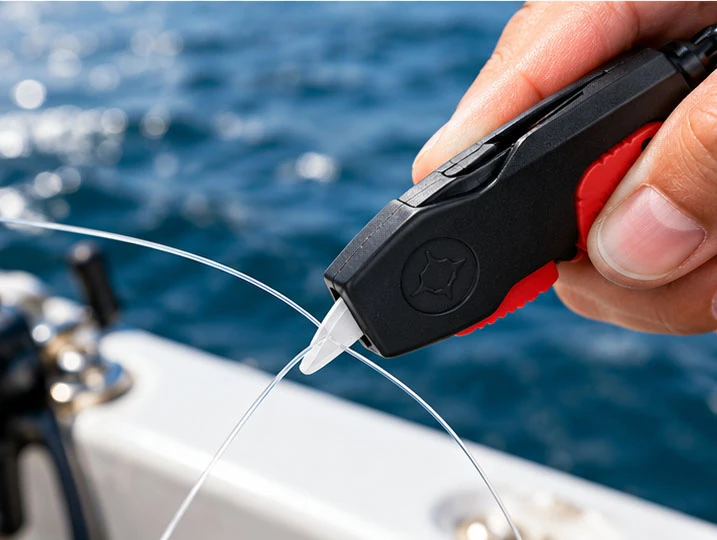
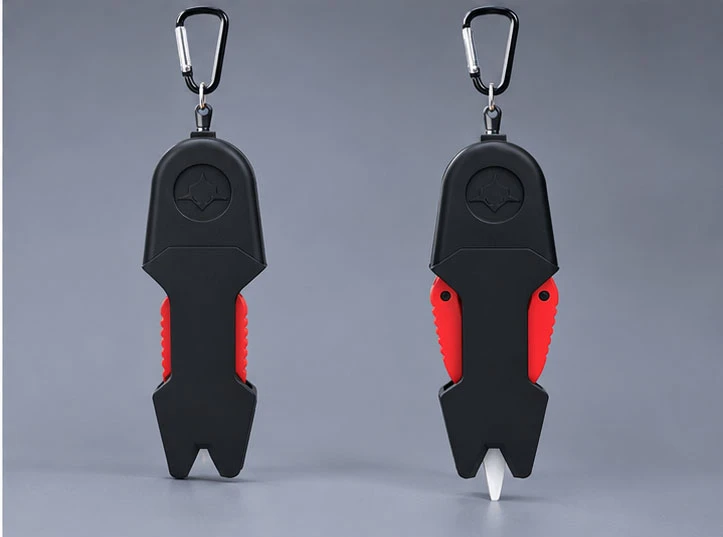
Adding fishing scissors to an existing product line may seem straightforward. Find a suitable model, put your logo on it, choose the packaging, and prepare it for sale. But for fishing tackle brands, fishing line companies, distributors, and private-label sellers, the real challenge is finding a product that fits the brand, performs as expected, and can be supplied consistently as orders grow.
Private label fishing scissors offer a practical way to develop a branded fishing tool without necessarily starting from a completely new design. Depending on the manufacturer's capabilities, buyers may be able to customize the logo, handle color, product configuration, and retail packaging while building on an existing product platform.
Material selection is another important consideration. Ceramic fishing scissors, particularly models using zirconia ceramic blades, can offer a useful alternative to conventional metal-blade tools for anglers who frequently work around saltwater or need a cutting tool for braided fishing line. However, the right product still depends on the intended application, blade design, overall construction, and the expectations of the target customer.
Before placing an order, brands need to understand what can be customized, how samples should be evaluated, and which production details must be confirmed with the supplier. This guide covers the main decisions involved in developing a private label fishing scissors product, from selecting the right model to preparing for bulk production.
What Are Private Label Fishing Scissors?
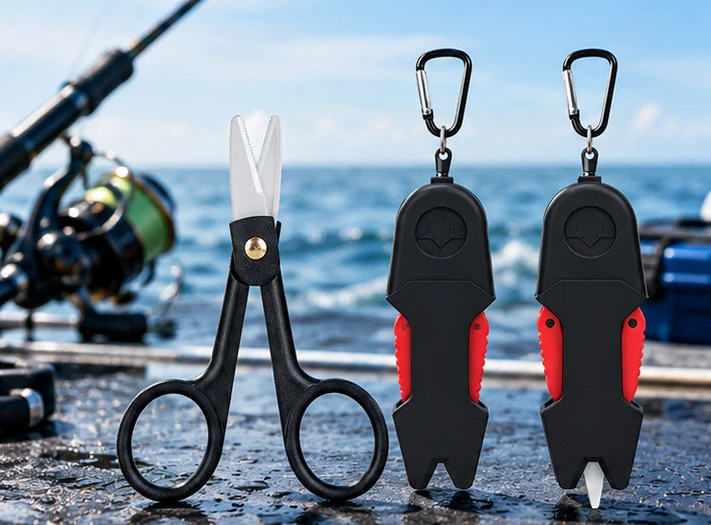
Private label fishing scissors are fishing scissors sold under a retailer's or brand owner's own name rather than marketed exclusively under the manufacturer's brand. The buyer works with a manufacturer to select a suitable product and establish the branding, specifications, and packaging required for the intended market.
For an established fishing tackle company, this might mean adding a ceramic line cutter to an existing collection of hooks, lures, terminal tackle, and fishing accessories. For a fishing line brand, it could mean offering a cutting tool that complements its PE braided line or leader products. A distributor may take a different approach, selecting a versatile model that fits several customer segments.
The important point is that private labeling does not automatically mean developing an entirely new product. Many projects begin with an existing model, allowing the buyer to concentrate on branding, product selection, and market positioning. More extensive engineering changes may be possible, but they require a separate assessment of feasibility, cost, and development time.
Private Label vs. OEM vs. ODM
These terms are often used together in manufacturing discussions, although they describe different aspects of a sourcing project. Their exact meaning can vary between suppliers, so buyers should always confirm what a proposed service actually includes.
Private label: The buyer sells a product under its own brand. The project may involve an existing model with customized branding, colors, or packaging.
OEM: Production is organized around the buyer's agreed requirements, which may include supplied designs, detailed specifications, or approved product configurations.
ODM: The manufacturer contributes an existing design or product development capabilities. The buyer then selects or adapts the proposed solution to suit its market and brand.
In practice, these arrangements can overlap. A buyer may begin with a manufacturer's existing ceramic fishing scissors, request a custom handle color and logo, and later discuss changes to the product configuration. The project is best defined by the agreed specifications rather than by the label used to describe it.
Which Model Is Right for Your Brand?
The most suitable approach depends on how much product development your business actually needs.
Established fishing tackle brands may prefer an existing model that fits their current product range. They usually need dependable product specifications, consistent branding, suitable retail packaging, and a supplier capable of supporting repeat orders.
Fishing line brands may want a cutting tool designed around the needs of customers who use braided PE line, monofilament, or fluorocarbon leaders. In this case, sample testing with the intended line types is more useful than choosing a model based on appearance alone.
Distributors and wholesalers often need a balance between product differentiation and purchasing practicality. A suitable standard model with private labeling may be more appropriate than a costly custom development project, particularly when the initial demand is still uncertain.
Amazon sellers and emerging fishing brands may benefit from starting with a clearly defined product concept and a manageable initial range. Packaging, product photography, listing claims, and the delivered product must all match. A strong brand presentation cannot compensate for inconsistent cutting performance or unclear specifications.
Why Add Fishing Scissors to Your Product Line?
Fishing scissors are a functional accessory with applications across several fishing categories. For businesses that already sell related equipment, adding a cutting tool can create a more complete product offering without requiring a move into an unrelated product category.
A Practical Complement to Existing Fishing Products
Fishing scissors can be sold alongside braided fishing lines, leaders, hooks, lures, terminal tackle, and tackle storage products. A fishing line company, for example, may offer a compatible cutting tool to customers who regularly trim line while tying rigs or changing terminal tackle.
Distributors can also include scissors in broader fishing accessory assortments. Depending on the channel, the product might be offered individually, grouped with line-related accessories, or incorporated into a branded fishing tool collection.
The opportunity is not simply to add another SKU. It is to identify a genuine use case for the intended customer and select a product that makes sense within the existing range.
Create a Clear Product Positioning
Not every fishing scissors product needs to serve the same customer. A basic utility model may suit price-sensitive buyers, while a ceramic-blade version may appeal to customers looking for a corrosion-resistant cutting tool or a more specialized option for their fishing kit.
Possible positioning directions include:
Everyday fishing scissors: A practical cutting tool for general tackle preparation and routine fishing tasks.
Braided-line cutting tools: Products selected and tested for cutting PE braided line, with particular attention to blade engagement and the ability to produce a controlled cut.
Ceramic fishing scissors: A differentiated product category for buyers interested in zirconia ceramic blades, wear resistance, and resistance to corrosion of the blade material.
Saltwater fishing accessories: Tools selected for coastal, boat, and saltwater applications, with attention to the corrosion resistance of the entire assembly rather than the blade alone.
Compact fishing tools: Smaller configurations intended for tackle boxes, kayak fishing, or other situations where storage space matters.
These positions should be supported by the actual product design and verified performance. A ceramic blade does not automatically make every pair of scissors suitable for every saltwater environment, nor does the material alone guarantee clean cuts on all fishing lines.
Differentiate Beyond Price
When several sellers offer visually similar fishing scissors, competing on price alone can make it difficult to build a recognizable product range. Private labeling gives brands more opportunities to establish a distinct identity through product selection, material choices, handle colors, packaging, and the way the tool fits into a wider collection.
For example, a fishing line brand might choose a ceramic line cutter that complements its braided line products. A tackle distributor might select a compact model with practical retail packaging. A premium fishing brand could focus on a carefully specified product, consistent quality, and a presentation that matches its existing accessories.
These decisions do not guarantee higher sales or margins. Their purpose is to create a more coherent product offer and give customers a clear reason to understand how the item fits the brand.
Choosing the Right Fishing Scissors for Your Brand
Before discussing logos and packaging, buyers should settle on the product itself. A model that looks attractive in a catalog may not be the right choice for the line types, fishing conditions, or price point associated with the brand.
Start with the Target Fishing Line
Different fishing lines present different cutting challenges. The construction, diameter, flexibility, and surface characteristics of the line all influence how a blade interacts with it. Buyers should therefore define the intended applications before approving a sample.
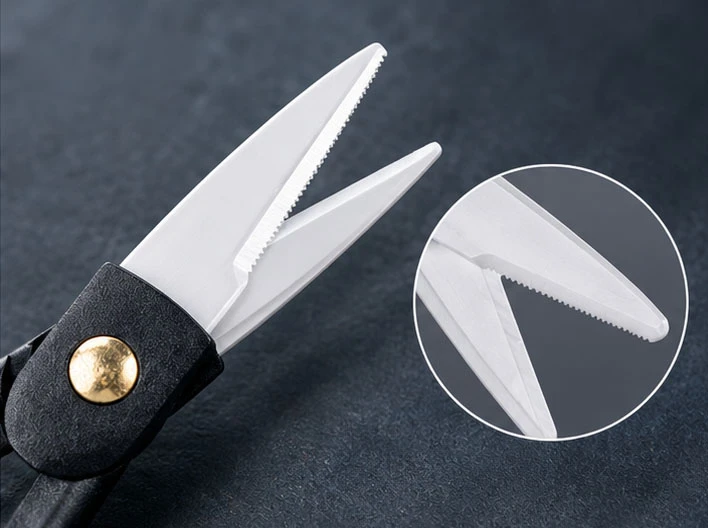
Braided PE line: Braided line consists of multiple fibers woven together. Depending on the braid construction and line diameter, the fibers may spread or resist cutting when the blade does not engage them effectively. Edge geometry, blade alignment, and the way the line is held during cutting all matter. Some models use a serrated section to help engage braided fibers, but the design should be evaluated on the actual line types the brand expects customers to use.
Monofilament: Monofilament line is generally a single strand of polymer. Its diameter and material properties affect the cutting experience, making blade sharpness, alignment, and controlled closing action relevant when comparing products.
Fluorocarbon: Fluorocarbon leaders can vary substantially in diameter and stiffness. A buyer should test the intended range rather than assume that a model that works well on thin line will perform equally well on heavier leader material.
Mixed applications: If the scissors will be marketed as a general-purpose fishing tool, test them with representative examples of each target line type. A product that performs well on thin braided line may not be the best choice for every other cutting task.
During sample evaluation, record the line brand, material, approximate diameter, cutting method, and observed result. This creates a more useful basis for comparing samples and confirming the product specification with the manufacturer.
Ceramic vs. Stainless Steel Blades
Blade material is an important part of product positioning, but it should not be the only selection criterion. Ceramic and stainless steel blades have different material characteristics, and each design needs to be considered in the context of its intended use.
Zirconia ceramic blades are valued for their high hardness, wear resistance, and resistance to corrosion of the ceramic material itself. These properties make ceramic fishing scissors worth considering for brands serving anglers who regularly handle wet equipment or fish in saltwater environments.
Unlike ordinary steel, zirconia ceramic does not rust in the way an iron-containing metal blade can. However, this does not mean that every component of a ceramic fishing scissors assembly is corrosion-proof. Pivot hardware, springs, fasteners, and other metal parts may require separate consideration, particularly when the product is intended for repeated saltwater exposure.
Stainless steel blades, meanwhile, are widely used in cutting tools and offer a different balance of toughness, corrosion resistance, and design flexibility. Their actual resistance to corrosion depends on the steel grade, finish, exposure conditions, and maintenance.
There is also a trade-off to consider with ceramic. Zirconia is hard and wear-resistant, but ceramic is generally more brittle than steel and can chip or fracture under impact, twisting, or inappropriate use. Product design, edge geometry, assembly quality, and user instructions therefore remain important.
For a private-label project, the more useful question is not which material is universally better. It is which material and blade configuration best suit the intended customer, fishing line applications, expected conditions, and target price point.
Choose the Right Handle and Configuration
The handle and overall configuration influence both usability and brand presentation. Buyers should consider the size of the scissors, grip shape, ease of handling, blade protection, and any accessories that may be needed for the intended fishing environment.
For a compact tool designed to stay in a tackle box, size and storage convenience may be priorities. A model intended for frequent use may require more attention to grip comfort and the control needed during repeated cutting. If the product is intended for boat or kayak fishing, buyers may also want to evaluate how the tool can be stored and retrieved safely.
Handle color can help distinguish a private-label product from generic alternatives, but appearance should not replace functional evaluation. The selected configuration should be tested as a complete product, including the blade action, handle fit, pivot movement, and any included attachment or protective component.
Before approving a model, ask the manufacturer which configuration options are already available and which would require additional development. This helps avoid assuming that every requested size, color, blade design, or accessory can be applied to every existing model.
What Can You Customize for a Private Label Fishing Scissors Project?
Customization is where a private-label product begins to reflect the identity of the brand selling it. However, the available options depend on the selected model, manufacturing process, order quantity, and development requirements. Buyers should separate standard customization from changes that require engineering work or additional production setup.
Logo and Brand Identity
Logo application is often one of the first requirements discussed in a private-label project. Before sending artwork, confirm the available logo placement, supported application method, printable area, and any limitations imposed by the product's shape or material.
Useful points to confirm include:
Logo position and maximum application area.
Accepted artwork formats and production-ready files.
Color requirements and the feasibility of reproducing brand colors.
Legibility at the final logo size.
Appearance and durability under the product's expected handling conditions.
Approval of the logo on a physical sample or other agreed production proof.
Buyers should also confirm who is responsible for checking the final artwork and approving any changes. A digital mockup can help establish the general appearance, but it may not fully represent the result on the finished product.
Handle Color and Product Configuration
Depending on the model, a manufacturer may offer options for handle color, product configuration, or selected accessories. These details can help a brand maintain visual consistency across a fishing tool collection or distinguish different product tiers.
When discussing customization, specify the preferred color, target configuration, and intended use rather than relying on general descriptions such as premium or professional. Reference images and written requirements can help reduce misunderstandings, although the manufacturer must still confirm technical feasibility.
Changes to the blade geometry, product dimensions, or structural components should be treated separately from straightforward cosmetic customization. They may affect tooling, development work, sample approval, and production cost. Any performance-related change should be evaluated through appropriate sample testing before it becomes part of the final specification.
Retail Packaging and Labeling
Packaging is part of the product experience, especially when fishing scissors are sold through retail stores, online marketplaces, or established distribution networks. A suitable package should present the product clearly, protect it during transport, and provide the information required by the intended sales channel.
Depending on the project, buyers may need to prepare:
Branded retail boxes, cards, or blister packaging, where suitable for the product.
Product names, model numbers, and accurate feature descriptions.
Barcode and SKU information for inventory management.
Packaging dimensions and carton requirements for storage and shipping.
Warnings, care instructions, and other market-specific labeling where applicable.
For online sellers, packaging artwork and product listings should describe the same product. Claims about corrosion resistance, cutting performance, or supported fishing line types should reflect the actual specification and available evidence. Clear, accurate descriptions are more useful in the long term than exaggerated claims that the product cannot consistently support.
Standard Customization vs. New Product Development
One of the most useful decisions a buyer can make early in the process is to determine whether an existing model can meet the product requirements.
With standard customization, the project may focus on branding, handle color options already supported by the manufacturer, and packaging. This approach can reduce the amount of development work required, although the final MOQ, cost, and lead time still need to be confirmed.
New product development is a different undertaking. Requests involving a new structure, revised blade geometry, unusual dimensions, or specialized functionality may require technical review, prototype work, additional testing, and revised production planning.
Neither approach is automatically the right choice for every brand. The decision should reflect the intended market, available budget, expected order volume, and the degree of differentiation the product genuinely needs. For many buyers, starting with an existing model and validating it with samples is a sensible first step before considering more extensive customization.