
For professional buyers, ceramic fishing scissors quality control should cover much more than the sharpness of the ceramic blade. Material consistency, blade dimensions, edge finishing, cutting performance, assembly precision, durability, and batch-to-batch consistency all influence the final product quality.
This becomes particularly important for businesses developing their own fishing tools. A distributor needs products that perform consistently across repeated orders. A fishing tackle brand needs to protect its reputation. An Amazon seller needs to reduce avoidable returns and negative customer reviews. These requirements cannot be addressed by checking one finished sample and assuming that every production batch will be the same.
So, what should buyers actually inspect before approving a ceramic fishing scissors supplier? Which tests are worth performing, and what questions should be asked before placing a bulk order?
This guide explains the key quality control points for ceramic fishing scissors, from raw material and blade inspection to functional testing, assembly evaluation, and mass production acceptance. It also provides a practical checklist that buyers can use when evaluating manufacturers and developing OEM or ODM fishing scissors projects.
1. Understanding the Main Quality Risks of Ceramic Fishing Scissors
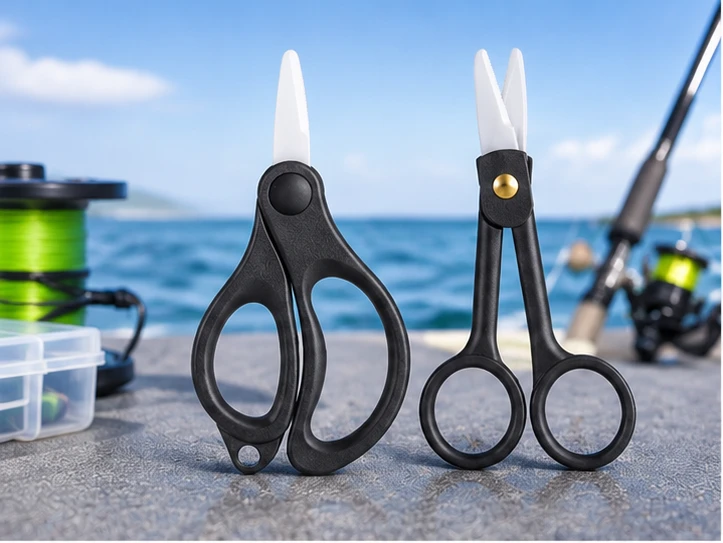
Before discussing inspection procedures, it is useful to understand where quality problems usually occur. Ceramic fishing scissors combine a hard cutting material with a mechanical structure, handle, and sometimes additional accessories. Each component introduces different quality requirements.
Unlike ordinary stainless steel scissors, zirconia ceramic blades have specific material characteristics. They offer high hardness and excellent wear resistance, but they are also more sensitive to impact and certain types of mechanical stress. This means that a good quality control process must consider both the advantages and the limitations of ceramic materials.
1.1 Ceramic Blade Chipping and Edge Damage
One of the most important issues to inspect is the condition of the ceramic cutting edge.
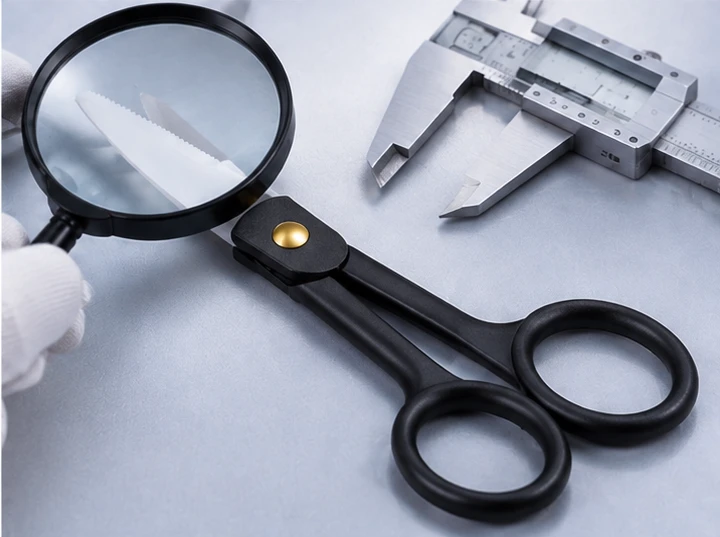
Small chips, micro-cracks, or irregularities along the edge may affect how the scissors engage with fishing line. Some defects are visible under suitable lighting, while smaller imperfections may require magnification to identify.
These problems can be associated with several factors:
Inconsistent ceramic forming or sintering conditions.
Improper grinding or edge finishing.
Excessive mechanical stress during assembly.
Damage during handling, transportation, or packaging.
Inappropriate use or impact after the product reaches the customer.
Buyers should not assume that a ceramic blade is automatically durable simply because zirconia is a high-hardness material. Hardness and toughness are different properties. A blade can resist ordinary abrasive wear while still being vulnerable to impact damage.
1.2 Inconsistent Cutting Performance
A ceramic fishing scissor should be evaluated according to how it cuts fishing line, not simply how sharp the edge looks.
Common functional problems include fishing line slipping between the blades, incomplete cuts, excessive cutting pressure, and uneven results between individual products.
For example, a scissor may cut thin monofilament easily but struggle with braided PE line because the fibers are not properly engaged by the cutting edges. Another product may cut braided line well but produce inconsistent results when the line diameter changes.
This is why cutting tests should use the actual line materials and applications that the finished product is designed for.
1.3 Poor Blade Alignment and Assembly
Even a well-processed ceramic blade cannot deliver consistent performance if the scissors are assembled incorrectly.
Buyers should pay attention to:
Misalignment between the two cutting edges.
Uneven contact when the blades close.
Excessive gaps between the cutting edges.
Loose pivot connections.
Unusually stiff or unstable opening and closing movement.
These problems can affect cutting precision and the overall user experience. In some cases, the blade material itself is not the problem. The actual issue comes from assembly tolerances or the relationship between the two blades.
1.4 Handle and Structural Defects
The handle is another part that deserves attention. Poorly molded plastic, sharp edges, inconsistent dimensions, or weak connections can make a product uncomfortable to use.
For fishing tools, this matters because customers often operate scissors with wet hands, gloves, or limited space on a boat or kayak. A product that performs well in a factory inspection but feels uncomfortable during actual fishing may still receive negative feedback.
1.5 Batch-to-Batch Quality Differences
Perhaps the most overlooked risk is inconsistency between production batches.
A manufacturer may provide a satisfactory sample, but can the same cutting performance, blade dimensions, handle appearance, and assembly quality be maintained across hundreds or thousands of units?
For B2B buyers, this is a critical question. A single good sample demonstrates that a product can be made. Consistent production demonstrates that the supplier can support a business relationship.
2. Ceramic Blade Quality: What Buyers Should Inspect
The ceramic blade is the central functional component of ceramic fishing scissors. Its material, dimensions, edge geometry, and finishing quality all influence the final cutting result.
2.1 Verify the Ceramic Material
Buyers should first confirm what type of ceramic material is used in the blade. Zirconia ceramic, commonly represented by ZrO2, is widely used in precision ceramic cutting applications because of its high hardness, wear resistance, and chemical stability.
However, simply stating that a blade is made from zirconia does not provide enough information to establish its quality.
When evaluating a manufacturer, consider asking:
Is the cutting blade manufactured from zirconia ceramic?
Can the supplier explain the material specifications?
Are raw material batches controlled during production?
Does the manufacturer have an incoming material inspection procedure?
Can the supplier provide relevant material documentation when required?
Material specifications should be evaluated against the intended product application. Different ceramic formulations and processing conditions can result in different mechanical properties, so buyers should avoid judging material quality from a product description alone.
2.2 Check Blade Dimensions and Geometry
Blade dimensions are directly related to product assembly and cutting performance. Even relatively small dimensional differences may affect how the blades fit into the handle or contact each other during operation.
Important inspection points include:
Blade length and width.
Blade thickness.
Cutting edge angle.
Blade profile and shape.
Tip geometry.
Consistency between individual blades.
For custom fishing scissors, these dimensions should be defined in the approved product drawings or technical specifications.
Buyers developing a private-label product should not rely entirely on visual comparison. Two blades may look almost identical but have different dimensions or edge geometries. Measuring critical dimensions helps establish a more objective inspection standard.
2.3 Inspect Edge Finishing and Surface Quality
Edge finishing is especially important because it affects the actual contact between the blade and fishing line.
During inspection, buyers should look for:
Visible chips or cracks along the cutting edge.
Uneven grinding marks.
Irregular edge profiles.
Surface scratches or obvious processing defects.
Differences in edge finishing between samples.
A magnifying glass or suitable inspection microscope can help identify small defects that are difficult to see with the naked eye.
However, visual inspection has limitations. A blade that looks smooth and clean does not necessarily cut well. The next step should always include functional testing with appropriate fishing line materials.
2.4 Evaluate Serrated and Straight Edge Designs
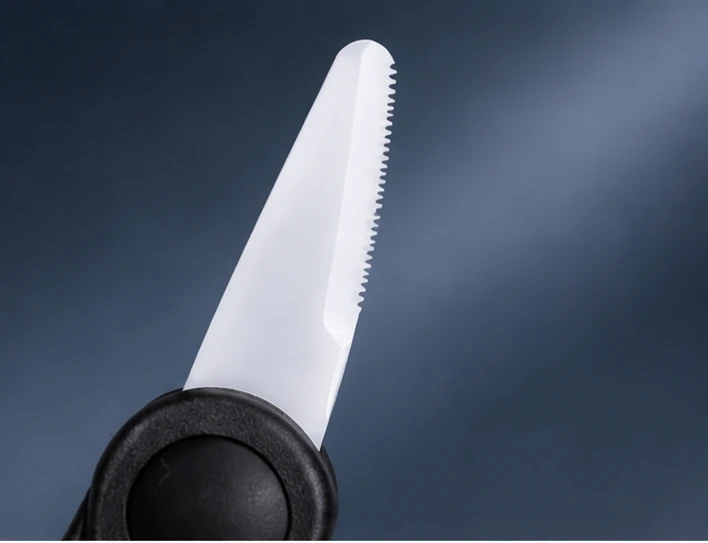
Not all ceramic fishing scissors use the same cutting edge design. Some products have straight cutting edges, while others incorporate serrations to help engage slippery fishing line.
For serrated models, buyers should check:
Whether the serrations match the approved product design.
Whether tooth spacing and geometry are consistent.
Whether the serrated section is positioned correctly.
Whether the cutting edge has visible damage.
Whether the actual cutting performance matches the intended application.
For models with serrations on only one blade, this detail should be included in the product specification. Inspectors should verify that the serrated edge is on the correct side rather than assuming that both blades should have the same surface design.
The inspection criteria should always reflect the actual product configuration. A straight-edge model and a serrated model should not automatically share identical acceptance standards.
3. Cutting Performance Testing: The Most Important Functional Check
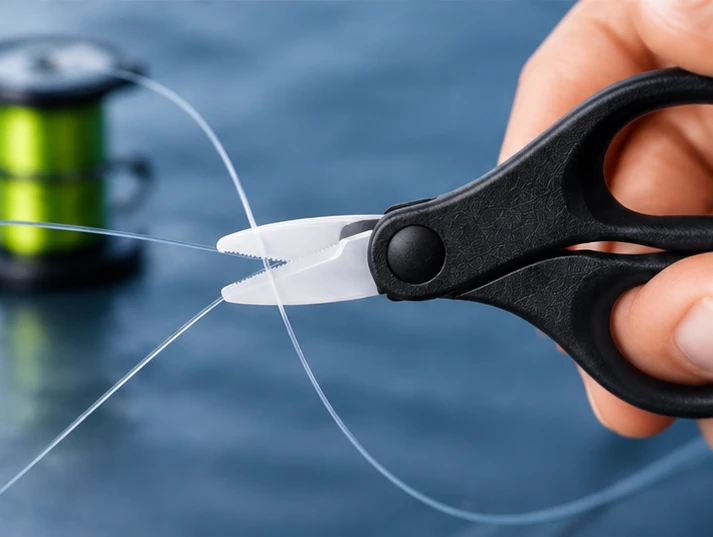
For fishing scissors, cutting performance is one of the most meaningful indicators of product quality. Buyers are not purchasing a ceramic blade simply because it is made from a particular material. They want a tool that can handle fishing line reliably in real applications.
A practical cutting test should therefore be part of the sample approval process and, where appropriate, the finished-product inspection procedure.
3.1 Test Different Fishing Line Materials
Different fishing lines behave differently during cutting. Their construction, flexibility, diameter, and surface characteristics can all influence the result.
For a fishing scissors product intended for multiple applications, buyers can consider testing the following materials:
Braided PE line: Evaluate whether the blades engage the fibers properly without excessive slipping or fraying.
Monofilament line: Check cutting precision, line deformation, and whether the cut is clean.
Fluorocarbon line: Evaluate cutting control and whether the product can complete the cut without excessive pressure.
Dyneema line: Where relevant to the target market, examine cutting consistency and fiber separation.
Not every model needs to pass every test. The test materials should be selected according to the product's intended positioning and the claims made in its marketing materials.
For example, a compact fishing line cutter designed mainly for braided PE line may have different performance requirements from a multipurpose fishing scissors model.
3.2 Evaluate Cutting Consistency
During testing, do not record only whether the line was cut. Pay attention to how the cutting process takes place.
Useful evaluation questions include:
Can the scissors cut the line in one controlled movement?
Does the fishing line slip between the blades?
Are there visible frayed fibers after cutting?
Does the product require unusually high hand pressure?
Are the results consistent across repeated tests?
Do different samples produce similar cutting results?
A clean cut on one attempt is encouraging, but repeated tests provide a better indication of functional consistency.
3.3 Check Cutting Performance at Different Line Diameters
Fishing line diameter is another variable that should be considered during product evaluation.
A scissor may perform well with thin braided line but show different results when used with thicker line. The same applies to monofilament and fluorocarbon products.
Buyers should establish a reasonable testing range based on the intended product application. Testing should include representative line diameters rather than relying on only one convenient sample.
This also helps manufacturers identify the practical operating range of a particular design. It is better to communicate a realistic application range than to make broad cutting claims that have not been properly verified.
3.4 Establish a Repeatable Cutting Test Procedure
For OEM and private-label projects, informal testing is not enough. A repeatable procedure makes it easier for both the buyer and manufacturer to compare results.
A basic cutting test record can include:
Fishing line material and brand.
Line diameter or specified test size.
Number of cutting attempts.
Cutting result and visible fiber condition.
Required operating pressure, if measured using a defined method.
Visible blade damage after testing.
Differences between tested samples.
Test conditions should remain consistent whenever possible. The same line material, diameter, cutting position, and testing method should be used when comparing different samples.
A repeatable testing procedure is more valuable than an informal statement that the scissors are sharp. It provides buyers with evidence that can support product approval and future quality comparisons.
4. Assembly and Finished Product Inspection
Once the ceramic blade has passed its individual inspection, the complete scissors should be evaluated as an assembled product.
This stage is important because product performance depends on the relationship between the ceramic blades, handle, pivot, and other structural components.
4.1 Blade Alignment and Closing Performance
Check whether the blades align correctly throughout the opening and closing movement.
Important points include:
Alignment of the two cutting edges.
Contact between the blades during closing.
Visible gaps or uneven contact areas.
Smooth movement throughout the operating range.
Unwanted movement or looseness at the pivot.
For small fishing scissors, even minor assembly differences may affect the way the cutting edges meet. These differences should be evaluated against the approved sample and product specifications.
4.2 Handle Quality and Ergonomics
The handle should provide a comfortable and stable grip during normal fishing activities.
Buyers should inspect the following:
Handle material and molding consistency.
Surface finish and visible defects.
Sharp edges or uncomfortable contact points.
Finger opening dimensions.
Grip comfort and handling stability.
Color consistency across the production batch.
For products intended for boat, kayak, or shore fishing, it is useful to evaluate the scissors under conditions that resemble normal use. A handle that feels comfortable during a quick factory inspection may feel different after repeated use.
4.3 Pivot, Fasteners, and Attachment Components
Some fishing scissors include additional structural components such as metal pivots, fasteners, springs, clips, or retractable attachments.
These components should be checked according to the product design.
Is the pivot connection stable?
Are fasteners properly secured?
Does the opening and closing action remain smooth?
Are springs or moving components functioning correctly?
Are attachment points strong enough for their intended use?
For models with a retractable or press-operated mechanism, the mechanism should also be tested repeatedly to confirm that it operates as intended and that the ceramic blade is protected or exposed according to the design.
4.4 Final Appearance Inspection
Before packaging, finished products should receive an appearance inspection.
Typical inspection items include:
Scratches, stains, and surface marks.
Uneven plastic molding.
Assembly gaps or loose components.
Incorrect logo placement.
Color differences.
Incorrect product accessories.
Packaging damage or labeling errors.
For private-label orders, logo positioning, handle color, and retail packaging should be compared with the approved artwork and sample. These details may not directly influence cutting performance, but they matter to the buyer's finished product presentation.
5. Durability and Corrosion Resistance Testing
Fishing scissors are often used in demanding outdoor environments. Saltwater, moisture, repeated cutting, and accidental impacts can all influence product life.
Durability evaluation should consider the complete product rather than focusing only on the ceramic blade.
5.1 Check Ceramic Blade Wear Resistance
Zirconia ceramic is valued for its high hardness and wear resistance. Nevertheless, buyers should evaluate whether the blade maintains its intended cutting performance after repeated use.
A practical durability evaluation can include:
Repeated cutting tests using specified fishing line materials.
Inspection of the cutting edge after testing.
Observation of any visible chipping or damage.
Comparison of cutting results before and after testing.
Evaluation of whether the blade remains suitable for its intended application.
The number of cutting cycles and test conditions should be defined according to the product design and intended usage. There is no single universal cycle count that is appropriate for every fishing scissors model.
5.2 Evaluate Corrosion Resistance of Non-Ceramic Components
One advantage of zirconia ceramic is that the blade itself does not rust like ordinary carbon steel. However, a complete pair of fishing scissors may contain several non-ceramic components.
These can include:
Metal pivot components.
Fasteners and screws.
Springs.
Other exposed metal accessories.
These parts may be exposed to moisture and saltwater during fishing activities. Their material selection and surface treatment should therefore match the intended application.
When sourcing fishing scissors for saltwater markets, buyers should ask the manufacturer which materials are used for exposed metal components and what corrosion resistance requirements can be supported.
It is important not to confuse the corrosion resistance of a ceramic blade with the corrosion resistance of the entire product.
5.3 Conduct Practical Saltwater Exposure Checks
For products marketed for saltwater fishing, exposure testing can help identify potential problems in metal components and assembled structures.
Depending on the product and target market, buyers may consider:
Inspecting all exposed metal materials.
Checking corrosion after defined exposure conditions.
Inspecting pivot movement after exposure.
Checking for changes in fastener condition.
Evaluating whether normal operation is maintained.
Salt spray testing, immersion testing, and real-world seawater exposure are different evaluation methods. Results from one test should not automatically be presented as a guarantee of performance in every marine environment.
For buyers, the important point is to define the expected operating environment and agree on appropriate evaluation methods before mass production.
6. Batch Consistency: Can the Manufacturer Maintain Quality in Mass Production?
For B2B buyers, batch consistency is often more important than the appearance of a single sample.
A manufacturer may be able to produce one excellent prototype. However, a fishing tackle brand or distributor needs confidence that the next production run will meet the same requirements.
This is where supplier quality management becomes particularly important.
6.1 Compare Samples with Mass Production
The approved sample should serve as an important reference for mass production inspection.
Buyers should compare bulk products against the approved sample in several areas:
Ceramic blade dimensions and geometry.
Cutting edge condition.
Cutting performance using specified fishing line materials.
Handle dimensions and appearance.
Blade alignment and assembly quality.
Accessories and packaging specifications.
However, an approved sample alone is not a complete quality standard. For custom projects, it is better to establish a written specification that records important dimensions, materials, colors, functional requirements, and packaging details.
This reduces misunderstandings when different production teams or future production batches are involved.
6.2 Check Whether the Manufacturer Has Documented Inspection Procedures
A reliable manufacturer should be able to explain how product quality is checked during production.
Buyers can ask whether the supplier performs inspections at different stages, including:
Incoming raw material inspection.
Inspection of ceramic components after processing.
Dimensional and appearance checks.
Assembly and functional inspection.
Finished product inspection before shipment.
Not every factory uses the same inspection structure, and the level of documentation may vary according to production scale and customer requirements.
What matters is whether the supplier has a clear process for identifying defects, recording inspection results, and preventing unsuitable products from reaching the customer.
6.3 Understand Sampling Inspection and Acceptance Criteria
For larger orders, checking every individual characteristic on every product may not always be practical. Sampling inspection can be used as part of a defined quality acceptance plan.
Buyers and manufacturers should agree on:
Inspection quantity and sampling method.
Critical, major, and minor defect classifications.
Acceptable Quality Limits (AQL), where applicable.
Functional test requirements.
Procedures for handling rejected batches.
AQL is commonly used in sampling-based acceptance inspection, but the appropriate inspection level and acceptance values depend on product risk, order requirements, and the agreement between buyer and supplier.
For example, a visible ceramic blade crack may be treated as a critical defect because it can affect product safety and function. A minor cosmetic mark on a non-functional surface may be classified differently, depending on the agreed appearance standard.
Buyers should define these classifications before production rather than discussing them for the first time after a shipment arrives.
6.4 Ask How the Manufacturer Handles Quality Problems
Even with a well-managed production process, defects can sometimes occur. The manufacturer's response is an important part of supplier evaluation.
Ask how the company handles:
Defect identification and recording.
Root cause analysis.
Corrective and preventive actions.
Reinspection of affected products.
Prevention of repeated quality problems.
A supplier that can explain why a defect occurred and what has been changed to prevent recurrence provides more confidence than one that simply promises to replace defective products.
For long-term OEM and ODM cooperation, a practical quality improvement process is an important part of the manufacturing relationship.
7. A Practical Ceramic Fishing Scissors Quality Inspection Checklist for B2B Buyers
After reviewing the main quality control areas, buyers can use the following checklist when evaluating samples, auditing suppliers, or preparing a bulk order inspection.
| Inspection Area | What Buyers Should Check |
|---|---|
| Raw Material | Zirconia material specifications and material consistency. |
| Blade Dimensions | Blade length, width, thickness, and geometry. |
| Edge Quality | Visible chips, cracks, grinding defects, and irregularities. |
| Blade Design | Straight or serrated edge configuration and design consistency. |
| Cutting Performance | Performance with specified PE, monofilament, and fluorocarbon lines. |
| Blade Alignment | Blade contact, closing movement, and alignment. |
| Handle | Material, color, molding quality, and grip comfort. |
| Assembly | Pivot stability, fasteners, and component connections. |
| Durability | Repeated cutting performance and visible blade damage. |
| Corrosion Resistance | Material suitability of exposed metal components. |
| Batch Consistency | Comparison between approved samples and production units. |
| Packaging | Logo, labeling, accessories, and retail packaging requirements. |
7.1 Before Requesting Samples
Good quality control begins before a sample is manufactured. Buyers should communicate their requirements clearly so that the manufacturer can recommend an appropriate product configuration.
Before requesting samples, define:
Target fishing line types and applications.
Expected blade dimensions and configuration.
Intended usage environment, including freshwater or saltwater.
Handle material and color preferences.
Logo and branding requirements.
Accessories and packaging expectations.
If a buyer is developing a new product rather than selecting an existing model, sharing drawings, reference images, or a basic product specification can make the sampling process more efficient.
7.2 Before Approving Samples
Once samples are received, do not approve them based on appearance alone.
Complete the following checks:
Inspect ceramic blade condition and dimensions.
Test cutting performance with the intended fishing line materials.
Check blade alignment and operating movement.
Evaluate handle comfort and product usability.
Confirm logo placement, color, and packaging.
Record any modifications required before production.
If adjustments are necessary, request a revised sample and confirm the final specifications before moving forward.
7.3 Before Placing a Bulk Order
Before production begins, buyers should confirm the details that will be used as the basis for manufacturing and inspection.
Approve the final product specification.
Confirm the reference sample.
Agree on critical quality inspection points.
Establish functional testing requirements.
Confirm acceptable defect classifications and sampling criteria.
Approve packaging and labeling artwork.
Clarify procedures for defective products and quality complaints.
These steps may seem time-consuming at the beginning, but they can prevent much larger problems during mass production and repeat orders.
8. Questions to Ask a Ceramic Fishing Scissors Manufacturer Before Ordering
When comparing manufacturers, buyers should ask questions that reveal actual production and quality management capabilities. General statements such as "we provide high-quality products" do not tell you much about how a supplier works.
8.1 What Zirconia Ceramic Material Do You Use?
Ask the manufacturer to explain the ceramic material used in the blade and whether relevant material specifications are available.
A capable supplier should be able to discuss material selection in relation to blade performance, processing requirements, and intended use.
8.2 How Do You Inspect Ceramic Blade Quality?
Ask about dimensional inspection, edge finishing, surface defects, and how ceramic blades are checked before assembly.
It is also useful to understand whether inspection criteria are documented and whether defects are recorded during production.
8.3 Do You Test Actual Fishing Line Cutting Performance?
This question is particularly important for fishing tool buyers. A manufacturer should understand that cutting performance needs to be evaluated using relevant fishing line materials rather than relying entirely on visual inspection.
Ask whether the supplier can conduct or support tests using braided PE, monofilament, or fluorocarbon lines according to your product requirements.
8.4 How Do You Maintain Quality Consistency Between Batches?
Ask how the manufacturer maintains product specifications across different production runs.
Useful topics include production records, inspection procedures, sample comparison, defect handling, and corrective actions.
8.5 Can You Provide Samples Before Mass Production?
Sample approval is an important step in product development. Buyers should confirm whether the manufacturer can provide samples for functional evaluation and whether modifications can be discussed before bulk production.
For customized products, it is also important to understand how long sample development takes and which design changes may affect the development schedule.
8.6 Do You Support OEM, ODM, and Private Label Projects?
For brands and distributors, product customization is often just as important as the standard product itself.
Depending on manufacturing capabilities, customization requirements may include:
Custom logo and branding.
Handle colors and materials.
Blade configurations and product dimensions.
Product accessories.
Custom retail packaging.
Product specifications for different fishing applications.
Buyers should explain their target market and project requirements early in the discussion. This helps the manufacturer evaluate feasibility, recommend suitable configurations, and provide a more accurate quotation.
9. How MIDDIA Approaches Quality Control for Ceramic Fishing Scissors
Choosing a ceramic fishing scissors manufacturer is not simply about finding a supplier with an attractive product catalog. Buyers need a manufacturing partner that understands ceramic processing, product development, and the practical requirements of fishing tools.
At MIDDIA, our focus is on ceramic manufacturing and customized ceramic cutting products, including zirconia ceramic fishing scissors and fishing line cutters for different market applications.
9.1 Ceramic Manufacturing Experience
With ceramic manufacturing experience dating back to 2010, MIDDIA has developed experience in technical ceramic materials and precision ceramic product processing.
Our background in zirconia and alumina ceramic manufacturing provides a foundation for understanding the material and processing requirements involved in ceramic cutting products.
For fishing scissors, this experience is relevant because blade quality is influenced not only by the selected material but also by forming, sintering, grinding, and finishing processes.
9.2 From Ceramic Processing to Finished Fishing Scissors
The production of a ceramic fishing scissors blade involves several manufacturing stages. These may include ceramic powder preparation, forming, sintering, precision grinding, and edge finishing.
After ceramic processing, the blade must be evaluated as part of the finished product. Assembly quality, blade alignment, handle integration, and functional cutting performance all contribute to the final result.
For buyers, this distinction is important. A good ceramic component is only one part of a reliable fishing scissors product. The complete assembly must also meet the intended specifications.
9.3 OEM and ODM Quality Requirements
MIDDIA supports discussions around customized ceramic fishing tools for brands, distributors, wholesalers, and other product buyers.
Depending on the project, customization can involve:
Different fishing line cutting applications.
Blade configurations and product structures.
Handle colors and branding.
Product dimensions and specifications.
Accessories and packaging requirements.
Sample development and production planning.
Rather than applying exactly the same specifications to every project, product requirements should be evaluated according to the customer's intended market and application.
For example, a fishing tackle brand developing a premium braided line cutter may prioritize cutting performance and product appearance. A wholesaler ordering a standard fishing scissors model may place greater emphasis on repeat-order consistency, packaging, and cost control.
9.4 Supporting Different Fishing Market Requirements
Different customers evaluate product quality from different perspectives.
Fishing tackle brands: Consistent product performance, appearance, and branding are important for protecting brand reputation.
Distributors and wholesalers: Reliable specifications and repeat-order consistency help reduce purchasing risks.
Amazon sellers: Functional reliability and clear product specifications can help reduce avoidable customer complaints and returns.
Fishing line brands: Cutting performance with their target line materials is a key consideration.
Trading companies: Clear specifications, inspection requirements, and production communication help simplify supplier management.
At MIDDIA, we welcome discussions about these different requirements when developing ceramic fishing scissors projects. The goal is to establish a product specification that both sides understand before moving into sampling and bulk production.
10. Frequently Asked Questions About Ceramic Fishing Scissors Quality Control
Q1. How Can Buyers Check the Quality of Ceramic Fishing Scissors?
Buyers should evaluate six main areas: ceramic material quality, blade dimensions and edge finishing, cutting performance, assembly quality, durability, and batch consistency. Visual inspection alone is not enough. Practical cutting tests using the intended fishing line materials should also be included in the sample approval process.
Q2. Can Ceramic Fishing Scissor Blades Chip or Crack?
Yes. Zirconia ceramic has high hardness and wear resistance, but ceramic materials can still be damaged by impact or excessive mechanical stress. Buyers should inspect the blade edges for visible chips and cracks and evaluate whether the finished product is suitable for its intended operating conditions.
Q3. How Do Manufacturers Test Ceramic Fishing Scissors?
Quality testing may include raw material inspection, blade dimension measurement, edge and surface inspection, cutting tests, assembly checks, repeated operation tests, and finished-product inspection. The exact procedures depend on the product design and customer requirements.
Q4. Why Is Batch Consistency Important for Private-Label Fishing Scissors?
Batch consistency ensures that products supplied in different production runs maintain the agreed specifications and functional performance. This is particularly important for private-label brands because inconsistent products can lead to customer complaints, returns, and damage to brand reputation.
Q5. Should Buyers Test Samples Before Placing Bulk Orders?
Yes. Sample testing allows buyers to evaluate blade quality, cutting performance, handle comfort, assembly, and appearance before committing to a larger order. Once approved, the sample and its corresponding technical specifications should serve as references for mass production.
Q6. What Quality Documents Should Buyers Request from a Fishing Scissors Manufacturer?
Depending on the project, buyers may request product specifications, relevant ceramic material information, dimensional inspection records, functional test records, finished-product inspection reports, and applicable quality management documentation. The required documents should be agreed upon according to the product, order size, and target market.
Conclusion: Quality Control Is More Than a Sharp Ceramic Blade
When sourcing ceramic fishing scissors, buyers should look beyond the appearance of a sample or a manufacturer's claims about blade sharpness. Reliable product quality depends on several connected factors, including ceramic material consistency, precision blade processing, practical cutting performance, assembly quality, and the manufacturer's ability to maintain consistent results during mass production.
For fishing tackle brands, distributors, wholesalers, and private-label businesses, a structured inspection process can make supplier evaluation much more effective. It helps identify potential problems before they become costly issues in the marketplace.
More importantly, a good manufacturing partnership should not end with the delivery of one satisfactory sample. It should include clear product specifications, agreed quality requirements, appropriate testing procedures, and consistent communication throughout production.
If you are developing your own ceramic fishing scissors or looking for a manufacturer to support an existing product line, MIDDIA welcomes discussions about your project requirements.
Whether you need a standard ceramic fishing line cutter, a customized zirconia ceramic scissors design, or private-label fishing tools with your own branding, our team can discuss suitable product configurations and manufacturing requirements with you.
Discuss Your Ceramic Fishing Scissors Quality Requirements
Consistent ceramic fishing scissors quality depends on more than blade sharpness. Material specifications, cutting performance, blade alignment, assembly precision, and batch-to-batch consistency all play an important role in delivering reliable products to your customers.
MIDDIA supports fishing tackle brands, distributors, wholesalers, and private-label businesses with zirconia ceramic fishing scissors development and OEM/ODM manufacturing. Share your target fishing line applications, product specifications, quality requirements, branding preferences, and estimated order quantity to discuss suitable product options, sample evaluation, and production requirements with our team.