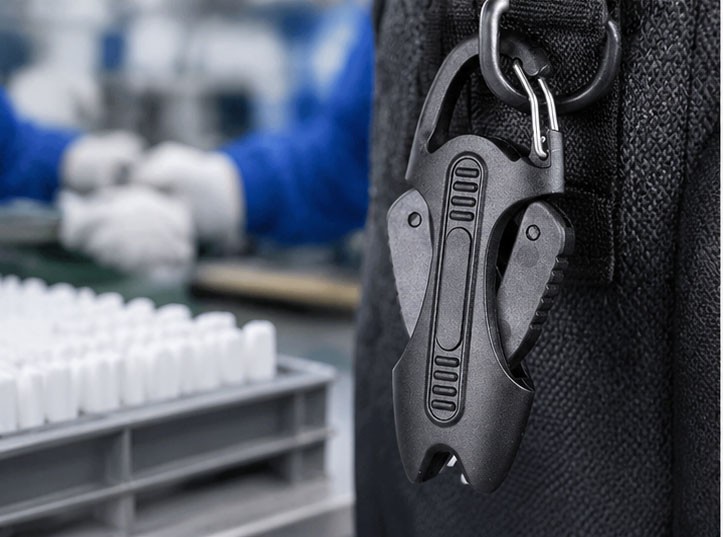
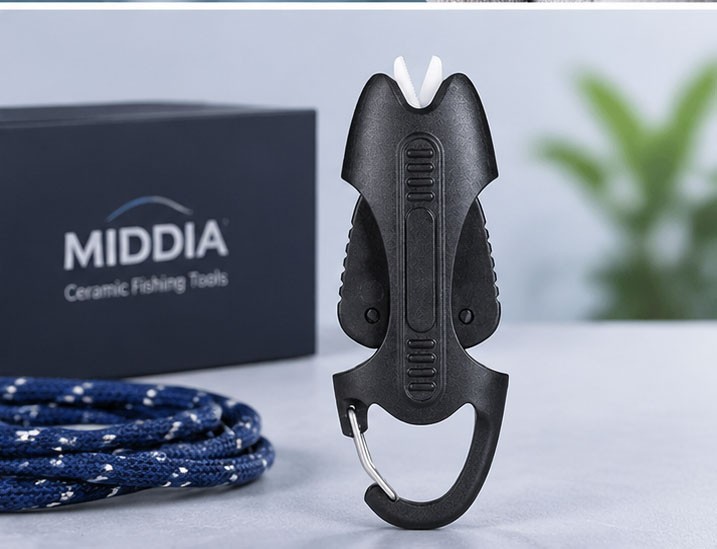
When sourcing fishing scissors for a fishing tackle brand, wholesale business, or private-label product line, the product itself is only one part of the purchasing decision. Before placing an order, buyers also need to understand the minimum order quantity (MOQ), sample availability, customization requirements, and the time required to complete production.
These details can have a direct impact on inventory costs, product launch schedules, and the financial risk of entering a new product category. For businesses sourcing ceramic fishing scissors, there are a few additional considerations. Blade specifications, handle configurations, assembly requirements, and packaging options may all affect how an order is prepared and delivered.
For a first-time buyer, ordering an existing model for market testing is often a different process from developing a fully customized product. A distributor may want a relatively small quantity to evaluate local demand, while an established fishing tackle brand may need customized handles, logo printing, and retail packaging. Each purchasing situation requires a slightly different approach.
This guide explains what buyers should know about fishing scissors MOQ, sampling, and production lead time before working with a manufacturer. It also covers how to organize a first order, avoid unnecessary delays, and prepare for repeat purchases.
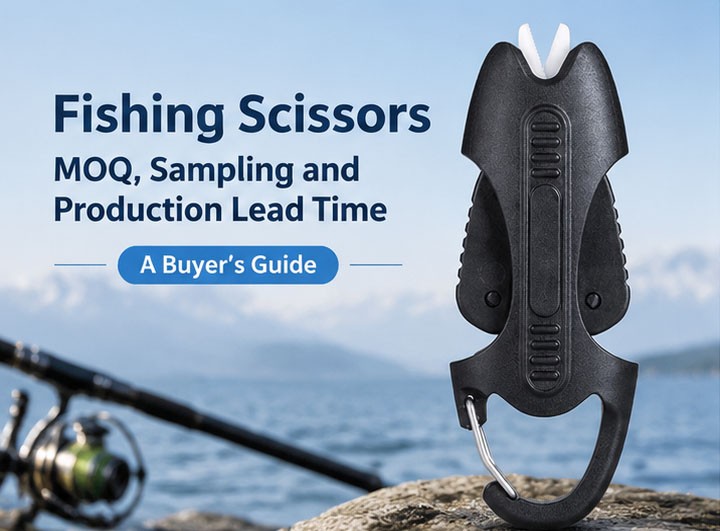
1. What Is the MOQ for Fishing Scissors?
MOQ, or Minimum Order Quantity, refers to the smallest quantity a manufacturer is willing to accept for a particular order. When purchasing fishing scissors, the MOQ is not always a fixed number for every product. It can vary depending on the model, available stock, customization requirements, packaging, and production arrangements.
For buyers, understanding MOQ is important because it determines how much inventory they need to purchase before testing a product in their market. Ordering too many units at the beginning can tie up working capital, while ordering too few may make customized production or packaging arrangements less practical.
1.1 What Does MOQ Mean When Ordering Fishing Scissors?
In a fishing scissors purchasing agreement, MOQ usually refers to the minimum number of finished products required for one order. However, buyers should clarify what the quoted MOQ actually covers.
For example, a manufacturer may have different minimum quantities for an existing ceramic fishing scissors model, a product with a custom logo, and a fully customized product with special packaging. The product quantity and packaging quantity may also be calculated separately.
Consider a distributor who wants to introduce ceramic fishing scissors to an existing fishing tackle catalog. The distributor may be able to start with an existing product model rather than requesting a new design. Since the basic product specifications and manufacturing arrangements are already established, this type of order may be easier to arrange than a completely new OEM project.
On the other hand, a brand requesting a new handle color, customized product specifications, and printed retail packaging may need a different MOQ arrangement. Some customization processes require separate preparation, materials, or production setup. These requirements can affect the minimum practical order quantity.
When requesting a quotation, buyers should therefore ask whether the MOQ applies to:
One specific product model or a combination of different models.
Products with or without customized logos.
Each handle color or all colors combined.
Individual products or complete retail packaging sets.
Standard production or a new OEM development project.
Clarifying these details at the beginning makes it easier to compare quotations from different manufacturers. Two suppliers may quote the same MOQ but include very different product configurations or packaging conditions.
1.2 Standard Fishing Scissors vs. OEM Fishing Scissors MOQ
One of the most important distinctions when sourcing fishing scissors is whether the buyer is ordering an existing product or requesting customization.
Standard products generally use established specifications. The manufacturer already has a defined product structure, blade configuration, and production process. Depending on stock availability and production arrangements, the order may be more flexible.
OEM fishing scissors involve additional requirements. These may include a custom logo, special handle colors, adjusted product specifications, or retail packaging designed for a particular brand. The more changes a buyer requests, the more details need to be confirmed before production.
| Order Type | Main Requirements | MOQ Considerations |
|---|---|---|
| Standard Products | Existing models and established specifications | May offer more flexible purchasing quantities, depending on stock and production arrangements |
| Logo Customization | Existing products with a customized brand logo | Depends on the logo application method and related setup requirements |
| Custom Handle Colors | Customized handle appearance or color | May require separate material preparation or color-specific production quantities |
| Custom Packaging | Branded retail boxes, labels, or product inserts | Depends on packaging specifications and supplier minimums |
| Full OEM Development | New specifications, product structure, or design requirements | Requires individual evaluation of development and production arrangements |
A customized fishing scissors order does not automatically require the same MOQ as a fully developed new product. For example, adding a logo to an existing ceramic fishing scissors model is generally a different project from developing a new handle structure or changing the blade design.
This distinction is useful when discussing an initial order with a manufacturer. Buyers should identify which customization features are essential for the first launch and which can be introduced later.
1.3 Can You Order Small Quantities for Your First Purchase?
Yes, it is worth discussing a smaller trial order when introducing a new fishing scissors product to your market. This is particularly relevant for independent fishing tackle brands, Amazon sellers, regional distributors, and businesses entering the ceramic fishing tools category for the first time.
Not every buyer has reliable sales data for a new product. Even if ceramic scissors appear promising, the actual response can vary depending on the target market, retail price, fishing habits, and competition.
Starting with an existing product model can help reduce the uncertainty. Instead of investing immediately in a fully customized design, buyers can evaluate an established ceramic fishing scissors model and determine whether it fits their customers' needs.
There are several practical ways to approach an initial order:
Start with an existing model: Select a product already available from the manufacturer instead of developing a new structure.
Request samples first: Evaluate cutting performance, appearance, and handling before deciding on the first commercial quantity.
Limit initial customization: Consider using an existing handle color and product configuration while adding only the most important branding elements.
Discuss mixed-model orders: If you want to test more than one design, ask whether different models can be combined to meet the purchasing requirements.
Plan repeat orders: Use actual sales performance from the first batch to estimate the next purchasing quantity.
For example, an Amazon seller may want to compare two ceramic fishing scissors designs before deciding which one deserves a larger inventory investment. A distributor may prefer to introduce one standard model first, then add branded versions after receiving feedback from local retailers.
Whether a manufacturer can accept a small order or combine different models depends on the specific products, available stock, and production conditions. It should be confirmed before the buyer makes inventory or launch commitments.
1.4 What Factors Affect Fishing Scissors MOQ?
MOQ is influenced by more than the number of scissors a buyer wants to purchase. Several production and sourcing factors can affect the final arrangement.
1. Product model and existing availability
Existing models are generally easier to arrange because their basic specifications and production requirements are already established. If a buyer selects an available ceramic fishing scissors model, there may be fewer preparation steps than for a new product development project.
2. Logo printing and branding requirements
A custom logo may involve printing, laser marking, or another suitable branding process, depending on the product structure. The manufacturer needs to confirm the logo position, artwork, size, and application method. Different methods may have different minimum quantities.
3. Handle color and material
Some buyers want their fishing scissors to match an existing brand identity. Custom handle colors may require separate material preparation, color matching, or additional production arrangements. If several colors are requested in one order, the manufacturer should clarify whether each color has its own minimum quantity.
4. Retail packaging
Packaging is often overlooked during the first quotation. However, custom printed boxes, hanging cards, labels, and instruction inserts may have their own minimum production quantities. A buyer ordering a relatively small number of scissors may need to consider whether standard packaging is more practical for the initial batch.
5. Blade configuration and product development
Ceramic fishing scissors can have different blade configurations and product structures. Some models use a serrated section to help grip braided fishing line, while others have different cutting-edge arrangements. A request to change an existing configuration may require technical evaluation before the manufacturer can confirm the MOQ.
For a first order, it is often more efficient to separate essential product requirements from optional customization. This allows the manufacturer to evaluate the project more accurately and helps buyers avoid paying for development work they may not yet need.
2. Fishing Scissors Samples: What Should Buyers Know Before Ordering?
A product photograph can show the general appearance of fishing scissors, but it cannot tell a buyer everything about the actual product. Blade alignment, cutting performance, handle comfort, assembly quality, and packaging details are much easier to evaluate with a physical sample.
This is especially important when purchasing ceramic fishing scissors. Buyers need to check whether the scissors perform well with the fishing lines commonly used by their customers, rather than relying only on the material description or appearance.
For brands and distributors, sampling is also an opportunity to identify potential problems before committing to a larger order. A relatively small investment in sample evaluation can help prevent more expensive changes after mass production has started.
2.1 Why Should You Request Samples Before Bulk Production?
There are several reasons why requesting samples is a sensible step before placing a bulk order.
Verify cutting performance on actual fishing lines.
Different fishing lines have different structures and characteristics. Braided PE line, monofilament, and fluorocarbon leader do not behave exactly the same way during cutting. A buyer should test the scissors using the line types that match the intended market and application.
For fishing tackle brands, this is particularly important because customers may judge a line cutter by how cleanly it handles their preferred fishing line. A product that performs well on one line type should not automatically be assumed to perform identically on every other type.
Check blade alignment and cutting consistency.
The cutting edges should meet and operate consistently. Buyers can inspect whether the scissors open and close smoothly, whether the blades remain properly aligned, and whether the cutting action is suitable for the intended fishing application.
Evaluate handle comfort and operating control.
Fishing scissors are often used outdoors, sometimes with wet hands or while handling other fishing equipment. Handle shape, grip, and opening and closing action can influence the overall user experience.
Inspect product finishing and assembly.
Check the pivot area, handle joints, surface finish, and overall assembly. The product should feel consistent with the quality level expected by the target market.
Confirm branding and packaging.
For private-label orders, a sample can also help verify the logo position, color appearance, retail presentation, and packaging information before a larger quantity is manufactured.
In short, sampling is not simply about receiving a free product or checking whether the scissors look attractive. It is part of the purchasing approval process.
2.2 What Types of Fishing Scissors Samples Can You Request?
Depending on the project, buyers may need different types of samples. The most practical approach is to identify what needs to be evaluated before requesting them.
A. Standard Product Samples
Standard samples are existing products with established specifications. They are usually the most straightforward option for buyers who want to assess a manufacturer's product quality before discussing a larger order.
For example, a fishing tackle distributor may request an existing ceramic fishing scissors model to check its cutting performance, handle design, and suitability for the local market.
Standard samples are also useful for Amazon sellers who need to evaluate product appearance, dimensions, and potential retail positioning before preparing a listing.
B. Branded Samples
Branded samples are based on an existing product but include selected customization features, such as a company logo or a supported handle color.
These samples allow brands to evaluate how their identity will appear on the finished product. They can also help the purchasing team check whether the logo remains clear and properly positioned without interfering with the product's appearance.
C. Customized OEM Samples
Customized OEM samples are prepared according to project-specific requirements. They may involve adjusted specifications, a different product configuration, customized appearance, or new packaging arrangements.
This type of sampling usually requires more discussion because the manufacturer needs to understand the intended design and determine whether the requested changes can be implemented with the existing production process.
It is also important to distinguish between modifying an existing model and developing a new product. These are not the same level of work, and their sample preparation requirements can be very different.
2.3 How Long Does Fishing Scissors Sampling Take?
Sample lead time depends mainly on whether the buyer selects an existing product or requests customization.
For MIDDIA's existing standard product samples, the published reference sampling time is approximately 2–3 days. This applies to the relevant available standard sample arrangement and should not be interpreted as a guaranteed timeline for every model or project.
Customized samples require additional confirmation. Logo application, handle color, product specifications, and packaging requirements can all affect the preparation schedule. If a project involves a new structure or more complex development work, the manufacturer needs to evaluate the requirements before providing a realistic estimate.
Before requesting a sample, buyers should confirm the following:
Whether the selected model is currently available.
Whether the sample is a standard product or a customized version.
Whether logo application or special colors are required.
Whether the sample includes retail packaging.
Whether sample fees and shipping costs apply.
When the sample can realistically be prepared and dispatched.
Another point worth considering is international delivery. Sample preparation time and shipping time are separate. Even if a standard sample is ready within a few days, the actual arrival date depends on the destination, shipping method, customs procedures, and local delivery arrangements.
For this reason, buyers preparing for a product launch should not calculate their schedule using sample preparation time alone.
2.4 How to Evaluate a Fishing Scissors Sample
Once the sample arrives, buyers should evaluate it against a clear checklist rather than making a decision based only on first impressions.
| Evaluation Item | What Buyers Should Check |
|---|---|
| Blade Material | Confirm the specified zirconia ceramic blade material and product configuration. |
| Cutting Performance | Test the scissors on the fishing line types relevant to the intended application. |
| Blade Alignment | Check whether the cutting edges meet properly and provide consistent operation. |
| Edge Design | Verify the actual straight or serrated edge configuration of the selected model. |
| Handle | Evaluate grip, comfort, operating control, and ease of use. |
| Assembly | Check pivot stability and smooth opening and closing movement. |
| Appearance | Inspect surface finish, color consistency, and visible manufacturing defects. |
| Branding | Confirm logo position, size, visibility, and appearance. |
| Packaging | Check retail presentation, labels, and any required product information. |
For ceramic fishing scissors, the cutting test deserves particular attention. Buyers should use representative fishing lines rather than testing only one material. For example, a product intended for braided PE fishing line should be evaluated using the relevant braid types and diameters expected in its target market.
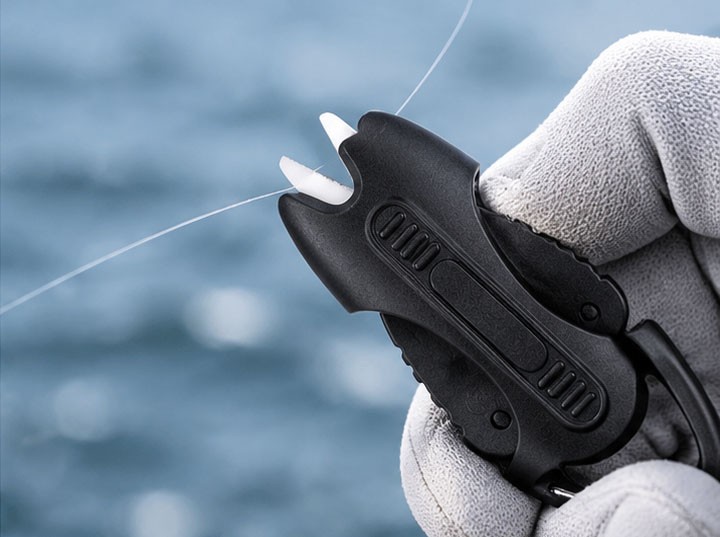
Some ceramic scissors models have a serrated section on one side of the blade, while other models may use a different edge configuration. Buyers should verify the actual design of the selected model instead of assuming that every ceramic fishing scissors product has the same blade structure.
It is also useful to record the test results. Photos, short videos, and written feedback can help the manufacturer understand any issues that need attention before bulk production.
2.5 When Should You Approve the Sample for Mass Production?
Sample approval is an important point in the purchasing process. Once the buyer confirms that the sample meets the agreed requirements, it should become the reference for subsequent production.
Before giving final approval, check that the following details have been confirmed:
Final product model and specifications.
Ceramic blade configuration and cutting-edge design.
Handle material and color.
Logo artwork, position, and application method.
Accessories and additional components.
Retail packaging and labeling requirements.
Agreed order quantity and production schedule.
For OEM orders, written confirmation is particularly useful. If the buyer approves one sample but later changes the logo, handle color, or packaging design, additional preparation may be required. These changes can affect both cost and lead time.
A clear approval record helps both parties avoid misunderstandings. It also gives the production team a defined reference when checking whether finished products match the approved specifications.
For larger orders, buyers may also discuss inspection requirements and acceptable quality criteria before production begins. This is more effective than waiting until the finished goods are ready to raise expectations that were never clearly agreed upon.
3. How Long Does Fishing Scissors Production Take?
Production lead time is one of the most important factors when planning a fishing scissors purchase. A manufacturer may have an attractive quotation and a suitable product, but if the order cannot be completed within the required schedule, the buyer may need to reconsider the purchasing plan.
However, there is no single production lead time that applies to every fishing scissors order. Standard products, customized products, and large-volume OEM projects can involve different preparation and manufacturing requirements.
Buyers should also distinguish between production completion, shipment arrangement, and final delivery. These are separate stages, and combining them into one estimated delivery date can create unrealistic expectations.
3.1 Production Lead Time for Standard Fishing Scissors
Standard fishing scissors generally have a more straightforward purchasing process because the product specifications are already established. If the selected model is available in stock, the manufacturer may be able to arrange shipment without waiting for a complete new production cycle.
According to the published product information for MIDDIA's BXJ02 model, available standard designs have a shipment arrangement reference of approximately 7 days, subject to stock availability and order confirmation.
This is useful information for distributors and wholesalers who want to replenish existing inventory or introduce a standard ceramic fishing scissors model without going through a lengthy customization process.
However, buyers should not interpret the 7-day reference as a universal delivery promise. It does not necessarily mean that every order will be manufactured and delivered to its destination within seven days.
Before confirming an order, it is advisable to ask the manufacturer:
Is the required model currently in stock?
Is the requested quantity available?
Does the order require additional assembly or preparation?
How long will packing and shipment arrangements take?
When can the goods realistically be dispatched?
If the requested quantity exceeds available stock, or if the order includes special packaging or branding requirements, additional time may be needed.
3.2 Production Lead Time for Customized OEM Fishing Scissors
Customized fishing scissors orders normally require more preparation than standard products. Even when the basic product model already exists, the manufacturer may need to coordinate several details before production can begin.
For MIDDIA's published product information, customized or large-volume orders have an approximate reference lead time of 30 days. The actual schedule depends on the product requirements, order quantity, materials, and production arrangements.
A typical OEM order may involve the following stages:
1. Product specifications confirmation
The buyer and manufacturer confirm the selected model, blade configuration, handle design, and any other product requirements. This stage is important because unclear specifications can create problems later in production.
2. Logo and appearance confirmation
The buyer provides the logo artwork and confirms its position, size, and application method. If customized handle colors are required, the manufacturer also needs to confirm the available options and preparation requirements.
3. Component and packaging preparation
Depending on the project, materials, accessories, and packaging may need to be prepared separately. Custom printed retail boxes or labels can have different preparation schedules from the scissors themselves.
4. Manufacturing and assembly
The products are manufactured or prepared according to the confirmed specifications. For ceramic fishing scissors, this may involve ceramic blade processing, grinding, component preparation, and final assembly, depending on the selected model and production arrangement.
5. Quality inspection
Finished products are checked against the agreed requirements. Inspection may cover appearance, assembly, cutting performance, branding, and packaging.
6. Final packing and shipment preparation
After inspection, the products are packed and prepared for dispatch according to the agreed shipping arrangement.
Not every OEM project requires the same amount of work at each stage. An order involving an existing model with a logo may be relatively straightforward, while a new product structure or special component may require additional development time.
3.3 What Factors Can Delay Fishing Scissors Production?
Production delays do not always result from manufacturing capacity. In many cases, they happen because important details have not been finalized before the order enters production.
Late confirmation of specifications
If the buyer changes the product model, blade configuration, or handle requirements after the quotation or sample approval stage, the manufacturer may need to revise the production arrangement.
Changes to logo artwork or packaging
Branding and packaging often involve several rounds of confirmation. A revised logo file, changed color, or new packaging layout may require additional preparation.
Special handle color requirements
Custom colors can require separate preparation or material arrangements. If the buyer requests several colors or changes the color after confirmation, the production schedule may be affected.
Raw material and component availability
Some product components or packaging materials may have different procurement schedules. The availability of these materials should be checked before the final production date is agreed upon.
Large order quantities
A larger order may require more manufacturing, assembly, and inspection time. Buyers should not assume that the production period for a small order can be applied directly to a substantially larger quantity.
Changes after sample approval
Once a sample has been approved, it should serve as the production reference. Any subsequent changes should be discussed immediately because they may affect materials, processing, quality checks, and the agreed completion date.
Additional inspection requirements
Some buyers require specific testing, inspection records, or additional packaging checks. These requirements should be communicated before production rather than introduced at the final stage.
The best way to reduce these risks is to confirm the product specifications, customization details, order quantity, and delivery expectations before production starts.
3.4 How to Plan Your Order Around a Product Launch Date
For a brand launching a new fishing scissors product, the production date is only one part of the overall schedule. The buyer also needs time for sample evaluation, product photography, listing preparation, shipping, and inventory receiving.
Amazon sellers, for example, may need the products to arrive before a planned listing launch or promotional period. Distributors may need inventory before the local fishing season begins. A fishing tackle brand introducing a new product line may also need time to prepare catalogs and marketing materials.
A practical purchasing schedule should account for the following stages:
Sample evaluation: Allow sufficient time to receive, inspect, and test the product.
Customization confirmation: Finalize logos, colors, specifications, and packaging.
Mass production: Confirm the manufacturing schedule according to the actual order quantity.
Quality inspection: Allow time for inspection and any necessary corrections.
International shipping: Consider the selected shipping method and destination.
Customs and local delivery: Include time for import clearance and final transportation.
Schedule buffer: Keep some additional time for unexpected changes or logistics delays.
For international buyers, it is particularly important to ask the manufacturer for a realistic estimated dispatch date rather than relying only on a general production lead time.
If a product launch has a fixed date, share that date with the manufacturer when requesting a quotation. This gives both parties an opportunity to evaluate whether the proposed product configuration, sampling process, and production schedule are realistic.