Choosing a fishing scissors OEM manufacturer is not simply a matter of finding a factory that can produce a pair of scissors at the lowest price. For fishing tackle brands, distributors, wholesalers, and online sellers, the right supplier needs to deliver a product that performs as expected, fits the target market, supports the brand’s requirements, and can be supplied consistently as orders grow.
This becomes particularly important when sourcing ceramic fishing scissors. Blade material, edge finishing, handle design, assembly quality, and cutting performance can all affect the user experience. A product may look good in a catalog but still disappoint customers if it struggles with braided fishing line, feels uncomfortable in the hand, or arrives with inconsistent quality across different batches.
Before placing a bulk order, buyers should understand what an OEM manufacturer can actually provide, which specifications need to be confirmed, and how to evaluate samples before committing to production. This guide explains the main factors to consider when sourcing fishing scissors, from manufacturing capabilities and customization options to minimum order quantities, quality control, and quotation requirements.
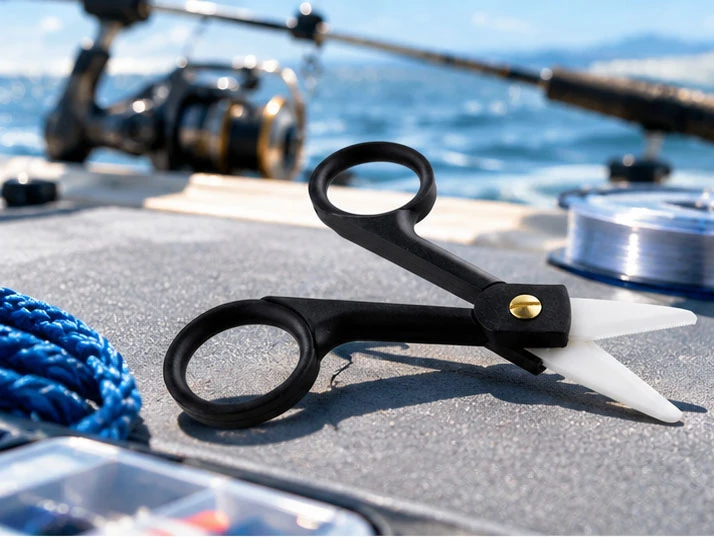
An OEM fishing scissors manufacturer produces fishing scissors according to agreed product specifications and customer requirements. Depending on the supplier and the project, this may involve selecting an existing model, adding private-label branding, adjusting selected product features, or developing a more customized design.
For buyers, the important question is not whether a supplier uses the terms OEM, ODM, or private label. It is whether the supplier can clearly explain the available services, identify technical limitations, and deliver the agreed product within the required budget and timeline.
Established fishing tackle brands often have a clear idea of the product they want to sell. They may already know the target customer, preferred handle design, blade material, packaging style, and expected retail price.
In this situation, an OEM project usually starts with a defined product specification. The manufacturer evaluates whether an existing model can meet those requirements and identifies any modifications that may be necessary.
For example, a brand may want to introduce ceramic fishing scissors for anglers who regularly use braided PE line. The project could involve confirming the blade configuration, selecting an appropriate handle design, adding the brand logo, and preparing retail packaging. Before production, the buyer and manufacturer should agree on the sample, specifications, and acceptance criteria.
This approach can reduce unnecessary development work, particularly when the requirements can be met by an existing product platform.
Private-label sourcing is often a practical option for distributors, wholesalers, Amazon sellers, and other e-commerce businesses that want to build a recognizable product line without developing an entirely new design.
Depending on the model, customization may include:
Adding a company logo to the product or packaging.
Selecting from available handle colors or finishes.
Choosing compatible accessories and product configurations.
Developing branded retail boxes, packaging cards, or labels.
Preparing product information for the intended sales channel.
The main advantage is that buyers can focus on product positioning, branding, and distribution while starting from an existing design. However, not every option is available for every model, and custom packaging may have a separate minimum order quantity.
Before requesting a quotation, buyers should distinguish between options that are already available and changes that require additional development. This simple step can prevent misunderstandings about cost and delivery time.
ODM generally involves a greater level of product development than private labeling an existing model. A buyer may want a different handle shape, a new blade configuration, a modified size, or a product designed for a specific fishing application.
These changes need to be evaluated individually. Altering the blade geometry, for example, may affect cutting performance, manufacturing complexity, and the way the product should be tested. A change to the handle or assembly structure may also influence durability and user safety.
Custom development can help a brand differentiate its products, but it may require engineering work, additional sampling, tooling, and a longer development schedule. Buyers should discuss these factors before assuming that a custom design can be produced at the same cost and lead time as an existing model.
Several suppliers may offer similar-looking fishing scissors. The difference often becomes clearer when buyers ask detailed questions about materials, manufacturing processes, customization, testing, and repeat orders.
The following criteria provide a practical starting point for evaluating a fishing scissors OEM manufacturer.
A supplier that understands fishing scissors should be able to discuss more than the product’s appearance. It should understand the intended application, the characteristics of different fishing lines, and the manufacturing details that affect cutting performance.
For ceramic fishing scissors, it is useful to ask about the blade material and its processing requirements. Zirconia ceramic products may involve several manufacturing stages, including powder preparation, forming, sintering, grinding, edge finishing, and inspection. The exact process depends on the product design and manufacturing method.
Buyers do not necessarily need to understand every production detail themselves. However, the manufacturer should be able to explain which stages influence the finished product and how relevant characteristics are checked.
It is also worth discussing the intended fishing-line applications. Braided PE line, nylon monofilament, and fluorocarbon line have different physical characteristics. A supplier should not assume that one blade design will deliver identical results with every line type and diameter.
Ask the manufacturer which existing models are suitable for your application, what testing is available, and whether the proposed product can be evaluated using the actual fishing lines your customers use.
Blade material is an important part of the purchasing decision, but it should not be evaluated in isolation. The cutting edge, blade alignment, finishing quality, and overall construction also influence how fishing scissors perform.
When comparing ceramic fishing scissors, buyers should look beyond general descriptions such as “sharp blade” or “long-lasting cutting performance.” Those phrases do not explain how the product behaves under actual use.
A more useful evaluation considers several questions:
Does the blade cut the intended fishing line cleanly?
Does braided line tend to slip between the cutting edges?
Is the cutting action consistent across repeated tests?
Are the blade edges properly finished, without visible chips or damage?
Does the blade alignment remain consistent during normal operation?
Are the results acceptable across the line diameters specified for the product?
Blade geometry matters because different cutting-edge designs interact with fishing lines in different ways. A smooth edge and a serrated edge, for example, may behave differently when cutting flexible braided fibers. The best choice depends on the intended application and should be confirmed through testing.
Ceramic hardness can contribute to wear resistance, but hardness alone does not guarantee the best cutting result. Ceramic materials also have different impact characteristics from many metals, so edge design, handling, and protection against accidental impacts should be considered.
For an OEM project, the goal is not simply to select the hardest blade material. It is to choose a product design that offers the right balance of cutting performance, durability, handling, and cost for the target market.
Fishing scissors are used in different environments and by anglers with different preferences. A compact cutter for a tackle box may have different requirements from a tool designed for frequent use on a fishing boat.
When reviewing an OEM manufacturer's product range, consider the following features:
Size and portability: Compact products are convenient for tackle boxes, fishing vests, and other portable storage.
Handle design: The shape and surface of the handle influence grip, comfort, and ease of operation.
Blade configuration: Different cutting-edge designs may suit different line types and user preferences.
Accessories: Clips, lanyards, protective covers, and other features may improve convenience, depending on the product.
Intended environment: Boat fishing, shore fishing, freshwater fishing, and saltwater fishing can involve different requirements for portability, maintenance, and corrosion resistance.
These features should be selected according to the product's intended use rather than added simply because they appear attractive in a catalog.
For example, a distributor targeting saltwater anglers may place greater emphasis on corrosion resistance across the complete product, while an online brand selling compact tackle accessories may prioritize portability, packaging, and ease of use.
Buyers should also confirm whether a feature is part of the existing model or requires a design change. Even a relatively small modification can affect the assembly process, sampling requirements, or final quotation.
Customization is often one of the main reasons a brand chooses an OEM fishing scissors manufacturer. However, customization capability should be assessed in practical terms. Buyers need to know which changes are available, what information they must provide, and whether the proposed design can be produced consistently.
Common areas to discuss include:
Logo and branding: Confirm the available logo placement, marking method, artwork format, and any related setup requirements.
Handle color: Ask which colors are available for the selected model and whether a custom color requires a separate production quantity.
Product configuration: Confirm the available blade designs, sizes, and accessories.
Retail packaging: Discuss packaging cards, boxes, labels, barcodes, and any required product information.
Product modifications: Clarify whether requested changes can be made to an existing design or require engineering development.
For online sellers, packaging deserves particular attention. The product itself may be technically suitable, but the packaging still needs to meet the requirements of the sales channel, protect the item during shipping, and present the brand clearly.
Artwork approval should take place before production. Buyers should check logo positioning, spelling, colors, dimensions, and product information rather than relying on an informal description of the finished packaging.
It is equally important to confirm what happens after the first order. If the product is successful, can the same approved specifications, branding, and packaging be used for repeat orders? Consistency between the initial order and future replenishment is a significant part of building a reliable product line.
A sample can look excellent while a later shipment presents problems. This is why quality control should be discussed before the first bulk order, not after a problem appears.
For fishing scissors, quality checks may include incoming material verification, blade appearance, edge condition, dimensions, assembly, functional performance, and packaging accuracy. The appropriate inspection plan depends on the product design and the buyer's requirements.
For ceramic models, particular attention should be paid to visible chips, cracks, edge damage, blade alignment, and the fit between the blade and the handle. Functional testing should also reflect the intended use rather than relying on visual inspection alone.
Buyers should ask the supplier how the approved sample will be used as a reference for mass production. It is helpful to document the relevant specifications and define acceptable results before placing the order.
For example, if a product is intended primarily for braided PE line, the buyer and manufacturer should agree on the line types, diameters, and test conditions used to evaluate cutting performance. The results can then be assessed against an agreed acceptance standard.
It is also worth asking how the manufacturer handles nonconforming products. A clear process for identifying defects, investigating their causes, and agreeing on corrective action is more useful than a general promise that every product will be perfect.
Minimum order quantity (MOQ) is an important consideration, especially for brands testing a new product or distributors adding another item to an existing range.
The MOQ for fishing scissors may depend on whether the buyer is ordering an existing model, requesting branding changes, selecting a custom color, or developing a new design. Packaging may also have its own minimum quantity, separate from the product itself.
Before comparing suppliers, confirm the MOQ for the exact model and customization package you intend to order. Do not assume that the MOQ listed for a standard product automatically applies to a fully customized version.
Production capacity needs similar clarification. A factory's overall output does not necessarily tell you how quickly a specific model can be produced. Buyers should ask about the availability of the selected product, relevant component supply, packaging preparation, and the expected schedule for their order.
Lead time should be discussed as a sequence of stages rather than a single number. Sample preparation, sample revisions, artwork approval, production, inspection, and shipping may all affect the final delivery date.
For a first order, the time required to confirm the product specification can be just as important as the manufacturing time itself. Providing complete requirements early helps both sides identify potential delays before they affect the launch schedule.
Clear communication is particularly important when sourcing customized products from overseas. A supplier may have a suitable product, but the project can still become difficult if specifications, artwork changes, and delivery expectations are not documented properly.
During the evaluation stage, notice how the supplier responds to technical questions. Does it explain which options are available? Can it identify limitations? Does it ask for the information needed to prepare an accurate quotation?
These details provide a useful indication of how the project may be managed after an order is placed.
Buyers should also clarify the documentation available for their project, including product specifications, approved artwork, sample confirmation, inspection requirements, and order details. The exact documentation will depend on the product and the agreement between the parties.
Finally, discuss the process for handling quality complaints, replacement requests, or specification discrepancies. No manufacturing process should be evaluated on the assumption that problems can never occur. A practical supplier relationship includes a clear method for addressing them when they do.
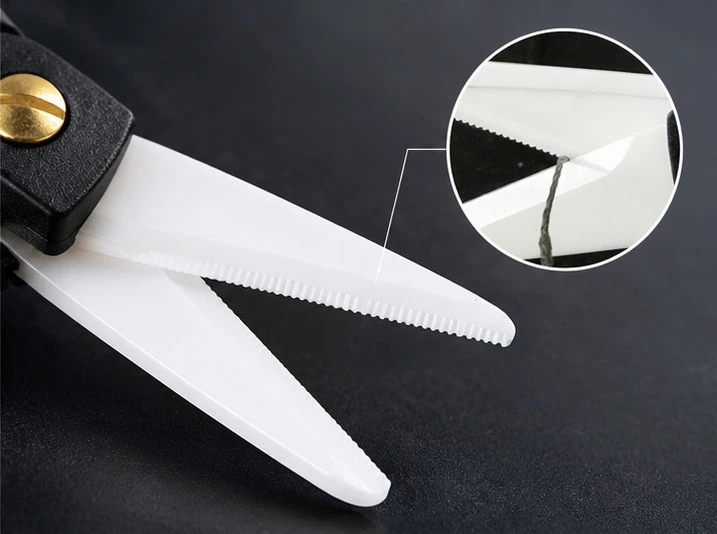
For buyers considering ceramic fishing scissors, the evaluation should focus on how the material performs within the complete product. Zirconia ceramic blades offer characteristics that can be useful in fishing applications, but the finished scissors still need to meet the buyer's requirements for cutting, handling, durability, and overall construction.
Zirconia ceramic and stainless steel have different material properties, so the choice depends on the product's intended use.
Ceramic blades are valued for their hardness and resistance to rust. These characteristics can make them attractive for fishing tools exposed to moisture and saltwater. Stainless steel blades, on the other hand, offer different mechanical properties and may be more suitable for designs that require greater tolerance to impact or particular forms of blade construction.
Neither material should be selected on a single claim alone. Buyers should consider the blade design, the complete tool's construction, the expected maintenance requirements, and the types of fishing line the scissors are intended to cut.
It is also important to distinguish between a rust-resistant blade and a corrosion-resistant complete product. Pins, springs, clips, fasteners, and other metal components may still require attention, even when the blade itself is ceramic.
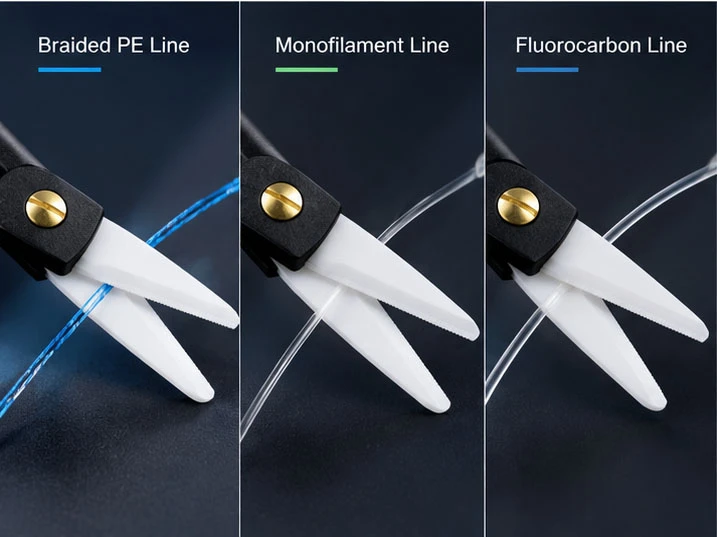
Fishing line is not a single, uniform material. Braided PE line consists of multiple fibers, while monofilament and fluorocarbon lines have different material characteristics. These differences can influence how a line behaves when it meets a cutting edge.
For braided PE line, buyers should check whether the scissors cut consistently without excessive slipping. For monofilament, the objective is a clean cut without unacceptable crushing or deformation. Fluorocarbon should also be tested under the intended conditions rather than assumed to behave exactly like nylon monofilament.
A useful sample evaluation should specify the actual line types and diameters relevant to the target market. Buyers can then compare cutting consistency, ease of operation, and the condition of the cut end.
Where repeatability matters, tests should use consistent conditions and a clearly defined method. This makes it easier to compare samples from different manufacturers and reduces the risk of choosing a product based on a single successful cut.
Saltwater fishing creates additional considerations for product selection. Although a ceramic blade does not rust in the same way as a conventional metal blade, the remaining components of the scissors may still be exposed to corrosion.
Buyers should therefore evaluate the complete product, including metal joints, springs, clips, and fasteners. They should also confirm the manufacturer's maintenance recommendations and request relevant test information when corrosion performance is an important purchasing requirement.
For brands selling into demanding marine environments, clear product specifications are preferable to broad claims such as “100% corrosion-proof.” The objective is to understand how the product is expected to perform under its intended conditions and what evidence supports that expectation.
Cutting performance is only one part of product reliability. Buyers should also examine the condition of the ceramic edge, the alignment of the blades, and the stability of the assembly during normal operation.
Because ceramic materials can be vulnerable to certain impact conditions, the design should be assessed for the way the tool is handled, stored, and protected. Packaging and protective features may also matter when products are transported in bulk or sold as portable fishing accessories.
During sample evaluation, check for visible chips or cracks, uncomfortable handling, loose components, and any other defects that could affect normal use. Where appropriate, agree on functional and safety-related acceptance criteria with the manufacturer before approving the sample.
For an OEM buyer, the aim is to establish a repeatable standard for the finished product. A suitable manufacturer should be able to discuss how the selected design, manufacturing process, and inspection requirements work together to meet that standard.
Once a buyer has identified a suitable fishing scissors model, the next question is how well it can be adapted to the brand's requirements. Customization can make a product more recognizable and help it fit a particular market, but not every modification has the same cost or production implications.
For most projects, it makes sense to start by reviewing the manufacturer's existing models and available options. This gives the buyer a clearer idea of what can be achieved without unnecessary product development.
Logo customization is often one of the first requirements discussed in an OEM fishing scissors project. Depending on the product design, branding may be applied to the handle, packaging, label, or other suitable areas.
Before production, buyers should provide the logo artwork in an appropriate format and confirm the intended size, position, color, and application method. A digital mockup is useful, but the final appearance should also be checked on a physical sample when branding is an important part of the product presentation.
Handle color can be another way to distinguish a private-label product. However, available colors may depend on the handle material, existing production options, and order quantity. A custom color may involve additional setup or a separate minimum order quantity.
For brands planning to sell several fishing accessories under the same name, consistency matters. Logo placement, color selection, packaging design, and product information should work together rather than being treated as separate decisions.
Some buyers need more than a logo or color change. They may want a particular cutting-edge configuration, a different product size, a revised handle shape, or accessories suited to a specific fishing application.
These requests should be reviewed individually. A change to the blade geometry can influence cutting performance, while a modification to the handle may affect ergonomics, assembly, or product durability. Even a seemingly small design change may require a new sample before it can be approved.
When discussing a custom fishing scissors project, buyers should explain what problem the modification is intended to solve. For example, a request for a more compact design may be related to storage in a fishing vest, while a different cutting-edge configuration may be intended for a particular type of braided line.
This information helps the manufacturer evaluate whether an existing model can meet the requirement or whether a more substantial development process is necessary.
Packaging deserves attention early in the sourcing process, particularly for distributors, retail brands, and e-commerce sellers. The package protects the product, communicates essential information, and influences how the item is presented to customers.
Depending on the product and supplier, buyers may be able to discuss custom packaging cards, retail boxes, labels, barcodes, and printed product information.
Several details should be confirmed before packaging production begins:
Packaging dimensions and material requirements.
Logo placement, artwork, colors, and spelling.
Product name, model number, and other required information.
Barcode and labeling requirements for the intended sales channel.
Protection against movement, scratches, or damage during shipping.
Packaging MOQ and whether it differs from the product MOQ.
Online sellers should also consider how the packaged product will be handled during fulfillment and delivery. A package that looks attractive in a product photograph may not provide enough protection during transportation.
It is advisable to approve the final artwork and, where necessary, a physical packaging sample before authorizing mass production.
One of the most useful decisions a buyer can make is whether to start with an existing model or develop a more customized product.
An existing model with private-label branding is often a practical choice when the product already meets the intended application and the main requirements concern appearance, packaging, or brand identity. It can also be a sensible way to test market demand before investing in a more distinctive design.
Fully custom development may be more appropriate when the product needs a different structure, specific dimensions, or features that are not available in the existing range. However, the additional development work should have a clear commercial purpose.
For a new product launch, buyers should compare the expected benefit of customization against its cost, development time, and production requirements. A unique feature is only valuable if it improves the product or helps the brand serve its target customers.
Commercial terms can determine whether an otherwise suitable product is viable for a buyer. Before comparing quotations, it is important to understand what the quoted price includes and which conditions apply to the selected model.
The minimum order quantity for fishing scissors can vary according to the product, customization requirements, and packaging arrangement. An existing model with standard packaging may have different purchasing conditions from a product that requires a custom color, special accessories, or new tooling.
For example, MIDDIA lists an MOQ of 100 pieces and a sample lead time of 2–3 days for its BXJ02 ceramic fishing scissors product page. These are model-specific published details, not a universal MOQ or sampling commitment for every MIDDIA product or custom project. Buyers should confirm the current terms for the exact model and configuration they intend to purchase.
When requesting a quotation, ask the supplier to clarify:
The MOQ for the selected product model.
Whether different colors or configurations have separate minimum quantities.
Whether logo customization changes the MOQ.
Whether custom packaging has a separate minimum order quantity.
Whether the quoted quantity can be divided across different models or variants.
Whether repeat orders are subject to the same purchasing conditions.
These questions are particularly important for smaller brands and online sellers. A product may have an attractive unit price, but the total commitment can be less suitable if the required quantity is too large for the first launch.
For most OEM projects, a sample is one of the most useful ways to reduce purchasing uncertainty. Product photographs and specifications provide important information, but they cannot fully demonstrate how the finished scissors feel and perform during use.
Before approving a sample, buyers should prepare a short list of the characteristics they need to evaluate.
Cutting performance: Test the line types and diameters relevant to the intended application.
Handling: Check grip, comfort, opening and closing action, and ease of use.
Product construction: Inspect blade alignment, assembly, handle integrity, and visible defects.
Accessories: Check the fit and function of clips, covers, lanyards, or other supplied components.
Branding: Review logo position, appearance, and legibility.
Packaging: Confirm dimensions, artwork, protection, and the overall presentation.
If the first sample does not meet the requirements, provide specific feedback rather than a general request to improve the product. Identifying the exact issue makes it easier to determine whether a modification is possible and whether another sample is needed.
Once the sample is approved, document the agreed specifications and retain a reference record. The production order should clearly identify the approved model, customization details, packaging, and relevant acceptance criteria.
Sample approval does not remove the need for batch inspection. It establishes the standard against which the production order can be evaluated.
The unit price is influenced by more than the blade material. Product design, processing requirements, order quantity, accessories, customization, and packaging can all contribute to the final quotation.
For ceramic fishing scissors, buyers may need to consider the selected model, blade configuration, handle materials, finishing requirements, and any additional product features. Custom logos, special colors, packaging artwork, and new tooling may introduce separate costs.
Shipping, packing arrangements, and the agreed delivery terms also affect the total purchasing cost. For an accurate comparison, buyers should make sure that competing quotations cover the same product and commercial scope.
A useful comparison includes:
Product model, material, and configuration.
Order quantity and applicable price breaks.
Logo, color, and accessory requirements.
Packaging type and packaging quantity.
Sampling, setup, or tooling charges, where applicable.
Inspection requirements and any related costs.
Shipping arrangements and delivery terms.
The lowest unit price is not always the lowest total cost. If a cheaper product does not meet the required cutting performance, requires additional packaging work, or creates avoidable quality problems, the initial saving may not translate into a better purchasing outcome.
For this reason, buyers should evaluate quotations alongside samples, specifications, and the supplier's ability to meet the requirements consistently.
A production schedule should cover the entire project, from the first discussion to shipment. This is especially important for private-label orders, where artwork approval and packaging preparation can affect the launch date.
A typical project may involve the following stages:
Submit the product requirements and request a quotation.
Confirm the model, customization options, MOQ, and commercial terms.
Prepare and evaluate product samples.
Finalize product specifications and approve the sample.
Approve logo artwork and packaging files.
Begin mass production according to the agreed schedule.
Complete the required inspection and packaging checks.
Arrange shipment and confirm the delivery plan.
The actual sequence can vary depending on product availability and the level of customization. Buyers should ask the manufacturer to confirm the expected time for each relevant stage instead of relying on an estimated production period that excludes sampling or packaging.
It is also useful to agree on how specification changes will be handled after sample approval. Changes made late in the process can affect materials, production arrangements, and delivery dates.
Quality control should be part of the purchasing agreement rather than an assumption based on the appearance of a sample. Before placing a bulk order, buyers should establish what the finished product must meet and how compliance will be assessed.
A written specification reduces the risk of different interpretations between the buyer and the manufacturer. It should describe the agreed product clearly enough for both parties to identify the required version.
Depending on the project, the specification may include:
Product model, dimensions, and relevant tolerances.
Blade material and cutting-edge configuration.
Handle material, color, and design.
Logo placement and branding requirements.
Accessories and assembly requirements.
Packaging artwork, labeling, and barcode details.
Intended fishing-line applications and functional requirements.
Visual inspection criteria and agreed acceptance standards.
Where cutting performance is important, the specification or accompanying test procedure should identify the line types, relevant diameters, and evaluation method. General descriptions such as “sharp enough for fishing line” are difficult to assess consistently.
The required level of detail depends on the product. The objective is to document the characteristics that matter to the buyer without creating unnecessary complexity.
The approved sample should serve as a reference for the production order. Buyers should retain the relevant product details and ensure that the sample approval covers any custom features, including the logo, color, accessories, and packaging.
If a change is required after approval, both sides should clarify whether it affects the existing specification and whether another sample is necessary. This is particularly important when the change could influence cutting performance, assembly, or product appearance.
A reference sample is most useful when it is supported by written requirements. It should not replace dimensional checks or functional tests where those are needed to verify product consistency.
Inspection requirements should reflect the product's intended application and the buyer's expectations. For fishing scissors, relevant checks may include blade condition, alignment, assembly, cutting performance, handling, accessories, and packaging.
For a ceramic model, buyers may want to identify visible chips, cracks, edge damage, or other defects that could affect performance or safe use. The complete product should also be checked for loose components, poor fit, and other assembly issues.
Where appropriate, a written inspection plan can specify sampling methods, test conditions, acceptable defect levels, and the procedure for handling nonconforming items. These requirements should be agreed with the manufacturer before production rather than introduced after the goods are completed.
Buyers should avoid assuming that a supplier follows a particular inspection frequency or guarantees a specific defect rate unless that commitment has been confirmed. The useful question is what inspection process applies to the actual product and order.
Before selecting a long-term supplier, ask what inspection records can be provided for the project. Depending on the order, these may include dimensional checks, visual inspection results, functional test records, or final inspection documentation.
It is also important to understand how problems are handled. If a batch contains products that do not meet the agreed requirements, the parties should have a clear process for identifying the affected items, investigating the cause, and agreeing on corrective action.
For distributors and established brands, this process matters beyond the first shipment. A supplier that communicates clearly about quality issues and supports a documented resolution process is easier to work with over multiple orders.
Many sourcing problems begin with assumptions that could have been clarified before the order was placed. The following mistakes are worth avoiding when evaluating fishing scissors suppliers.
Price is important, but it should be compared alongside product specifications, sample results, customization costs, packaging, and delivery requirements. Two quotations may look similar while covering different products or different levels of service.
Ask for a clear breakdown of the quotation and compare suppliers against the same requirements. This provides a more useful basis for making a purchasing decision.
A product photograph cannot confirm cutting performance, comfort, blade alignment, or assembly quality. Skipping sample evaluation may save time at the beginning, but it leaves important questions unanswered before the buyer commits to a larger order.
Whenever possible, test the actual model using the fishing lines and conditions relevant to the target market. Record the results and clarify any changes before approving production.
Not every supplier can implement every requested change, and some modifications may require additional development. A logo application may be straightforward, while a new blade configuration or handle structure can require more extensive evaluation.
Separate standard options from custom development in the initial discussion. Confirm the cost, MOQ, sample requirements, and expected timeline for each nonstandard feature.
Packaging may involve a separate order quantity or setup cost. Buyers who consider only the product MOQ may discover that the complete project requires a larger commitment than expected.
It is also worth asking whether packaging files and approved product specifications can be reused for future orders, subject to the supplier's production arrangements. This can make replenishment planning easier.
If the buyer and manufacturer have different ideas about what constitutes an acceptable product, disputes may arise after production. This is especially relevant to functional characteristics such as cutting performance, where subjective descriptions can lead to inconsistent expectations.
Define the important specifications and inspection criteria before ordering. For customized products, written confirmation of the final sample, branding, and packaging is particularly useful.
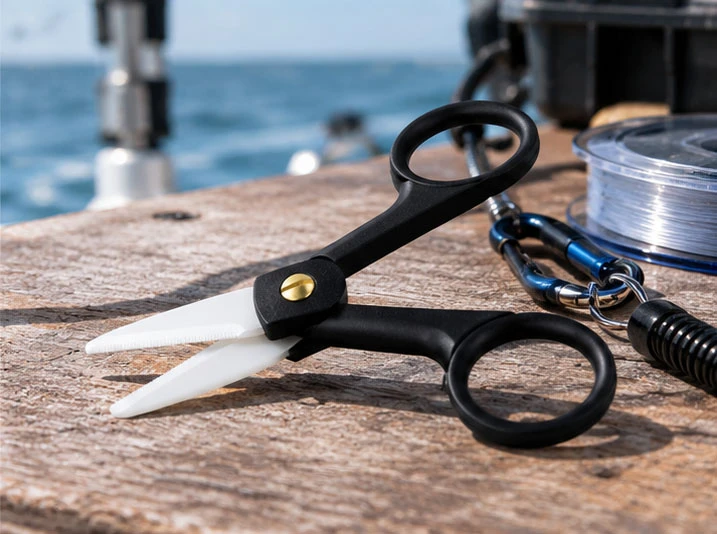
Before choosing a supplier, review the following points. They provide a practical framework for comparing manufacturers and identifying questions that still need answers.
Does the manufacturer have relevant experience with fishing scissors or ceramic cutting tools?
Can it explain the available blade materials, configurations, and intended applications?
Can it provide a sample for evaluation before bulk production?
Are the available logo, color, accessory, and packaging options clearly defined?
Can the product specifications and acceptance criteria be documented?
Are product MOQ and packaging MOQ confirmed separately where necessary?
Are sampling and production timelines realistic for the selected model?
Can the supplier explain its inspection process and how quality issues are handled?
Can the approved specifications be used as a reference for repeat orders?
Does the quotation clearly identify the product, customization, packaging, and delivery scope?
Not every project requires the same level of documentation or customization. A buyer ordering a standard model with a logo may need a simpler process than a brand developing a new product. The important point is that the supplier's capabilities and the buyer's requirements should be aligned before a commercial commitment is made.
If a manufacturer cannot provide clear answers to basic questions about the product, sampling, or production requirements, it is worth resolving those gaps before proceeding.
A well-prepared request for quotation (RFQ) helps the manufacturer understand the project and provide a more relevant response. It also reduces the need for repeated clarification, especially when the buyer is comparing several suppliers.
Buyers do not need to prepare a complicated technical document for every inquiry. In many cases, a concise description of the intended product, target market, customization requirements, and estimated order quantity is enough to begin the discussion.
Where possible, include the following information:
Product type: Ceramic fishing scissors, braided-line cutter, or another specific product.
Target application: Braided PE, monofilament, fluorocarbon, or a combination of line types.
Product reference: An existing model number, product photograph, drawing, or reference sample.
Customization: Logo, handle color, accessories, and any required product modifications.
Packaging: Retail box, packaging card, barcode, labeling, and other presentation requirements.
Estimated quantity: Expected first-order volume and, if known, anticipated reorder quantities.
Target market: The country or region where the product will be sold.
Sample requirements: Number of samples and the characteristics that need to be evaluated.
Timeline: Target dates for sample approval, production, or delivery.
If some details have not been decided, buyers can still begin with an inquiry. Explain what is already known and ask the manufacturer which decisions need to be made before a firm quotation can be prepared.
The next step should be a review of the project requirements. The manufacturer can then determine whether an existing model is suitable, identify available customization options, and clarify any technical questions that affect the quotation.
Once the product and commercial requirements are understood, the parties can discuss sampling, branding, packaging, MOQ, pricing, and production timing. If the project involves significant modifications, additional evaluation may be necessary before the final cost and schedule can be confirmed.
After sample approval, the final product specification and relevant artwork should be documented. This creates a clearer basis for production and helps both sides confirm that the delivered goods match the agreed requirements.
MIDDIA focuses on ceramic cutting tools and offers a product range that includes ceramic fishing scissors. For brands, distributors, wholesalers, and sourcing teams considering an OEM or private-label project, the starting point is to identify the suitable model and clarify the required product specifications.
Depending on the selected product and project requirements, discussions may cover logo branding, available product configurations, packaging, sample evaluation, and bulk-order arrangements. The specific options, MOQ, and lead time should be confirmed for the intended model rather than assumed to be identical across the product range.
When contacting MIDDIA, provide your target application, estimated order quantity, preferred product or reference image, and any customization requirements you already have. This information helps establish whether an existing model is suitable and which details need further discussion.
Planning Your Own Fishing Scissors Product Line?
Tell MIDDIA about your target market, fishing-line applications, branding preferences, packaging requirements, and estimated order quantity. The team can discuss suitable product options, sample evaluation, and the next steps for your OEM project.
The MOQ depends on the selected model, order quantity, branding requirements, and packaging arrangement. Existing products may have different minimum quantities from products that require custom colors, new components, or more extensive development. Confirm the MOQ for the exact configuration before placing an order.
Logo customization may be available for selected models, depending on the product design and marking method. Buyers should confirm the available logo placement, artwork requirements, MOQ, and any additional setup costs with the manufacturer.
Some manufacturers offer handle color options and customized retail packaging. The available choices depend on the product model, materials, and production requirements. Custom colors or packaging may involve additional costs or separate minimum quantities.
Yes, sample evaluation is a useful way to verify the product before committing to a bulk order. Buyers should assess cutting performance using their intended fishing lines, as well as handling, assembly, accessories, branding, and packaging. Important acceptance criteria should be agreed before mass production.
Compare quotations using the same product specifications, order quantity, customization requirements, packaging scope, inspection criteria, and delivery terms. A low unit price may not represent the best overall value if the product does not meet the required performance or supply conditions.
OEM generally focuses on producing a product according to agreed specifications, while ODM may involve more extensive design and product development. Actual service definitions vary by supplier, so buyers should confirm which design, engineering, and customization services are included in the proposed project.
Ceramic blades offer resistance to rust, which can be useful for saltwater fishing tools. However, other components, including springs, pins, clips, and fasteners, may still be vulnerable to corrosion. Buyers should evaluate the complete product and follow the manufacturer's maintenance recommendations.
Choosing a fishing scissors OEM manufacturer requires more than comparing product photographs and unit prices. Buyers need to understand the supplier's manufacturing capabilities, confirm that the product suits the intended fishing-line applications, and establish clear requirements for customization, sampling, quality control, and delivery.
For ceramic fishing scissors, particular attention should be paid to blade condition, cutting performance, assembly quality, and the requirements of the complete product in its intended environment. A carefully evaluated sample and a written specification can help reduce uncertainty before a bulk order is placed.
For brands and distributors planning a new fishing scissors product line, starting with a suitable existing model may be the most practical route. More extensive customization can be considered when it serves a clear product or market objective.
The most useful supplier relationship is one in which product requirements are understood, limitations are discussed openly, and the approved specifications provide a clear reference for future orders. With these points established early, buyers can make more informed sourcing decisions and build a more reliable foundation for their fishing tackle business.
Looking for an OEM Ceramic Fishing Scissors Manufacturer?
Choosing the right OEM supplier involves more than comparing unit prices. Blade material, cutting performance, manufacturing consistency, customization capabilities, and quality control all matter when developing fishing scissors under your own brand.
MIDDIA specializes in ceramic manufacturing and supports OEM/ODM cooperation for fishing tackle brands, distributors, wholesalers, and private-label businesses. Contact our team to discuss zirconia ceramic blade options, handle colors, logo branding, retail packaging, product samples, and bulk production requirements.
Copyright © 2011-2026 custom ceramic blades, ceramic fishing scissors, ceramic box cutter, baby food scissors, zirconia blade manufacturer, MIDDIA MIDDIA. All Rights Reserved. XML Map
