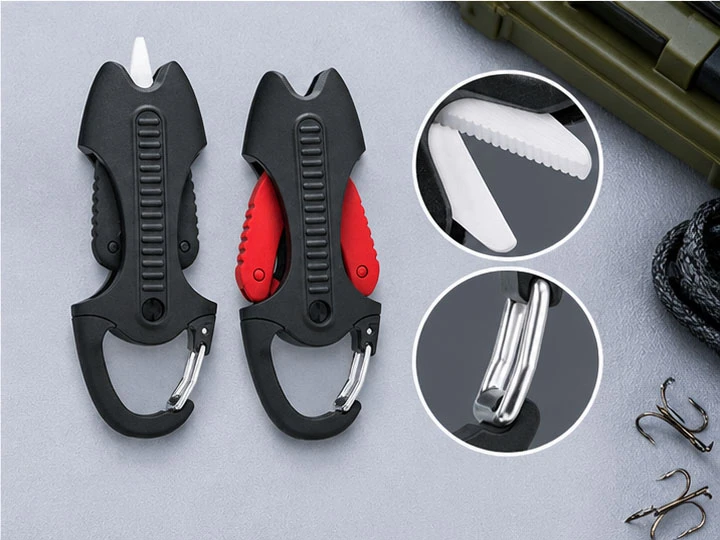
Fishing scissors may be a small part of a saltwater fishing setup, but the right pair can make everyday tasks much easier. Cutting braided fishing line, trimming a fluorocarbon leader, removing tag ends after tying a knot, or preparing tackle between casts all require a tool that works reliably in wet conditions. When the scissors are difficult to handle or no longer cut cleanly, even a simple rigging task can become frustrating.
The challenge is that saltwater fishing does not happen in just one environment. A boat angler may need quick access to scissors while working around a crowded deck. A kayak angler has limited storage space and needs to keep essential gear secure. Shore anglers, meanwhile, often carry their tackle between fishing spots and prefer tools that are compact and easy to maintain.
These differences matter when choosing fishing scissors. Blade material, cutting performance, grip, storage, and corrosion resistance all deserve attention, but not every feature has the same importance for every angler.
Ceramic fishing scissors offer an alternative to conventional steel-bladed designs, particularly for anglers who want a corrosion-resistant cutting edge. However, ceramic is not automatically the best choice for every task. Understanding how the scissors will be used is a better starting point than choosing a product based on material alone.
This guide explains what to look for in fishing scissors for boat, kayak, and shore fishing, compares ceramic and stainless steel options, and outlines the product features worth considering when developing fishing accessories for different markets.
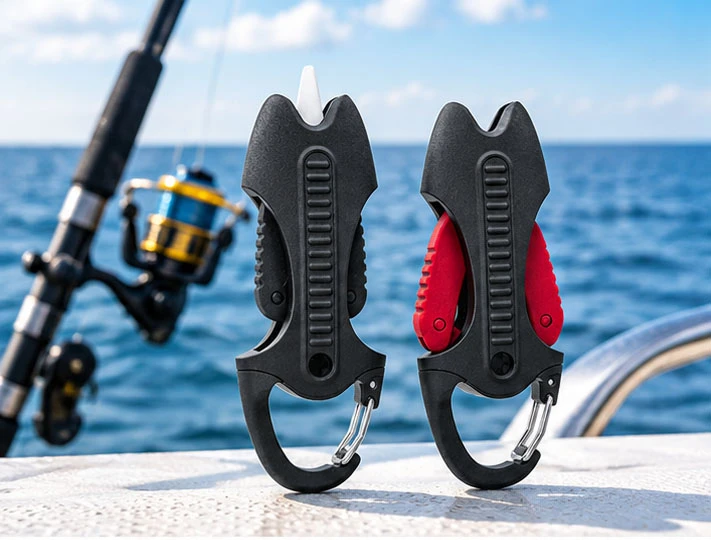
What Makes Fishing Scissors Suitable for Saltwater Use?
Saltwater places particular demands on fishing tools. Scissors may be exposed to sea spray, wet fishing line, damp tackle bags, and repeated contact with salty hands. After a fishing trip, they may be returned to a storage compartment before they have completely dried. Over time, these conditions can affect the cutting edge, pivot, screws, and other metal components.
A suitable pair of saltwater fishing scissors should therefore do more than cut line when new. It should provide dependable cutting performance, remain comfortable to use in wet conditions, and have a design that is practical to clean and maintain.
Clean Cutting for Different Fishing Lines
Not all fishing lines behave the same way under a cutting edge. Braided PE line consists of multiple woven fibers, which can flatten, spread, or slip between poorly matched blades. Monofilament line is more elastic, while fluorocarbon leaders are commonly selected for their abrasion resistance and other properties that make them useful in different fishing situations.
For these materials, cutting performance depends on several factors, including blade sharpness, edge geometry, blade alignment, and the way the two cutting surfaces meet. A well-designed pair of scissors should hold the line securely enough to make a controlled cut instead of pushing it away or leaving loose fibers behind.
Some designs use serrated edges to help engage braided fibers, while others use smooth edges for a different cutting feel. Neither design is universally superior. The best choice depends on the intended line types, the blade geometry, and how the finished product performs in practical testing.
Corrosion Resistance Beyond the Blade
Blade material is an important consideration, but it is only one part of the complete product. Even when a blade is highly resistant to corrosion, a metal pivot, spring, screw, or other exposed component may still require attention after contact with seawater.
Zirconia ceramic blades do not rust in the way steel blades can because ceramic is not an iron-based metal. This makes ceramic an interesting option for fishing accessories intended for regular use around saltwater. Stainless steel remains a practical alternative, but its corrosion resistance depends on the specific alloy, manufacturing quality, and exposure conditions.
It is also worth remembering that corrosion resistance does not eliminate maintenance. Rinsing scissors with fresh water after a saltwater session, removing residue, and allowing the tool to dry can help protect the complete assembly and maintain its performance.
Portability, Grip and Safe Storage
Fishing scissors are often used while the angler is holding another piece of equipment, working with wet line, or standing in a confined space. A comfortable handle and a manageable overall size can make a noticeable difference.
For saltwater fishing, useful design details may include textured handles, a protective sheath, a secure carrying clip, or a lanyard attachment point. These features are especially relevant when the scissors are used on a moving boat or stored on a small kayak.
The blade should also be protected during storage. A compact tool is convenient, but it still needs to be stored in a way that reduces accidental contact with the cutting edge and helps prevent damage from other equipment in the tackle bag.
Choosing Fishing Scissors for Boat Fishing
Boat fishing gives anglers access to a wide range of saltwater species and fishing techniques, but it also creates a working environment where space, movement, and exposure to seawater all affect equipment choices. Fishing scissors may be needed several times during a trip, from trimming braided line to adjusting a leader or preparing a new rig.
Handling Salt Spray and Repeated Wetting
On a boat, scissors may be exposed to sea spray even when they are not being used directly over the water. They may also be placed on a damp surface or returned to a tackle box with salt residue still on the handle and blades.
A corrosion-resistant blade can reduce one common maintenance concern. For ceramic fishing scissors, the zirconia blade itself will not develop the type of rust associated with steel. However, buyers should still examine the pivot construction, fasteners, handle materials, and other components before assuming the entire tool is suitable for long-term marine use.
For anglers who spend long days offshore, a design that is easy to rinse and inspect may be more useful than a product that simply advertises a rust-resistant blade.
Cutting Braid, Leaders and Tag Ends
Boat anglers may work with braided main lines, monofilament, and fluorocarbon leaders during the same trip. The scissors should be matched to these tasks rather than selected on the assumption that every fishing line can be cut equally well by every blade design.
For braided line, the ability of the blades to engage the fibers and produce a clean cut is particularly important. When trimming fluorocarbon or monofilament leaders, blade alignment and the ability to control the cut also matter. The intended line diameter should be considered, especially when the scissors will be used with heavier leaders.
Before selecting a product for regular boat use, test it with the actual lines used by the target anglers. A clean cut on thin braid does not automatically demonstrate that the same scissors will perform well on a substantially thicker leader.
Compact Storage and Quick Access
Boat anglers often need to keep frequently used tools within reach without allowing them to clutter the working area. Scissors that fit neatly into a tackle box, tool pouch, or designated storage compartment can make rigging more convenient.
A carrying clip or protective sheath may be useful, depending on the design. The important point is that the storage method should keep the scissors secure while allowing them to be retrieved without unnecessary effort.
For fishing tackle brands developing products for this market, these details can help distinguish a thoughtfully designed accessory from a generic pair of scissors. Cutting performance remains essential, but convenience during repeated use is also part of the product experience.
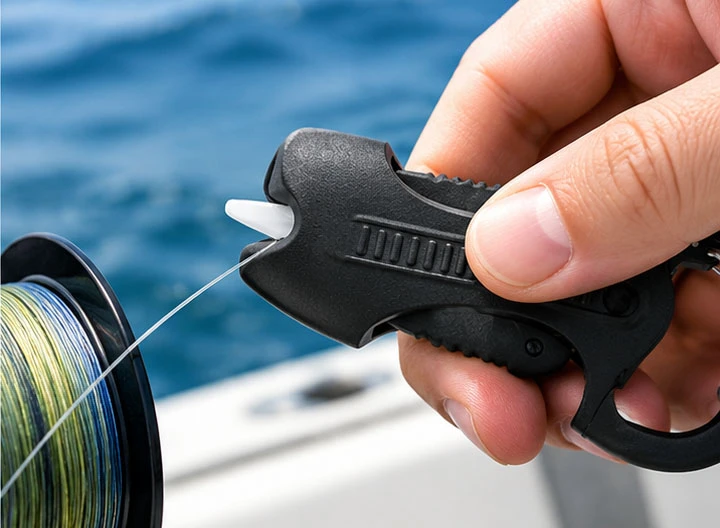
What to Look for in Fishing Scissors for Kayak Fishing
Kayak fishing creates a different set of priorities. Storage space is limited, movement is more restricted, and equipment that might be easy to retrieve on a large boat can be awkward to reach from a seated position. A pair of fishing scissors should be compact enough to fit into the intended storage location and secure enough to remain where the angler expects it to be.
Lightweight Design for Limited Deck Space
Kayak anglers usually have to make deliberate decisions about the equipment they carry. Oversized tools and unnecessary accessories can take up space that would be better used for tackle, safety equipment, or other essentials.
Compact fishing scissors can help keep a small fishing setup organized. However, reducing the overall size should not come at the expense of usable handle space, safe operation, or adequate blade length for the intended line types.
For manufacturers and product developers, the goal is to balance portability with function. A smaller pair of scissors is only an improvement when it remains comfortable to hold and performs the cutting tasks for which it was designed.
Secure Handling and Tool Retention
Wet hands, splashes, and restricted movement make tool retention especially important in kayak fishing. A lanyard attachment point or suitable carrying clip can help reduce the chance of losing the scissors overboard. A secure sheath can also make storage more practical when the tool is not in use.
Handle shape and surface texture deserve attention as well. Anglers may need to make small, precise cuts while managing line with their other hand. A handle that is difficult to grip or awkward to operate can make these routine tasks less convenient.
These features should be evaluated as part of the complete product design. A corrosion-resistant blade is valuable, but it does not replace secure storage, sensible ergonomics, or safe handling practices.
Balancing Cutting Performance and Impact Resistance
Zirconia ceramic is known for its high hardness and wear resistance. These properties can help a properly manufactured ceramic cutting edge retain useful sharpness through repeated cutting tasks. Ceramic also offers an important advantage in marine environments: the blade itself does not rust like steel.
There is a trade-off, however. Ceramic is generally more brittle than common metals and can chip or fracture if subjected to a hard impact, twisting force, or misuse as a prying tool. A ceramic blade should be used for its intended cutting applications rather than for tasks that require bending or levering.
For kayak anglers, this distinction is practical rather than theoretical. Scissors are carried alongside other equipment and may be dropped or knocked against hard surfaces. A protective sheath, sensible storage, and careful handling help reduce avoidable damage.
When evaluating ceramic fishing scissors, buyers should consider the intended use, blade construction, assembly quality, and actual performance tests. High hardness is a useful material property, but it should never be treated as proof of impact resistance.
Selecting Fishing Scissors for Shore Fishing
Shore fishing often involves walking between casting locations, carrying tackle in a backpack, or fishing from beaches, rocks, piers, and other coastal areas. Compared with a boat setup, the equipment may need to be carried for longer periods and stored in a smaller bag.
For this reason, shore fishing scissors should be easy to carry, straightforward to access, and practical to maintain after exposure to saltwater. The right balance depends on the fishing style and the other equipment the angler carries.
Easy Carrying Between Fishing Spots
For anglers who move frequently, compact scissors can be a useful addition to a lightweight tackle kit. A protective sheath or suitable clip can help keep the tool organized, while a manageable size makes it easier to store alongside leaders, hooks, lures, and other small accessories.
Product designers should also consider how the scissors will be carried. A design intended for a large tackle box may not be as convenient for someone who prefers a small waist pack or a compact sling bag.
Cutting Fishing Line in Windy or Wet Conditions
Coastal fishing conditions are not always comfortable. Wind can make loose line harder to control, and wet hands can make small tools more difficult to handle. A suitable pair of scissors should allow the angler to position the line and make a controlled cut without excessive effort.
Blade alignment, handle design, and the ability to engage the intended line type all contribute to the result. For braided PE line in particular, scissors should be tested to see whether they cut the fibers cleanly or tend to push them between the blades.
It is better to judge these characteristics through practical testing than to rely solely on a material label or a general claim about sharpness.
Freshwater Rinsing and Post-Trip Care
After fishing in saltwater, rinse the scissors with fresh water to remove salt residue. Dry the tool before placing it in a closed tackle bag, and pay attention to the pivot and other areas where moisture or debris may collect.
Ceramic blades do not rust like steel, but the complete scissors may contain metal components that still need care. Sand, salt crystals, and accumulated residue can also affect the operation of the pivot or interfere with smooth handling.
A straightforward cleaning routine is useful regardless of blade material. It helps keep the tool ready for the next trip and makes it easier to identify wear, damage, or changes in cutting performance.
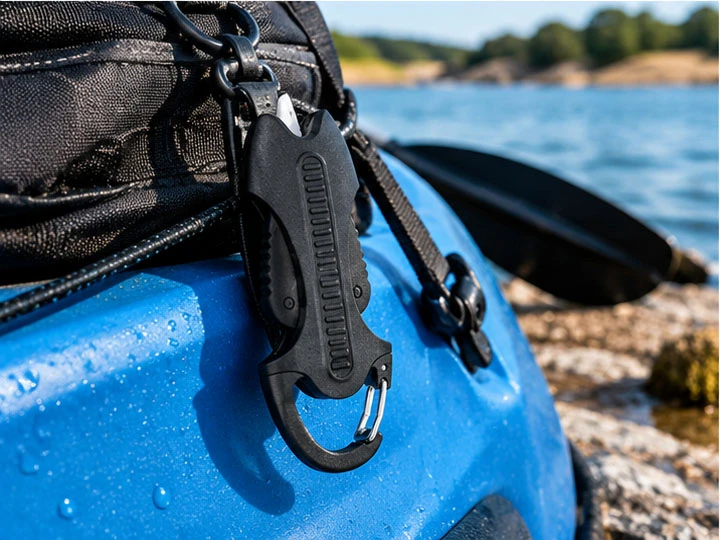
Ceramic vs. Stainless Steel Fishing Scissors for Marine Environments
When comparing fishing scissors for saltwater use, ceramic and stainless steel are two different approaches to blade design. Neither material makes every product better by default. The more useful question is how each option fits the intended application, maintenance expectations, and product positioning.
| Evaluation factor | Zirconia ceramic scissors | Stainless steel scissors |
|---|---|---|
| Blade corrosion | The ceramic blade does not rust like steel. | Corrosion resistance depends on the alloy and exposure conditions. |
| Hardness and wear | High hardness and wear resistance are key material characteristics. | Performance depends on steel grade, heat treatment, and blade design. |
| Impact tolerance | More vulnerable to chipping or fracture under impact or twisting loads. | Generally more tolerant of impact and bending. |
| Cutting performance | Depends on edge geometry, alignment, and manufacturing quality. | Also depends on edge geometry, alignment, and manufacturing quality. |
| Maintenance | The blade resists rust, but the pivot and other components still require care. | Cleaning and drying remain important, even with corrosion-resistant steel. |
| Product positioning | Can provide differentiation for specialized fishing accessories. | A familiar option for versatile, general-purpose cutting tools. |
When Does a Ceramic Blade Make Sense?
Ceramic fishing scissors may be a good fit for anglers who value a corrosion-resistant cutting edge and want an alternative to conventional steel-bladed tools. Their hardness and wear resistance can also be attractive in products designed for repeated fishing-line cutting.
For saltwater accessory brands, ceramic offers a way to develop a distinct product proposition. It may appeal to customers who frequently fish in marine environments and want to reduce concerns about rust on the blade itself.
Still, the choice should reflect the intended use. Ceramic scissors are designed for cutting, not for cutting wire, twisting against a resistant object, or performing other tasks that could damage a brittle edge. Actual cutting performance should be verified using the line types and sizes specified for the product.
Why the Complete Scissor Matters More Than Material Alone
A high-quality blade cannot compensate for poor assembly. If the blades do not meet correctly, the pivot is loose, or the handles are uncomfortable, the user may still experience poor cutting performance even when the blade material itself is excellent.
The same principle applies to corrosion resistance. A ceramic blade may remain free of rust, but exposed metal components can still corrode if their materials and finishes are unsuitable for the application.
When comparing products, look at blade alignment, handle ergonomics, pivot construction, protective accessories, and the consistency of the finished assembly. These details help determine whether the scissors are genuinely suitable for repeated saltwater use.
For fishing tackle brands and buyers, this is also why sample evaluation matters. Testing a finished product with real braided line, monofilament, and fluorocarbon provides more useful information than selecting a tool based on material specifications alone.