Welcome to Custom Ceramic Blades & Shears Manufacturer Middia website

How to Prevent Corrosion in Fishing Tools

Release time:2026-10-16click:17
Fishing tools rarely fail at a convenient time. A pair of scissors may work perfectly during a morning of saltwater fishing, then develop rust spots around the pivot after being left in a damp tackle bag overnight. Pliers can become stiff, small springs may corrode, and cutting edges can gradually lose their usefulness if they are not cleaned and stored properly.

Knowing how to prevent corrosion in fishing tools is especially important for anglers who fish in coastal waters, on boats, or in humid environments. Saltwater leaves behind chloride-containing deposits, while moisture and poor ventilation allow corrosion to continue between fishing trips. Even stainless steel tools can require regular care.

The good news is that a few practical habits can make a real difference. Rinsing tools with fresh water, drying them thoroughly, inspecting moving parts, and choosing suitable materials all help reduce corrosion risks. For fishing scissors, material selection deserves particular attention because the cutting blade and the mechanical components do not necessarily have the same corrosion resistance.

This guide explains how corrosion develops, how to maintain fishing tools after saltwater use, and what to consider when choosing corrosion-resistant equipment. It also looks at zirconia ceramic blades and why they can be a useful option for fishing scissors designed for demanding marine environments.
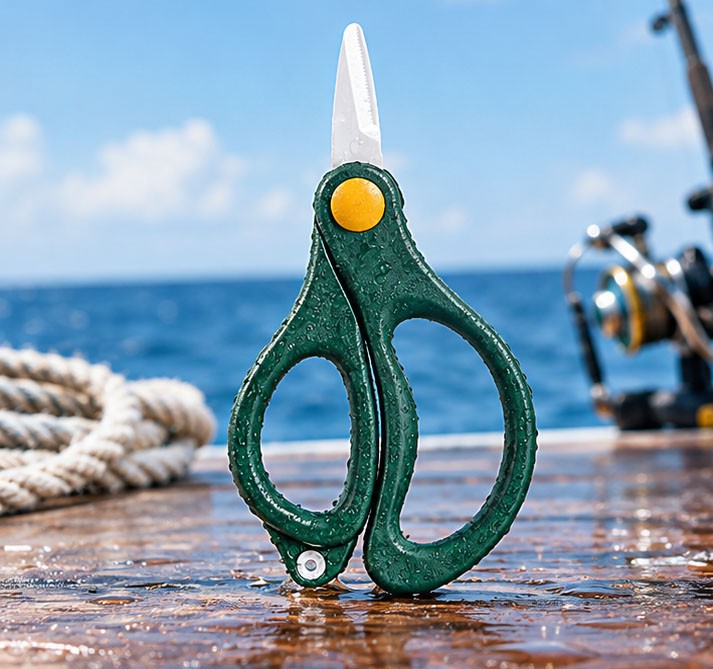
Green-handled ceramic fishing scissors on a wet boat deck during saltwater fishing.

1. Why Do Fishing Tools Corrode?

Corrosion is not caused by saltwater alone. The condition of a tool, the materials used in its construction, the amount of time it remains wet, and the way it is stored all affect how quickly damage develops. Understanding these factors makes it easier to choose the right maintenance routine rather than relying on occasional cleaning after a problem appears.

1.1 Saltwater and Chloride Exposure

Seawater contains dissolved salts, including chloride ions that can interfere with the protective surface layers of certain metals. When saltwater evaporates, it leaves concentrated salt deposits on exposed surfaces. If those deposits remain on a fishing tool, they can contribute to localized corrosion, particularly when moisture is present.

This is one reason fishing scissors, pliers, hooks-removal tools, and other metal accessories may develop rust or surface damage even when they are not continuously submerged. Repeated exposure during fishing trips can leave fresh deposits on the same areas, including blade edges, pivot joints, screws, and small gaps between components.

Saltwater exposure also varies from one fishing environment to another. Offshore fishing, coastal surf fishing, and fishing from a saltwater pier can all expose tools to spray, splashes, and humid air. A tool carried in a pocket or clipped to a vest may receive less direct water contact than one stored on a wet boat deck, but it still needs appropriate care.

Rinsing away salt residue soon after use is therefore a simple but important preventive measure. Leaving a tool until the next trip gives deposits more time to accumulate and makes routine maintenance easier to forget.

1.2 Moisture and Poor Drying

Water is another important part of the corrosion process. After a fishing trip, tools are often placed directly into tackle boxes, bags, or storage compartments. If the equipment is still wet, these enclosed spaces can retain moisture and slow down drying.

Scissor pivots are particularly easy to overlook. Water can remain around the joint even when the outer surfaces look dry. The same issue applies to hinges, spring mechanisms, screw heads, and overlapping metal parts. These areas may receive less airflow than exposed surfaces, allowing moisture to remain for longer periods.

Humidity can make the problem worse. In coastal regions, tools may be exposed to damp air even when they are not being used. A clean, dry tool stored in a ventilated space generally has a better chance of remaining in good condition than one placed in a closed, humid tackle bag.

For this reason, drying should be treated as a separate step rather than something that happens automatically after rinsing. Wiping a tool with a clean cloth and allowing it to dry fully before storage can help prevent unnecessary corrosion.

1.3 Material Choice and Surface Damage

Not all fishing tools respond to moisture in the same way. Carbon steel, stainless steel, coated metals, and ceramic components have different properties. A material that performs well in one application may require more care in another.

Unprotected carbon steel can rust relatively quickly when exposed to water and salt. Stainless steel generally offers better corrosion resistance, but its performance depends on the specific grade, surface condition, design, and exposure environment. The term "stainless" should not be interpreted as a guarantee that a tool will never corrode.

Surface damage can also matter. Scratches, worn coatings, damaged protective finishes, and manufacturing defects may create areas where corrosion is more likely to begin. On a fishing scissor, the blade is only one part of the assembly. A corrosion-resistant blade does not automatically protect the pivot, spring, screws, or other metal components.

Regular inspection helps identify problems before they affect the tool's function. Small rust spots, pitting, unusual discoloration, or a pivot that becomes difficult to move are all reasons to examine the tool more closely.

1.4 Galvanic Corrosion in Mixed-Material Tools

Some fishing tools contain several different metals. When dissimilar metals are electrically connected in the presence of an electrolyte, such as saltwater, galvanic corrosion can occur. Depending on the materials and conditions, one metal may corrode faster than it would on its own.

This does not mean that every tool made from multiple materials will develop galvanic corrosion. The risk depends on the metal combination, electrical contact, exposure, and design. However, it is worth considering when evaluating products intended for regular marine use.

For fishing brands and product developers, this is an important reminder: corrosion resistance should be assessed at the assembly level. Selecting a suitable blade material is useful, but the performance of the complete tool also depends on its fasteners, joints, springs, surface treatments, and overall construction.
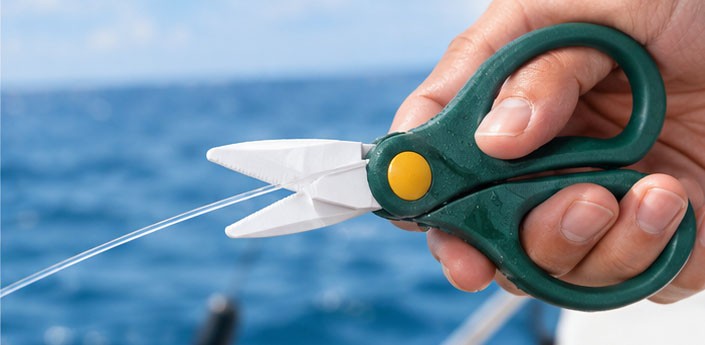
Green-handled ceramic fishing scissors cutting fishing line against a saltwater fishing background.

2. How to Prevent Corrosion in Fishing Tools After Every Trip

A practical maintenance routine does not need to be complicated. In most cases, the important steps are to remove salt, eliminate residual moisture, protect compatible moving parts, inspect the tool, and store it correctly. The exact routine should follow the manufacturer's instructions, especially for tools with specialized coatings or components.

2.1 Rinse Tools with Fresh Water

After using metal fishing tools in seawater, rinse them with clean fresh water as soon as practical. This helps remove salt deposits before they dry on the surface. Pay particular attention to the blade faces, cutting edges, pivot area, screw heads, and other locations where residue may collect.

For scissors, open the blades carefully so that accessible surfaces around the joint can be rinsed. Avoid forcing a stiff or damaged mechanism. If a tool has electrical components, specialized coatings, or manufacturer-specific cleaning requirements, follow those instructions instead of assuming that unrestricted rinsing is appropriate.

Freshwater rinsing is useful, but it is not a complete maintenance routine. Water left around a joint can still cause problems, and a tool that is rinsed but stored wet may remain exposed to moisture for hours. Cleaning and drying need to work together.

2.2 Dry Every Component Thoroughly

Once the salt has been removed, wipe the tool with a clean, dry cloth. Open scissors and accessible moving parts where it is safe to do so, allowing trapped water to escape. Give particular attention to pivots, overlapping surfaces, and narrow gaps.

Do not assume that a tool is ready for storage simply because the outer surface feels dry. Check the joint and other hard-to-reach areas, then allow the tool to air-dry fully in a suitable location. Avoid leaving wet tools in direct contact with other metal equipment, where moisture and salt residue may be transferred between items.

If you fish frequently, it can help to establish a fixed routine when returning to shore: remove the tools from the tackle bag, rinse them, dry them, and inspect them before putting everything away. A consistent process is often more effective than occasional intensive cleaning after corrosion has already appeared.

2.3 Lubricate Moving Metal Parts When Appropriate

Scissor pivots, plier joints, and other moving mechanisms may benefit from a suitable corrosion-protective lubricant. The lubricant should be compatible with the materials and intended use of the tool. Apply it according to the manufacturer's recommendations rather than using an excessive amount.

Too much lubricant can attract dirt or transfer onto surfaces that need to remain clean. On fishing scissors, it is particularly important to avoid contaminating the cutting area if the residue could affect line handling or cutting performance. Wipe away excess product and keep the blade surfaces clean.

Lubrication also has limits. It cannot compensate for severe corrosion, damaged components, or an unsuitable material choice. If a pivot remains stiff after cleaning and appropriate maintenance, inspect it for damage rather than forcing it to move.

2.4 Inspect Tools for Early Signs of Corrosion

A quick inspection after each trip can help catch problems before they become more serious. Look for orange or brown rust spots, surface pitting, unusual discoloration, damaged coatings, loose fasteners, and movement that feels rough or uneven.

Check the parts that are easiest to miss. A fishing scissor may have clean-looking blades but corrosion around the pivot or spring. Pliers may still open and close while corrosion is developing around a screw or hinge. Early inspection makes it easier to decide whether cleaning is sufficient or whether a component needs repair or replacement.

Do not continue using a tool if corrosion or mechanical damage compromises safe operation. A damaged cutting edge may catch or crush fishing line instead of cutting it cleanly, while a badly affected joint may become unreliable when quick action is needed.

2.5 Store Fishing Tools in a Dry, Ventilated Environment

Once the tools are clean and fully dry, store them somewhere that limits moisture accumulation. Avoid putting wet scissors or pliers straight back into a closed tackle box. If the box has removable trays, take the opportunity to dry those as well when water has collected inside.

Moisture-control products may be useful in enclosed storage areas, provided they are appropriate for the environment and used according to their instructions. They should be treated as an additional measure, not a replacement for rinsing and drying after saltwater exposure.

It is also worth checking stored equipment periodically, particularly during long periods of humid weather. A tool that was dry when packed away may still be exposed to moisture if its storage environment changes. Good storage reduces risk, but it does not make maintenance unnecessary.

3. Which Materials Are Best for Corrosion-Resistant Fishing Tools?

Maintenance can significantly reduce corrosion risk, but material selection determines how a tool responds to its environment in the first place. For anglers, the choice depends on the intended task, cutting performance, frequency of saltwater exposure, and willingness to maintain the equipment. For fishing brands and distributors, it also affects product positioning, customer expectations, and long-term product reliability.

3.1 Carbon Steel: Strong Cutting Performance but Higher Maintenance Needs

Carbon steel is used in many cutting tools because it can offer useful hardness, edge performance, and manufacturing flexibility. However, unprotected carbon steel is susceptible to rust when exposed to moisture, particularly when salt residue remains on the surface.

Protective coatings and suitable maintenance can help, but coatings may wear or become damaged during normal use. For tools used regularly around seawater, buyers should consider how the material is protected and whether the maintenance requirements fit the intended application.

Carbon steel is not automatically unsuitable for fishing. It may work well in applications where the performance advantages justify the additional care. The key is to understand the trade-off rather than assume that all cutting tools require the same level of maintenance.

3.2 Stainless Steel: Corrosion Resistance Depends on Grade and Construction

Stainless steel is a common choice for fishing tools because it offers a useful balance of strength, cutting performance, and corrosion resistance. Its protective behavior comes from a passive surface film that can help limit corrosion under suitable conditions.

However, stainless steel is not a single material with identical properties across every product. Different grades have different compositions and corrosion resistance. Surface condition, manufacturing quality, exposure to chlorides, and the presence of deposits can all affect performance.

Small components also deserve attention. A stainless steel blade does not guarantee that the spring, pivot, screws, or other hardware have the same level of corrosion resistance. When choosing tools for frequent saltwater use, consider the specifications of the complete assembly and continue routine cleaning and drying.

3.3 Zirconia Ceramic: A Rust-Free Cutting Edge for Fishing Scissors

Zirconia ceramic offers a different approach to corrosion resistance. Unlike iron-based steel, zirconia does not rust through the same electrochemical process. This makes it an attractive blade material for certain fishing scissors, particularly products intended for users who regularly handle wet fishing line in saltwater environments.

Zirconia ceramic is known for its high hardness and wear resistance. In a properly designed and manufactured cutting tool, these properties can support a durable cutting edge for suitable applications. Ceramic blades can be especially relevant where avoiding rust on the cutting edge is a priority.

There is an important distinction, however, between a rust-free blade and a completely corrosion-proof tool. Ceramic scissors may still contain metal pivots, screws, springs, or other exposed components. Those parts need appropriate materials and care. Salt residue and moisture should not be ignored simply because the blade itself does not rust like steel.

Ceramic also behaves differently from metal under mechanical stress. Although it is hard and wear-resistant, it can be more brittle than many metals. Twisting the blades, dropping the tool onto a hard surface, or using the scissors on materials outside their intended application can cause damage. Ceramic is therefore not a universal replacement for every metal cutting tool.

For fishing scissors designed to cut braided PE line, monofilament, or fluorocarbon, the blade material is only one part of the performance equation. Blade geometry, grinding quality, alignment, and the overall scissor design all influence how cleanly the tool cuts. The best choice is the one that balances corrosion resistance with the actual cutting task.

3.4 Why the Entire Tool Matters More Than One Material

When evaluating corrosion-resistant fishing scissors, it is worth looking beyond the blade specification. A product may use zirconia ceramic for the cutting edges while relying on metal hardware for the pivot and opening mechanism. The durability of those components still affects the experience of using and maintaining the tool.

Handle construction, fastener selection, assembly precision, and the compatibility of different materials can all influence long-term performance. For commercial buyers, these details are particularly important because a material claim on a product page does not tell the whole story.

If saltwater durability is a major selling point, ask the supplier which components are ceramic, which are metal, and what care the finished product requires. Check sample products under realistic use conditions, including cutting the line types intended for the market. A clear understanding of the complete design is more useful than relying on a broad "rustproof" label.
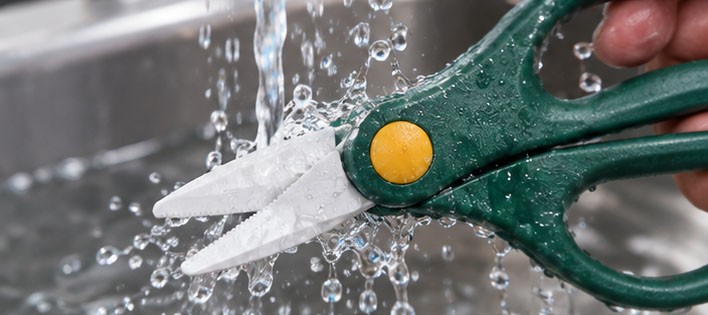
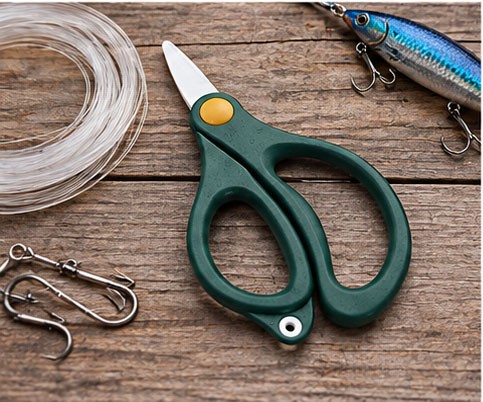
Rinsing ceramic fishing scissors with fresh water after saltwater use to remove salt residue.

4. How to Choose Fishing Tools for Saltwater Environments

Choosing fishing tools for saltwater use is not simply a matter of finding a product labeled rustproof. The right choice depends on how often the tool gets wet, what it needs to cut or handle, how it is constructed, and how much maintenance the user is willing to perform.

For individual anglers, comfort and dependable performance may be the main priorities. For fishing tackle brands, wholesalers, and distributors, the decision involves additional considerations, including product consistency, customer expectations, and the suitability of the tool for a particular market.

4.1 Match the Material to the Fishing Environment

A tool used occasionally for freshwater fishing may face very different conditions from one carried on a boat every weekend. Frequent exposure to seawater, salt spray, and humid storage places greater demands on the materials and overall construction.

Consider the actual conditions in which the tool will be used. Will it be rinsed after every trip? Will it remain clipped to a fishing vest during a full day offshore? Is it likely to be stored in a damp tackle bag? These practical details help determine whether a conventional metal tool with regular maintenance is suitable or whether a corrosion-resistant alternative deserves closer consideration.

For fishing scissors, a zirconia ceramic blade may be a useful option when resistance to blade rust is important. Stainless steel remains a practical choice for many designs, provided the selected grade and construction are appropriate for the intended environment.

4.2 Check the Blade, Pivot, Screws, and Springs

Do not evaluate a fishing tool by its most visible component alone. Inspect the blade material, pivot assembly, fasteners, springs, and other exposed metal parts. These components may have different corrosion characteristics even when they belong to the same product.

When sourcing tools for regular saltwater use, ask for clear material specifications rather than relying on general descriptions. If the supplier advertises a rust-resistant design, find out which parts the claim covers and what maintenance is recommended.

It is also useful to assess the finished product rather than only reviewing individual material specifications. The way components fit together can influence how easily salt and moisture collect around joints and whether the tool can be cleaned and dried without difficulty.

4.3 Consider Cutting Performance Alongside Corrosion Resistance

Corrosion resistance is important, but a fishing scissor still needs to perform its main job. A blade that resists rust but struggles to cut the intended line is unlikely to satisfy experienced anglers.

Different fishing lines present different cutting requirements. Braided PE line consists of multiple fibers that can flatten or slip between poorly aligned blades. Monofilament can compress before being severed, while fluorocarbon has its own stiffness and handling characteristics. Blade geometry, edge condition, alignment, and the design of the complete scissor all affect the result.

Before selecting a product, test it with the line types it is intended to handle. For brands and distributors, this is particularly important when developing a product range for different fishing applications. Corrosion resistance and cutting performance should be evaluated together rather than treated as interchangeable benefits.

4.4 Evaluate Maintenance Requirements and Total Ownership Cost

The initial purchase price does not tell the whole story. A tool that requires frequent cleaning, careful drying, or occasional replacement may create additional work for the user. Conversely, a higher-priced product is not automatically more economical unless its performance and durability justify the difference.

For fishing tackle businesses, total ownership cost can also include customer complaints, warranty handling, returns, and the time needed to explain product care. A well-matched product can help set realistic customer expectations and reduce avoidable problems.

When comparing alternatives, consider the purchase price, expected use conditions, maintenance requirements, cutting performance, and replacement needs. The objective is not to find a material that solves every problem, but to select a tool whose performance matches the intended application.

saltwater-fishing-tools-and-ceramic-scissors.jpg

5. Are Ceramic Fishing Scissors a Good Choice for Saltwater Fishing?

For anglers who regularly cut fishing line around seawater, ceramic fishing scissors are worth considering. Their main material advantage is straightforward: a zirconia ceramic blade does not rust like an iron-based steel blade. This can be useful for products designed around saltwater use, especially when the cutting edge is frequently exposed to moisture.

However, choosing ceramic scissors should involve more than looking at the blade material. The design must also suit the line being cut, the way the tool is handled, and the conditions in which it will be stored.

5.1 Why Zirconia Ceramic Helps Reduce Blade Corrosion

Zirconia ceramic is an oxide ceramic with good chemical stability in many everyday use environments. Because it does not contain iron in the form found in conventional steel blades, it does not develop ordinary iron rust on its cutting edge.

For saltwater anglers, this removes one specific concern: rust developing on the ceramic blade itself. It can also make ceramic an attractive material for fishing accessory brands looking to offer a different maintenance profile from conventional all-metal scissors.

That benefit should be described accurately. A ceramic blade does not mean the entire scissor is immune to corrosion. Metal hardware may still require rinsing, drying, inspection, and appropriate lubrication. Product construction and storage conditions remain important, even when the cutting edge itself does not rust like steel.

5.2 Corrosion Resistance Is Only One Part of Scissor Performance

A useful fishing scissor must do more than resist corrosion. It should cut the intended line cleanly, open and close smoothly, and remain comfortable to handle during repeated use. The blade edges need suitable geometry and alignment, while the pivot must support consistent movement.

Zirconia ceramic is hard and wear-resistant, but it is not indestructible. Ceramic can chip or fracture under impact or excessive twisting, particularly when used outside the conditions for which the tool was designed. Users should avoid forcing the blades through unsuitable materials or using the scissors as a lever.

For PE braid, monofilament, and fluorocarbon, performance should be verified through practical testing. A well-designed ceramic scissor may suit a particular range of fishing-line applications, but its actual cutting ability depends on the complete product rather than the material name alone.

5.3 What Fishing Brands Should Check Before Sourcing Ceramic Scissors

For fishing tackle brands, distributors, wholesalers, and private-label sellers, the sourcing process should cover both the ceramic blade and the finished product. Before adding a ceramic scissor to a product line, consider the following points:

  • Blade material: Confirm that the blade specification matches the intended application and product positioning.

  • Cutting performance: Test the product with the target line types, including the PE braid, monofilament, or fluorocarbon used by the intended customers.

  • Component construction: Check the pivot, fasteners, springs, and other exposed components for suitability in saltwater environments.

  • Product consistency: Evaluate blade alignment, cutting quality, assembly, and finish across samples rather than judging only one unit.

  • Brand customization: Discuss logo application, handle colors, packaging, and other specifications that fit the planned retail or distribution channel.

  • Sample evaluation: Test actual samples under realistic conditions before confirming a larger production order.

These checks help buyers assess whether a ceramic fishing scissor fits their customers and their intended price range. For an OEM or ODM project, it is also useful to discuss the target market, product configuration, packaging requirements, and expected order quantities early in the development process.

MIDDIA develops ceramic cutting tools, including ceramic fishing scissors, for customers looking at specialized cutting applications. Its ceramic manufacturing background, dating to 2010, provides a basis for discussing product development and customization requirements with fishing tackle businesses. Final specifications and performance should always be evaluated against the requirements of the individual project.

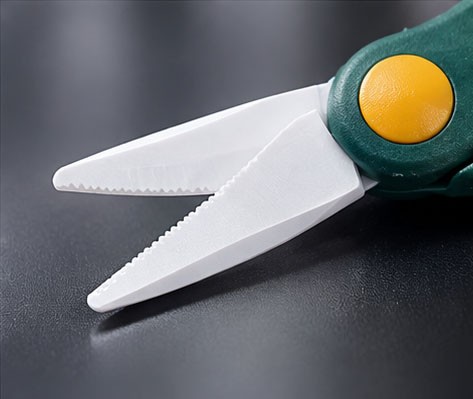
Close-up of the serrated zirconia ceramic blades on green-handled fishing scissors.

6. Common Mistakes When Preventing Fishing Tool Corrosion

Most corrosion-prevention problems do not come from a lack of complicated equipment. They often result from small habits that are easy to overlook. Avoiding the following mistakes can make routine maintenance more effective.

6.1 Assuming Stainless Steel Never Rusts

Stainless steel offers corrosion resistance, but it is not immune to every marine environment. Chloride deposits, prolonged moisture exposure, unsuitable grades, and damaged surfaces can contribute to corrosion. Rinse and dry stainless steel fishing tools after saltwater use, and inspect them regularly.

6.2 Cleaning the Blade but Ignoring the Pivot

Visible blade surfaces are easy to clean, while joints and fasteners often receive less attention. Unfortunately, these areas can retain salt and moisture. Open the scissors where it is safe to do so, clean accessible areas, and dry the pivot before storage. If the joint remains stiff, check for corrosion or mechanical damage.

6.3 Putting Wet Tools Straight Back into a Tackle Box

A closed tackle box is convenient for transport, but it is not the right place to leave wet equipment to dry. Moisture may remain around the tool and inside the storage compartment. Remove wet tools, rinse away salt, and let them dry fully before putting them away.

6.4 Choosing a Tool Based Only on Its Rustproof Claim

Terms such as rustproof and corrosion-resistant can describe different things depending on the product. A ceramic blade may not rust like steel, but the rest of the assembly may contain metal components. Check the material specifications and maintenance instructions instead of assuming that a single claim covers every part of the tool.

6.5 Expecting Maintenance to Fix Poor Material Selection

Regular cleaning and drying are important, but they cannot make every material suitable for every environment. A tool designed without adequate consideration of saltwater exposure may remain difficult to maintain even when the user follows a careful routine. For frequent marine use, choose a product designed for the intended application and maintain it according to the manufacturer's guidance.

7. Frequently Asked Questions About Fishing Tool Corrosion

Q1. How do you prevent fishing tools from rusting in saltwater?

Rinse tools with fresh water after saltwater exposure, remove visible salt deposits, and dry all components thoroughly before storage. Pay attention to pivots, screws, and other areas where moisture can collect. Apply a suitable protective lubricant to compatible moving metal parts when recommended by the manufacturer, and inspect the tools regularly for early signs of corrosion.

Q2. Does stainless steel rust after exposure to saltwater?

Yes, stainless steel can corrode under certain conditions. Its resistance depends on the grade, surface condition, construction, and exposure environment. Chloride deposits and prolonged moisture can contribute to corrosion, especially when the selected material is not appropriate for the application. Regular rinsing, drying, and inspection remain important for stainless steel fishing tools.

Q3. Do ceramic fishing scissors rust?

Zirconia ceramic blades do not rust like iron-based steel blades. However, ceramic fishing scissors may contain metal pivots, screws, springs, or other components that can corrode. The complete tool still needs appropriate material selection and care, particularly when it is used regularly in saltwater environments.

Q4. Are ceramic fishing scissors completely corrosion-proof?

No. The ceramic blade itself does not develop ordinary iron rust, but this does not make the entire scissor assembly corrosion-proof. Exposed metal components, fasteners, and joints may still be affected by saltwater or moisture. Buyers should evaluate the materials used throughout the product and follow the recommended cleaning and storage routine.

Q5. How often should fishing tools be cleaned after saltwater use?

As a practical rule, rinse tools after each saltwater fishing trip rather than waiting until the next use. Remove salt deposits, dry the tool fully, and inspect moving parts before storage. Tools exposed to heavy spray or prolonged wet conditions may need additional attention. Always follow any specific care instructions supplied with the product.

Q6. What should fishing brands look for when sourcing corrosion-resistant fishing scissors?

Brands should evaluate blade material, cutting performance, pivot and fastener construction, product consistency, and maintenance requirements. For ceramic scissors, confirm that the blade suits the intended fishing-line applications and check how the other components are constructed. Sample testing, customization discussions, and clear product specifications help determine whether a design fits the target market.

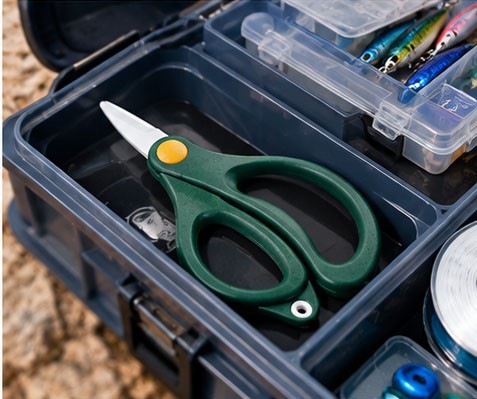
Ceramic fishing scissors stored in an organized tackle box with fishing lures and line.

8. Choosing Corrosion-Resistant Fishing Scissors for Your Product Line

Preventing corrosion in fishing tools requires a combination of suitable materials, regular maintenance, and thoughtful product design. Rinsing and drying after saltwater use remain essential for many metal tools, while appropriate storage helps limit prolonged moisture exposure. Choosing a material that matches the intended application can further reduce maintenance concerns.

For fishing scissors, zirconia ceramic offers a useful advantage: the blade does not rust like conventional steel. This makes ceramic an option worth evaluating for saltwater fishing accessories, especially when combined with suitable construction, reliable cutting performance, and clear care instructions.

For fishing tackle brands, distributors, wholesalers, and private-label sellers, product development should begin with the actual needs of the target customer. Consider the fishing-line types the scissors must cut, the expected exposure to seawater, the desired product positioning, and the requirements for branding and packaging. Testing samples under realistic conditions is an important step before committing to a production run.

MIDDIA works with customers exploring OEM and ODM ceramic fishing scissors and related product customization. Depending on the project, discussions may cover product configuration, logo application, handle colors, packaging, and sample evaluation. Specifications, available options, and production arrangements should be confirmed for each individual project.

If you are developing a fishing accessory line for saltwater users, share your target market, intended line applications, and customization requirements with the MIDDIA team. This provides a practical starting point for evaluating whether a ceramic fishing scissor is suitable for your product range.

Develop Your OEM Ceramic Fishing Scissors with MIDDIA

Looking for ceramic fishing scissors for your fishing tackle brand, distribution business, or private-label product line? Discuss your target applications, product specifications, logo customization, and packaging requirements with MIDDIA.

Tell us what you need, and we can discuss suitable product options and sample evaluation for your project.

Discuss Your OEM/ODM Project

label:

Xiamen Middia Biological
Ceramic Technology Co.,Ltd
Address
Address: Room 406, No. 388 Qishan Road,
Huli District, Xiamen City, Fujian Province, China
Contact Us
  • Telephone: 86-15396283716
  • E-mail: info@middiaceramic.com

Copyright © 2011-2026 custom ceramic blades, ceramic fishing scissors, ceramic box cutter, baby food scissors, zirconia blade manufacturer, MIDDIA MIDDIA. All Rights Reserved. XML Map

Top