Finding a reliable ceramic fishing tool supplier involves more than comparing product prices or choosing a company with an attractive product catalog. For fishing tackle brands, distributors, wholesalers, and private-label businesses, the supplier you select can directly affect product quality, customer satisfaction, inventory planning, and long-term profitability.
Ceramic fishing scissors and line cutters have become an interesting product category for businesses looking to offer alternatives to conventional stainless steel cutting tools. Zirconia ceramic blades offer several useful characteristics, including high hardness, wear resistance, and excellent resistance to corrosion. However, these advantages do not automatically guarantee that every ceramic fishing tool on the market will perform well.
The actual result depends on several factors: ceramic material quality, manufacturing processes, blade geometry, assembly precision, product testing, and quality control during mass production. A supplier may offer a good-looking sample but struggle to maintain the same specifications across repeated orders. Another may provide attractive OEM pricing but lack the technical experience needed to develop a product for specific fishing applications.
So, how should buyers evaluate potential suppliers before placing an order?
This guide covers nine practical factors to consider when selecting a ceramic fishing tool supplier, from manufacturing experience and blade quality to OEM customization, production capacity, and long-term cooperation. Whether you are sourcing your first ceramic fishing scissors or looking for a more dependable manufacturing partner, these criteria can help you make a more informed decision.
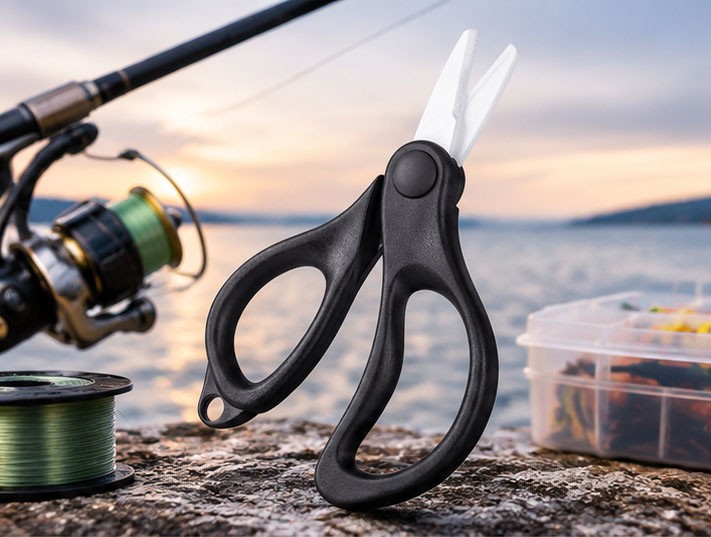
The first step is understanding what kind of company you are dealing with. Not every supplier advertising ceramic fishing scissors actually manufactures ceramic components. Some companies produce ceramic blades themselves, while others purchase finished blades or complete products from third-party factories and focus mainly on assembly, distribution, or export.
There is nothing inherently wrong with working with a trading company. However, if your project involves custom blade configurations, material adjustments, or product development, access to actual manufacturing knowledge can make a considerable difference.
Ask potential suppliers which production stages they handle directly. A manufacturer with ceramic processing experience should be able to explain its production workflow rather than simply showing finished product photographs.
For zirconia ceramic fishing scissors, relevant manufacturing stages may include:
Ceramic powder preparation and material selection.
Powder molding and component shaping.
High-temperature firing and sintering.
Precision grinding and dimensional finishing.
Cutting-edge processing and sharpening.
Finished component inspection and product assembly.
These stages require different equipment, technical knowledge, and quality controls. Understanding which processes are performed in-house and which are outsourced helps buyers evaluate the supplier's actual manufacturing capabilities.
Zirconia (ZrO2) is widely used in technical ceramic applications because of its high hardness, wear resistance, and useful mechanical properties. For fishing scissors and line cutters, these characteristics make it a suitable material for developing durable cutting edges.
Compared with conventional metal blades, zirconia ceramic blades offer some important advantages:
Corrosion resistance: Zirconia ceramic does not rust like carbon steel, making it suitable for products used in wet and saltwater fishing environments.
Wear resistance: Its high hardness helps maintain a cutting edge under appropriate operating conditions.
Low maintenance: The ceramic cutting edge does not require the same rust-prevention treatment as conventional steel blades.
Material stability: Zirconia is chemically stable in many common fishing environments.
At the same time, ceramic is not simply a stronger replacement for every type of metal blade. It has different mechanical characteristics and can be more vulnerable to impact, chipping, or fracture if improperly designed or handled.
A knowledgeable supplier should be able to explain both the advantages and limitations of zirconia ceramic instead of relying entirely on marketing claims.
Before moving forward, consider asking:
How many years of experience does your company have in ceramic manufacturing?
Do you manufacture ceramic blades in-house or purchase finished components?
Which ceramic processing stages are controlled internally?
Have you produced ceramic scissors or fishing-line cutting tools before?
Can you provide relevant product specifications and manufacturing information?
Answers to these questions will give you a better understanding of whether the supplier has the technical foundation to support your project, particularly if you plan to develop customized fishing tools rather than purchase standard products.
Once you have confirmed the supplier's manufacturing background, the next step is to evaluate the quality of its ceramic blades. Material selection matters, but it is only one part of the equation. Even good-quality zirconia can produce disappointing results if the forming, sintering, grinding, or finishing processes are poorly controlled.
Not all ceramic materials have identical properties. Different zirconia formulations and processing conditions can influence hardness, toughness, density, and dimensional stability.
When evaluating a supplier, ask whether it can identify the ceramic material used in its products and provide relevant specifications. Depending on the project, you may also request material documentation or testing information.
For buyers developing a private-label product, material consistency is particularly important. A change in ceramic material or manufacturing conditions between production batches may affect the finished blade's performance.
A typical zirconia ceramic manufacturing process involves several stages, each contributing to the final product's quality.
Powder preparation: Ceramic raw materials are selected and prepared to meet the required processing specifications.
Molding: The prepared powder is shaped into the required component geometry.
Sintering: The formed component undergoes controlled high-temperature treatment to develop its final ceramic structure.
Precision grinding: The sintered component is ground to achieve the required dimensions and surface finish.
Edge finishing: The cutting edge is processed to achieve the intended geometry and cutting characteristics.
Inspection: Finished ceramic components are checked before they proceed to assembly.
Buyers do not necessarily need to understand every technical detail of ceramic production. However, a supplier that can explain how its processes affect product performance is generally better positioned to support technical discussions and customization requests.
One common mistake is assuming that all ceramic fishing scissors perform similarly simply because they use zirconia blades. In practice, blade geometry and mechanical design play an important role in cutting performance.
Consider the following details:
Blade configuration: Straight and serrated edges engage fishing lines differently.
Cutting-edge geometry: Edge angle and finishing influence how the blade interacts with different line materials.
Blade alignment: Proper contact between the cutting edges is necessary for consistent scissor operation.
Blade thickness: The design must balance cutting requirements with the mechanical strength of the ceramic component.
Assembly precision: Pivot alignment and mechanical stability affect the overall user experience.
For example, a serrated blade may help engage slippery braided fishing line, while other blade configurations may be more appropriate for different cutting applications. The best design depends on the intended product and should be verified through sample testing.
A company with ceramic manufacturing experience is not automatically an experienced fishing tool supplier. Fishing scissors are specialized products, and their design needs to reflect how anglers actually use them.
When evaluating suppliers, look beyond their ability to manufacture ceramic blades. Consider whether they understand different fishing-line materials, common cutting problems, and the conditions in which fishing tools are used.
Fishing lines have different structures and mechanical characteristics. A cutting tool that works well with one type of line may not provide the same results with another.
| Fishing Line Type | What Buyers Should Evaluate |
|---|---|
| Braided PE Line | Blade engagement, serration design, and clean cutting without excessive slipping. |
| Dyneema | Cutting performance on high-strength braided fibers and consistency across repeated cuts. |
| Fluorocarbon | Blade contact, cutting control, and performance with relatively stiff line materials. |
| Monofilament | Edge geometry, cutting precision, and smooth operation. |
A supplier should be willing to discuss the intended fishing-line applications before recommending a product configuration. This is especially useful for brands that want to position different models for freshwater fishing, saltwater fishing, offshore applications, or general tackle use.
Fishing tools are often exposed to conditions that ordinary household scissors never encounter. Saltwater, moisture, sand, repeated handling, and outdoor storage can all influence product durability.
For this reason, evaluate whether the supplier understands requirements such as:
Corrosion resistance of exposed metal components, including pivots and fasteners.
Handle materials suitable for wet-hand operation.
Compact designs for tackle boxes and fishing bags.
Protective or retractable blade configurations.
Clips, lanyards, and other accessories for convenient carrying.
One detail worth checking is the difference between ceramic blades and metal components. A zirconia blade does not rust, but a metal pivot, spring, or fastener may still corrode depending on its material and surface treatment. A well-designed saltwater fishing tool needs to consider the complete product rather than focusing on the blade alone.
Suppliers who understand these practical details are more likely to help buyers develop products that meet the expectations of their target customers.
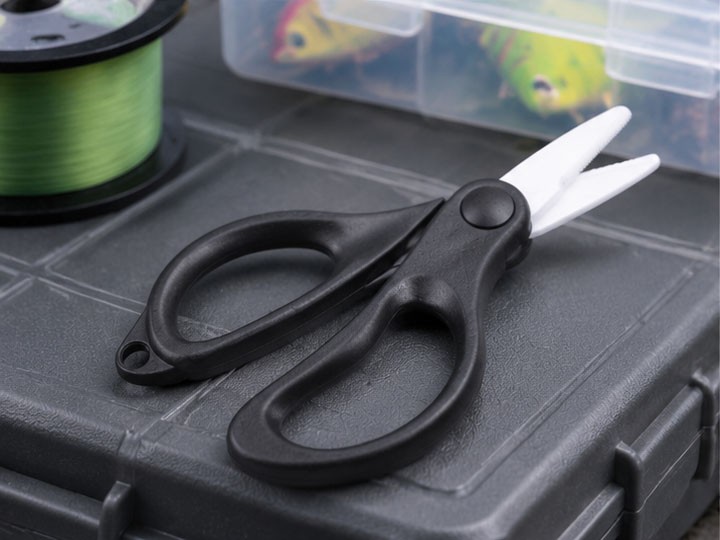
Product samples are one of the most useful tools in supplier evaluation. Product photographs, catalogs, and technical descriptions can provide an initial understanding, but they cannot fully demonstrate how a ceramic fishing scissors model performs in actual use.
Before committing to a large order, request samples and evaluate them against your intended market requirements. This is particularly important for businesses launching a new private-label product or changing from an existing supplier.
A sample gives you an opportunity to identify problems before they become expensive production issues.
For example, a product may have an attractive appearance but show poor blade alignment, uncomfortable handle ergonomics, or inconsistent cutting performance. These issues are much easier to discuss and correct during the sample approval stage than after thousands of units have been produced.
Sample testing also helps establish a reference product. Once the sample is approved, its specifications and performance requirements can be documented and used as a reference for future production orders.
A practical evaluation should cover both cutting performance and overall product quality.
| Test Item | Evaluation Focus |
|---|---|
| PE line cutting | Clean cuts, blade engagement, and minimal line slipping. |
| Fluorocarbon cutting | Controlled cutting action and consistent blade contact. |
| Monofilament cutting | Smooth operation and reliable cutting performance. |
| Blade alignment | Proper contact and consistent movement throughout the cutting action. |
| Handle ergonomics | Comfort, grip, and ease of operation. |
| Saltwater exposure | Condition of metal pivots, fasteners, and other exposed components. |
| Repeated operation | Mechanical stability and consistent cutting performance over repeated use. |
| Physical inspection | Surface finish, assembly quality, and visible defects. |
Testing should use the fishing-line types and conditions relevant to your customers. If your target market mainly uses braided PE line, for example, it makes sense to place greater emphasis on braided-line cutting performance.
Different buyers may evaluate the same sample from different perspectives.
Fishing tackle brands: Focus on product differentiation, cutting performance, appearance, and brand positioning.
Distributors: Consider product reliability, market suitability, and the likelihood of repeat orders.
Amazon sellers: Pay attention to ease of use, packaging, product consistency, and potential customer complaints.
Wholesalers and importers: Evaluate whether the product can meet bulk purchasing requirements without significant quality variation.
One important point: do not rely only on the supplier's original sample. Record your test results and agree on the key product specifications before approving mass production. This creates a clearer basis for quality discussions later.
A supplier's ability to produce one good sample is not the same as its ability to manufacture thousands of consistent products. For businesses planning regular purchases, quality control is one of the most important factors in selecting a ceramic fishing tool supplier.
Inconsistent products can lead to customer complaints, returns, replacement costs, and damage to brand reputation. These problems may not become obvious until products have reached distributors, retailers, or end users.
A dependable supplier should have inspection procedures covering more than the final packaging stage.
Depending on the product and manufacturing process, quality checks may include:
Incoming material inspection: Checking raw materials and purchased components against relevant specifications.
Production process control: Monitoring forming, sintering, and grinding conditions.
Blade inspection: Checking dimensions, edge condition, and visible defects.
Assembly inspection: Evaluating blade alignment, pivot stability, and operating smoothness.
Functional testing: Checking whether finished products meet the agreed cutting requirements.
Final inspection: Checking appearance, accessories, labeling, and packaging before shipment.
The specific inspection methods should match the product design and order requirements. What matters is that the supplier can explain how defects are identified and how nonconforming products are handled.
Repeat-order consistency deserves particular attention when you are building a long-term product line.
Ask whether the supplier can maintain documented product specifications and use an approved sample as a production reference. You should also clarify whether material changes, design adjustments, or component substitutions require your approval.
For customized fishing scissors, useful controls include:
Documented blade and handle specifications.
Approved samples retained as quality references.
Defined inspection requirements for important product features.
Functional testing procedures for finished products.
Clear procedures for handling defects and customer feedback.
These practices help reduce misunderstandings between the buyer and supplier, especially when different orders are placed several months apart.
Depending on your market and purchasing requirements, you may also request information about the supplier's quality management system, relevant material documentation, and product inspection records.
However, it is important to distinguish between company-level certifications and certifications or test reports covering a specific product. A manufacturer holding a quality management certification does not automatically mean every fishing scissors model has been independently tested or certified.
Ask for documents that are relevant to the actual product and verify their scope before using them in marketing or regulatory claims.
For many fishing tackle businesses, the purpose of working with a ceramic fishing tool supplier is not simply to purchase an existing product. It is to develop a product that fits their brand identity, target market, and sales strategy.
This is where OEM, ODM, and private-label capabilities become important. A supplier that can support different levels of customization gives buyers more flexibility when building or expanding their product lines.
Depending on the existing product design and manufacturing capabilities, customization may cover several areas.
Handle colors: Different colors to match brand identity or distinguish product models.
Brand logos: Logo printing or other suitable branding methods.
Blade configurations: Different cutting-edge designs for specific applications.
Product appearance: Adjustments to selected design details where technically feasible.
Protective features: Retractable mechanisms, blade covers, or other safety-related components.
Accessories: Clips, lanyards, and carrying attachments.
Not every product can support every customization option. Some changes may require new tooling, additional development work, or higher minimum order quantities. Buyers should discuss feasibility before finalizing specifications.
| Cooperation Model | How It Works | Suitable Buyers |
|---|---|---|
| OEM | The buyer provides existing product specifications or designs, and the supplier manufactures accordingly. | Established brands with defined product requirements. |
| ODM | The supplier contributes product design or development capabilities based on the buyer's requirements. | Businesses seeking new product concepts or technical support. |
| Private Label | An existing or customized product is supplied with the buyer's branding and packaging. | Distributors, Amazon sellers, wholesalers, and emerging brands. |
For a business entering the ceramic fishing scissors market for the first time, private labeling an existing product may be a practical starting point. Buyers with more specific product requirements may prefer OEM or ODM cooperation.
Packaging is another part of product development that should not be overlooked. For retail brands, packaging influences product presentation and helps communicate important information to customers.
Potential customization options include:
Custom retail boxes or blister packaging.
Brand logos and product labels.
Barcode and product identification information.
Product instructions and care information.
Packaging dimensions suitable for retail display and shipping.
Discuss packaging requirements early, especially if your products will be sold through retail stores or online marketplaces with specific packaging expectations.
Before approving an OEM or private-label project, clarify the following points:
MOQ for standard and customized products.
Sample development and customization costs.
Whether additional tooling or molds are required.
Sample approval and revision procedures.
Expected production lead time after approval.
Ownership and permitted use of custom designs, artwork, and tooling.
Good customization is not limited to printing a logo on an existing product. It involves making sure the product design, cutting performance, appearance, and packaging work together to meet your customers' expectations.
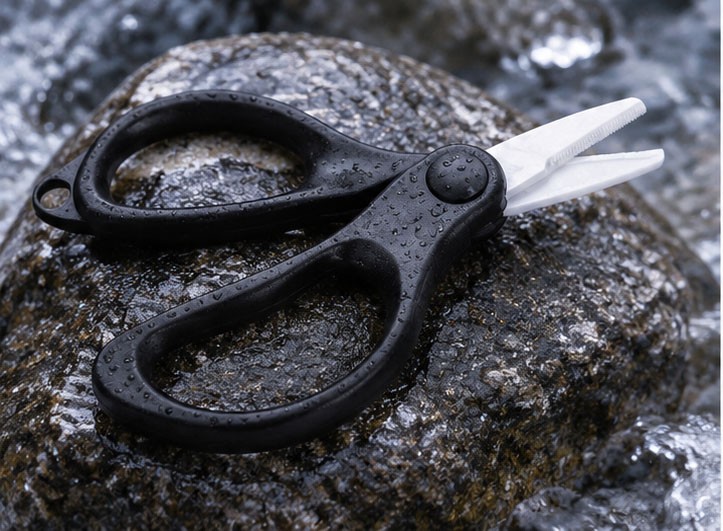
Even if a supplier offers excellent product quality, it may not be the right partner if its production capacity cannot support your purchasing plans. This is particularly relevant for wholesalers, importers, and distributors who depend on regular inventory replenishment.
Before selecting a supplier, understand how it handles both initial orders and repeat purchases.
Start by asking about standard product availability, production capacity, and experience handling orders similar to yours.
Some suppliers may be well suited to small sample orders but have limited experience with larger production runs. Others may have substantial production resources but offer less flexibility for smaller customized projects.
Consider the following:
Availability of standard product models.
Production capacity for your selected model.
Ability to handle bulk orders.
Capacity for repeat orders and seasonal demand.
Availability of materials and essential components.
It is also worth asking how the supplier manages production when several customer orders overlap. A clear production planning process can help reduce the risk of unexpected delays.
Minimum order quantity and production lead time can vary considerably depending on the product and customization requirements.
For example, an existing ceramic fishing scissors model with standard packaging may have a lower MOQ than a product requiring a new handle design, custom color, or specially developed packaging.
Ask suppliers to distinguish between:
Standard product MOQ.
Customized product MOQ.
Sample preparation time.
Mass production lead time.
Additional time required for customized packaging and shipment preparation.
Do not assume that a supplier's sample lead time represents the production schedule for a bulk order. The two processes can have very different requirements.
For distributors and wholesalers, an unreliable supply chain can create problems beyond the purchasing department. Delayed deliveries may affect product launches, inventory turnover, retailer relationships, and seasonal sales opportunities.
For private-label brands, inconsistent delivery schedules can also make it difficult to coordinate marketing campaigns and online inventory planning.
A suitable supplier should be able to communicate realistic production schedules and provide updates when unexpected issues arise. Reliable planning is often more valuable than an aggressive delivery promise that cannot be maintained.
Supplier selection should not end with product specifications and quotation comparisons. Communication quality and technical support can have a significant influence on how smoothly an OEM project develops.
This becomes especially important when buyers are working with customized ceramic fishing scissors, where small design adjustments may affect manufacturing feasibility or product performance.
A capable supplier should be willing to understand your intended market and product positioning before recommending a solution.
For example, if your brand is developing a ceramic fishing scissors model for saltwater anglers, the discussion should include more than the ceramic blade. Handle materials, exposed metal components, carrying accessories, and product maintenance requirements may also need consideration.
Useful questions include:
Can the supplier recommend suitable products based on your target fishing-line applications?
Can it explain the differences between available blade configurations?
Can it identify potential limitations in a proposed customization?
Can it provide clear technical answers during sample development?
Does it communicate changes to specifications and production schedules promptly?
No manufacturing process is completely free from problems. What matters is whether the supplier has a clear approach to addressing them.
Before starting a long-term relationship, understand how it handles:
Sample feedback and product modifications.
Quality issues discovered during production.
Specification changes after sample approval.
Defective products and corrective actions.
Repeat-order management and after-sales communication.
A supplier that communicates openly about manufacturing limitations is often a better long-term partner than one that agrees to every request without considering feasibility.
For established fishing tackle brands, supplier selection is a long-term sourcing decision. You may eventually want to introduce additional ceramic fishing scissors models, develop different handle designs, or expand into other ceramic cutting tools.
A supplier with relevant ceramic manufacturing experience and product development capabilities may be able to support these plans as your business grows.
Price is naturally an important part of supplier evaluation, but comparing quotations based only on unit cost can lead to poor purchasing decisions.
A low-priced product may initially look attractive. However, if it has inconsistent cutting performance, poor assembly quality, inadequate packaging, or unreliable delivery, the actual cost of purchasing it may be considerably higher.
| Cost Factor | Why It Matters |
|---|---|
| Unit price | Direct purchasing cost for each product. |
| Sample cost | Initial investment required for product evaluation. |
| Customization cost | Additional expenses for logos, colors, tooling, and packaging. |
| Shipping cost | Transportation expenses affecting landed procurement cost. |
| Defect rate | Potential replacement, inspection, and quality-related costs. |
| Lead time | Influences inventory planning and product launch schedules. |
| Repeat-order stability | Affects long-term sourcing reliability and purchasing efficiency. |
Consider two suppliers offering ceramic fishing scissors with similar specifications. Supplier A provides a lower unit price, while Supplier B offers more detailed product documentation, consistent sample performance, and clearer quality control procedures.
If Supplier A cannot maintain the same cutting performance during mass production, the buyer may face additional inspection work, replacement requests, customer complaints, and delayed shipments.
These costs are not always visible in the original quotation. That is why buyers should evaluate the overall procurement value rather than focusing exclusively on the lowest price.
For businesses comparing several potential suppliers, a simple scoring system can make the selection process more objective.
The following is a suggested evaluation model. You can adjust the weights depending on your purchasing volume, product requirements, and business priorities.
| Evaluation Criteria | Suggested Weight |
|---|---|
| Ceramic manufacturing experience | 15% |
| Blade quality and process control | 15% |
| Fishing-line application knowledge | 15% |
| Sample testing performance | 15% |
| Quality control and consistency | 15% |
| OEM/ODM customization | 10% |
| Production and delivery capability | 10% |
| Communication and technical support | 5% |
| Total | 100% |
Score each supplier against the same criteria rather than relying on general impressions. This makes it easier to identify which company offers the strongest overall fit for your business.
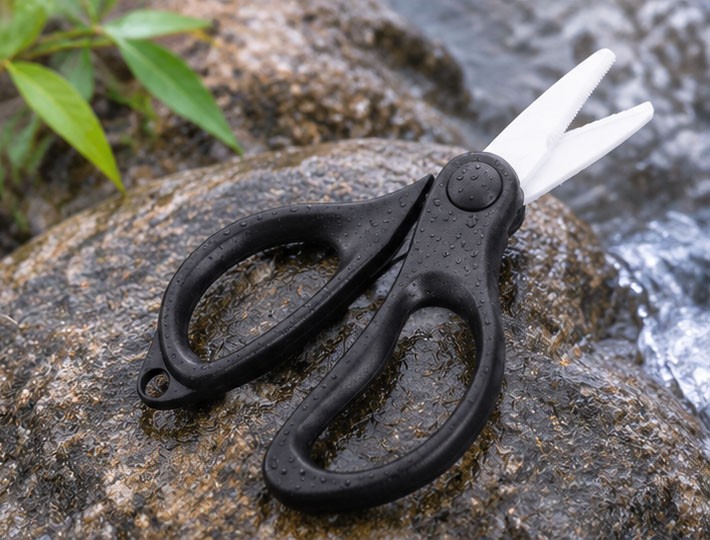
After evaluating the technical and commercial factors involved in supplier selection, the next step is finding a manufacturing partner that can support your actual product requirements.
MIDDIA brings ceramic manufacturing experience dating back to 2010, with experience in technical ceramic products, including zirconia ceramic cutting tools and scissors. This manufacturing background provides a foundation for developing ceramic fishing scissors and line cutters for different fishing applications.
Working with technical ceramics requires knowledge of material preparation, forming, sintering, grinding, and finishing. MIDDIA's experience in ceramic manufacturing provides relevant process knowledge for developing cutting products that require precision and consistent component quality.
Rather than treating the ceramic blade as an isolated component, we recognize the importance of material selection, blade geometry, finishing, and finished-product assembly in the overall user experience.
Different anglers have different cutting requirements. Braided PE line, Dyneema, fluorocarbon, and monofilament do not behave identically when cut.
MIDDIA's ceramic fishing tool range is developed around practical fishing applications, with product configurations that can be evaluated according to the intended line types and usage requirements.
For buyers, this means the discussion can focus on selecting a suitable model rather than simply choosing a product based on its appearance.
For brands and distributors looking to develop their own product lines, MIDDIA supports customization discussions covering several aspects of ceramic fishing scissors and cutting tools.
Custom brand logos.
Handle color options.
Product configuration discussions.
Selected design adjustments, subject to feasibility.
Private-label packaging.
Sample evaluation before bulk production.
Whether you already have a detailed product specification or are exploring options for a new ceramic fishing tool, we can discuss the requirements and identify an appropriate cooperation approach.
We understand that a successful supplier relationship involves more than completing an initial order. Product consistency, clear communication, customization support, and dependable production planning all contribute to long-term cooperation.
MIDDIA works with fishing tackle brands, distributors, wholesalers, importers, and private-label businesses seeking ceramic fishing scissors and related cutting tools for their markets.
If you are evaluating suppliers for a new product launch or considering an alternative manufacturing partner, discussing your specifications and purchasing requirements is a practical place to start.
Start with the supplier's ceramic manufacturing experience, material knowledge, blade processing capabilities, and understanding of fishing-line applications. Then evaluate sample performance, quality control procedures, OEM customization options, production capacity, and communication. A reliable supplier should be able to explain its manufacturing processes and provide relevant product information rather than relying entirely on marketing claims.
Both options can be suitable, depending on your purchasing requirements. Direct manufacturers may offer closer communication with production teams, better access to manufacturing information, and more flexibility for technical discussions. Trading companies may provide sourcing convenience and access to multiple product categories. If your project requires customized ceramic blades or ongoing product development, working directly with a manufacturer that has relevant technical capabilities can be particularly useful.
Yes. Requesting samples is a sensible step before committing to a large purchase. Test the scissors with the fishing-line materials relevant to your customers, check blade alignment, evaluate handle comfort, and inspect the overall assembly quality. Once the sample is approved, document the important specifications so that future production orders can be compared against the agreed reference.
MOQ depends on the product model, existing inventory, customization requirements, and packaging specifications. Standard products may have different minimum quantities from products requiring custom colors, new components, or specially developed packaging. Ask the supplier to provide separate MOQ information for standard and customized orders before making your purchasing decision.
Many ceramic fishing scissors suppliers offer private-label services, although the available options vary. Common customization items include handle colors, logo printing, retail packaging, and selected product design details. Before confirming an order, discuss logo artwork, packaging specifications, sample approval, customization costs, and minimum order quantities.
Begin with an approved product sample and a written specification covering important product characteristics. Agree on the relevant inspection requirements, including blade alignment, cutting performance, assembly quality, and packaging. Ask the supplier how it controls production changes and handles nonconforming products. Maintaining clear specifications and communication between orders is essential for long-term quality consistency.
Choosing the right ceramic fishing tool supplier is an important decision for any business planning to build or expand its fishing tackle product range.
At MIDDIA, we combine ceramic manufacturing experience since 2010 with OEM and ODM support for ceramic fishing scissors and cutting tools. We work with fishing tackle brands, distributors, wholesalers, importers, and private-label businesses looking for suitable products and dependable manufacturing cooperation.
Whether you need standard ceramic fishing scissors, custom product configurations, branded packaging, or samples for evaluation, our team can discuss your requirements and help identify a suitable solution.
Tell us about your target fishing-line applications, product specifications, branding requirements, and estimated order quantity. We would be glad to discuss your project.
Contact MIDDIA to request product information, discuss samples, or start your OEM ceramic fishing tool project.
Looking for a Reliable Ceramic Fishing Tool Supplier?
Choosing the right ceramic fishing tool supplier is essential for maintaining consistent product quality, reliable performance, and long-term supply stability. From zirconia ceramic blade manufacturing and precision grinding to sample testing and batch quality control, every stage matters when developing a dependable fishing tool product line.
MIDDIA has been developing ceramic cutting tools since 2010 and works with fishing tackle brands, distributors, wholesalers, and private-label businesses on ceramic fishing scissors and OEM/ODM projects. Whether you need standard products, custom blade configurations, private-label branding, or tailored packaging, our team can help evaluate your requirements, arrange samples, and discuss suitable production options.
Copyright © 2011-2026 custom ceramic blades, ceramic fishing scissors, ceramic box cutter, baby food scissors, zirconia blade manufacturer, MIDDIA MIDDIA. All Rights Reserved. XML Map
