
Preparing food for a baby does not always happen in the kitchen. Parents may need to cut cooked noodles at a restaurant, divide soft vegetables during a family trip, or prepare smaller portions of food while visiting relatives. In these situations, having a suitable cutting tool within reach can make feeding routines considerably easier. This is one reason why Portable Baby Food Scissors have become a useful addition to modern baby feeding accessories.
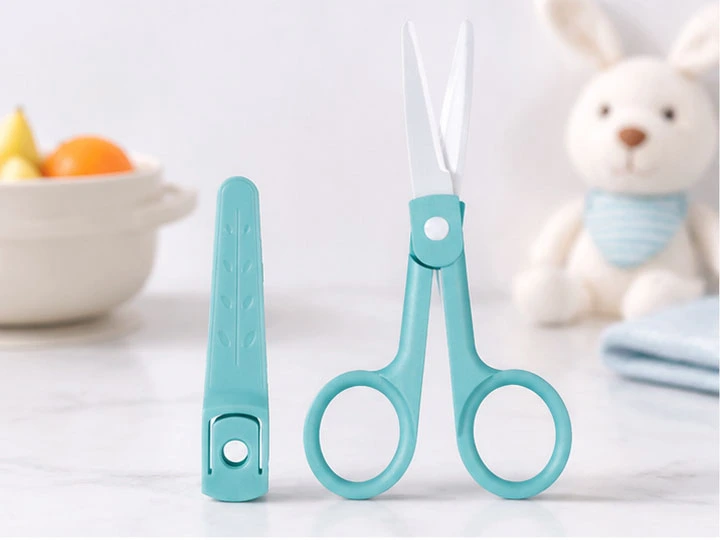
Unlike ordinary kitchen scissors, portable baby food scissors are designed with everyday feeding situations in mind. Their compact construction makes them easier to carry, while features such as lightweight handles and protective blade covers help simplify storage. Some models also use ceramic blades, offering a rust-resistant alternative to conventional metal cutting edges.
However, portability involves more than simply making a pair of scissors smaller. Parents need a product that is convenient to pack, comfortable to use, straightforward to clean, and suitable for repeated use. For baby care brands, retailers, and distributors, these same details also influence product selection, customer satisfaction, and retail positioning.
So, what makes baby food scissors genuinely portable? From blade dimensions and handle materials to protective covers and storage design, several factors determine whether a product works well both at home and away from home. Understanding these features can help parents choose practical feeding tools and help retailers identify products that meet real consumer needs.
1. Why Do Parents Need Portable Baby Food Scissors?
Parents who prepare meals for babies quickly discover that feeding routines are not limited to one location. Even when a baby has started eating family foods, the texture and portion size may still need some adjustment. Cooked noodles, soft vegetables, boneless fish, and other suitable foods sometimes need to be cut into smaller pieces before serving.
At home, this task is relatively simple. A kitchen knife or a regular pair of scissors may already be available. Outside the home, however, finding an appropriate and clean cutting tool is not always convenient. This is where dedicated baby food scissors can be useful.
Preparing Baby Food Outside the Home
Restaurants are one of the most common situations in which parents may want to carry feeding scissors. A family meal can include foods that are suitable for a baby but are not prepared in a convenient size or texture. Cooked noodles may be too long, vegetables may need to be divided into smaller portions, and some soft foods may be easier for a baby to manage after cutting.
Travel creates similar requirements. During a weekend trip, a family holiday, or a visit to relatives, parents may not have access to their usual kitchen equipment. A compact pair of baby food scissors can be packed with other feeding essentials and used when a suitable food preparation surface is available.
For parents who regularly eat outside the home, carrying a small feeding tool is often more convenient than depending on whatever utensils happen to be available. The important point is that the scissors should be designed for easy transport rather than simply being a smaller version of ordinary household scissors.
Reducing the Need for Full-Size Kitchen Tools
Regular kitchen scissors are generally designed for broader household tasks. They may have longer blades, larger handles, and a shape that takes up more space in a bag. Many models also lack a dedicated protective cover.
These characteristics are not necessarily problems in a kitchen, but they can become inconvenient when parents need to carry several baby feeding accessories together. A full-size pair of scissors may occupy unnecessary space and may not be suitable for loose storage alongside feeding spoons, containers, and other items.
Portable baby food scissors address this practical issue through a more compact structure. Their dimensions, handle design, and storage accessories are selected with feeding-related use in mind.
Making Feeding Routines More Convenient
Convenience is not just about carrying less. It also means being able to find and use a product without making the feeding process unnecessarily complicated.
A dedicated pair of baby food scissors can stay with a family's feeding kit, rather than being moved between different household tools. Parents can keep the scissors in a designated storage pouch or drawer, making them easier to locate when needed.
For families with busy schedules, small improvements in everyday organization can make a difference. A compact cutting tool with a protective cover is a practical example of how a relatively simple baby feeding accessory can support more flexible routines.
2. What Makes Baby Food Scissors Portable?
What makes baby food scissors portable? The answer involves several design elements working together: compact dimensions, lightweight construction, practical handles, protective covers, and convenient storage. A product may be small but still inconvenient to carry if its blade is exposed or its overall structure is difficult to pack.
When evaluating Portable Baby Food Scissors, it is therefore useful to consider the complete product rather than focusing on one specification.
Compact Dimensions for Easy Carrying
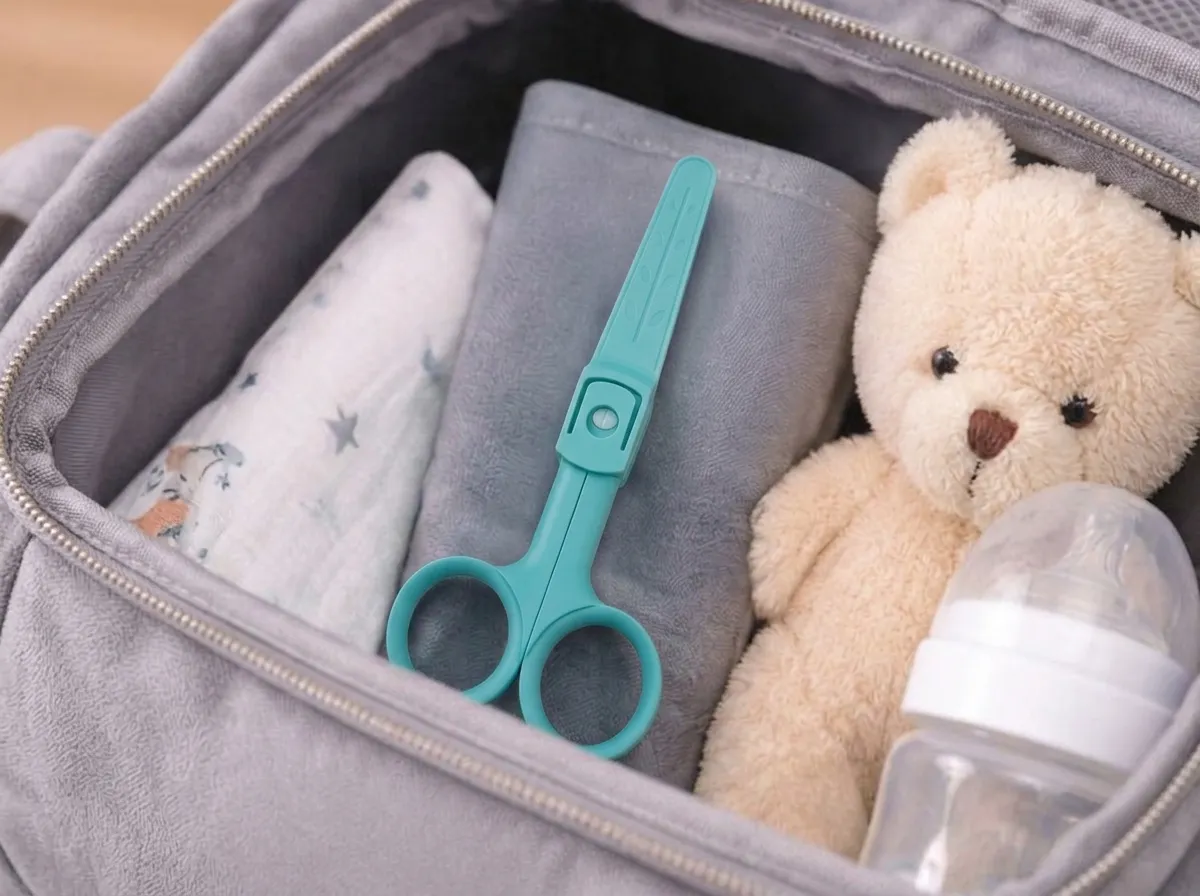
Product dimensions have a direct influence on portability. A compact pair of scissors is easier to place inside a diaper bag, feeding pouch, travel organizer, or dedicated baby care kit.
Blade length is one part of this consideration, but it should not be confused with the overall length of the product. A pair of scissors with a short blade may still have relatively large handles or an unnecessarily bulky protective cover. Retailers should evaluate the complete dimensions when comparing different products.
For example, MIDDIA's CS6 portable ceramic baby food scissors feature 2-inch zirconia ceramic blades. This compact blade configuration is intended to support convenient food preparation while keeping the cutting component relatively small.
However, a shorter blade is not automatically better in every situation. The scissors still need to provide enough cutting area for their intended applications. Product designers must balance compactness with practical cutting performance, handle accessibility, and comfortable operation.
For buyers comparing products, several measurements are worth requesting:
Overall length: Determines how much space the complete scissors occupy in a feeding bag.
Blade length: Influences the available cutting area and product proportions.
Handle dimensions: Affect grip comfort and ease of operation.
Protective cover dimensions: Determine how much additional space is required during storage.
These measurements provide a more useful picture of portability than blade length alone.
Lightweight Materials and Ergonomic Handles
Weight is another important consideration, especially for parents who already carry diapers, bottles, wipes, feeding containers, and spare clothing. A baby feeding accessory should not add unnecessary bulk to an already full bag.
Handle material plays a role in the overall weight and handling characteristics of the scissors. PP (polypropylene) is commonly used in baby care and household products because it is a lightweight thermoplastic that can be molded into different shapes and colors.
For portable scissors, PP handles can contribute to a lightweight product structure. Their shape also allows manufacturers to develop different grip configurations and visual designs without relying on heavy handle materials.
Weight alone, however, does not determine whether a pair of scissors is comfortable to use. Handle openings, finger space, surface finish, and the relationship between the handle and blade all influence handling.
A product that is extremely small may be difficult for an adult to grip properly. Conversely, oversized handles can reduce the benefits of a compact design. A well-designed product should strike a reasonable balance between carrying convenience and comfortable operation.
Protective Covers for Safer Storage
A protective cover is one of the most recognizable features of travel baby food scissors. It serves a practical purpose: covering the exposed blade edges when the scissors are not being used.
Without a suitable cover, scissors placed inside a diaper bag may come into contact with feeding spoons, food containers, tissues, or other personal items. A protective cover helps separate the blade area from these belongings and reduces the chance of accidental contact during normal storage.
Some products use detachable covers, allowing the cover to be removed when the scissors need cleaning. This arrangement can also make the product easier to pack and organize.
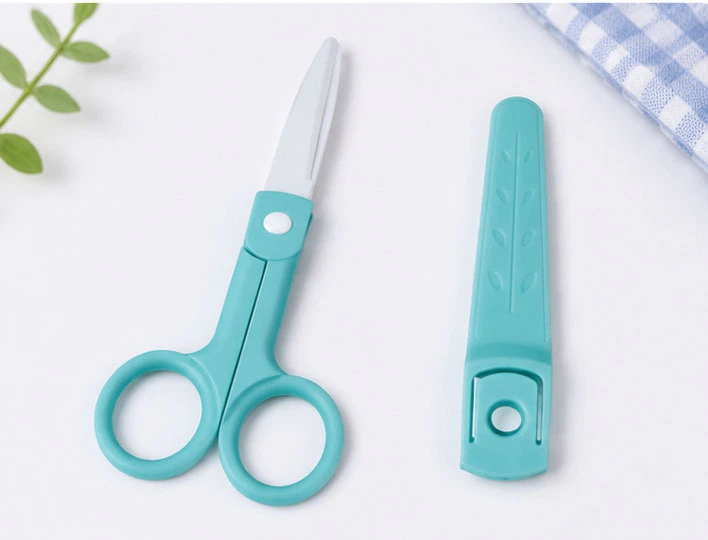
MIDDIA's CS6 model uses a detachable protective cover as part of its portable design. The cover complements the compact ceramic blade structure and provides a dedicated storage solution when the scissors are not in use.
For product designers, the fit of the cover deserves particular attention. It should be easy for an adult to remove and reinstall, while remaining secure enough for ordinary carrying conditions. A cover that is excessively loose may come off inside a bag, while one that is too difficult to remove can make everyday use inconvenient.
It is also important to remember that a protective cover is a storage accessory, not a guarantee that the scissors are childproof. The complete product should always be stored out of children's reach when not in use.
Convenient Storage Without Taking Up Too Much Space
Portability also depends on how easily the scissors fit into the storage systems parents already use. Most families do not want to carry a separate large case for every feeding accessory.
A compact design can fit into several common storage arrangements:
Diaper bags and everyday baby care bags.
Dedicated baby feeding pouches.
Travel organizers with separate compartments.
Kitchen drawers reserved for baby feeding tools.
Portable food preparation kits.
Protective covers make this arrangement more practical by keeping the blade covered during storage. A detachable design may also make it easier to clean individual components before packing.
In product development, the relationship between the scissors and their cover should be considered from the beginning. Designing the cover as an afterthought can result in unnecessary bulk, poor fit, or awkward proportions. A well-integrated cover contributes to the overall portability of the product.
In simple terms, portable baby food scissors combine compact dimensions, manageable weight, a practical grip, covered blade storage, and a design that fits naturally into everyday feeding routines.
3. Where Can Parents Use Portable Baby Food Scissors?
One advantage of portable feeding accessories is that they can support different routines without requiring a completely separate set of tools for every location. Baby food scissors are particularly useful when parents want to prepare suitable foods in smaller portions outside their usual kitchen environment.
Everyday Use at Home
Although portability is the main focus, these scissors are not exclusively designed for travel. Many parents use baby food scissors as part of their regular home feeding equipment.
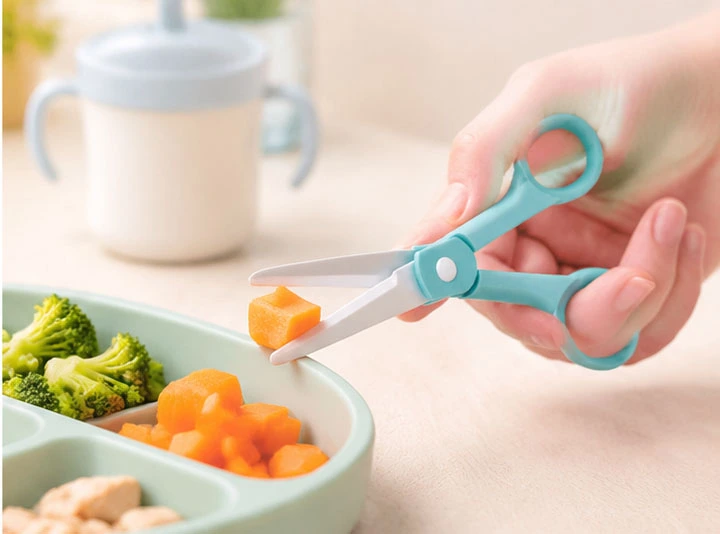
For example, they may be used to cut cooked noodles into shorter lengths, divide soft cooked vegetables, or prepare suitable pieces of cooked meat and other foods. A compact pair of scissors can be easier to handle for small food preparation tasks than a large kitchen tool.
Keeping the scissors in a dedicated baby feeding drawer also helps establish a consistent cleaning and storage routine. When a meal is finished, the product can be cleaned, dried, covered, and returned to its designated place.
Some families prefer to keep a separate set of feeding tools for their baby rather than sharing general kitchen utensils. A dedicated pair of scissors fits naturally into this approach.
Restaurants and Family Dining
Eating at a restaurant is a different experience from preparing food at home. Parents may have limited space, fewer utensils, and less control over how a meal is served.
Portable baby food scissors provide an option for preparing suitable foods at the table, provided that the restaurant permits their use and a clean surface is available. For instance, cooked noodles or soft vegetables may need to be divided into smaller portions before being offered to a baby.
A compact design is particularly helpful in this setting because parents generally do not want to unpack several large accessories during a family meal.
When packing for a restaurant visit, it is useful to keep the scissors inside a dedicated feeding pouch. The protective cover should remain in place until the scissors are needed. After use, the product should be cleaned appropriately before being returned to storage. If suitable cleaning facilities are unavailable, it is better to keep the used scissors separate until they can be cleaned properly.
Family Trips and Travel
Travel often requires parents to think more carefully about what they carry. A short weekend away may involve bottles, snacks, feeding containers, clothes, and several other baby care essentials.
In this situation, compact feeding scissors can be included in the family's travel kit without taking up the space required by larger household tools.
They may be useful when preparing suitable foods in a hotel room, at a relative's home, or in another appropriate food preparation area. A protective cover helps keep the blade covered while the scissors are packed with other travel accessories.
Before traveling, parents should check the applicable transportation and security requirements. Rules for sharp objects can differ between airlines, airports, countries, and types of baggage. A protective cover does not automatically make scissors permissible in every carry-on bag.
For this reason, checking current travel regulations before departure is a sensible part of packing baby feeding accessories.
Outdoor Dining and Family Visits
Not every outing involves a long journey. A family picnic, a visit to grandparents, or a day spent with friends can create the same need for convenient food preparation.
Parents may prefer to bring familiar feeding tools rather than depend on utensils available at the destination. Portable baby food scissors can be stored with other feeding accessories and used when a suitable food preparation area is available.
Outdoor settings require additional attention to hygiene. Scissors should not be placed directly on picnic tables or other surfaces that may be contaminated. A clean food preparation surface and appropriate cleaning arrangements remain important.
The value of portability becomes clear in these everyday situations. The product is useful not because it performs a completely different function outside the home, but because its size and storage design make the same task easier to manage in different environments.
4. Why Does a Protective Cover Matter for Travel Baby Food Scissors?
When choosing Baby Scissors with Protective Cover, the cover should be treated as an important part of the product rather than a decorative accessory. Its design influences storage convenience, blade protection, and the overall experience of carrying the scissors.
Protecting the Blades During Storage
Scissors have exposed cutting edges when they are open or closed without a cover. When placed inside a bag, these edges may come into contact with other objects or be handled accidentally while someone searches for a feeding spoon or container.
A properly fitted protective cover creates a physical barrier around the blade area. This helps reduce direct contact with other belongings during normal storage and makes the product easier to organize.
For ceramic scissors, protecting the blade during transport is especially worth considering. Zirconia ceramic is hard and resistant to corrosion, but ceramic materials can be more vulnerable to impact and concentrated mechanical stress than many metal alternatives. Avoiding unnecessary collisions with hard objects is therefore important.
A protective cover supports storage protection, although it cannot eliminate the risk of damage from severe impact or improper handling.
Making the Scissors Easier to Pack
A good cover also makes the scissors more convenient to carry. Parents can place the covered product in a dedicated compartment without leaving the blade edges exposed.
This is particularly helpful when a feeding pouch contains several items. Spoons, small containers, bibs, and other accessories can be arranged more easily when the scissors have their own covered storage form.
For manufacturers, the design should consider the relationship between the cover and the rest of the product. The cover should not make the scissors unnecessarily bulky, and its shape should allow the complete product to fit into common storage arrangements.
Removable Covers and Cleaning Convenience
Food preparation tools need regular cleaning, and protective covers should not be overlooked during this process. Small food particles or moisture can collect inside a cover if it is not cleaned properly.
A detachable cover offers a practical advantage because it allows the scissors and the cover to be cleaned separately. Parents can pay attention to the inner surface of the cover, the blade area, and the connection between the blades and handles.
After cleaning, all components should be dried thoroughly before being reassembled or placed in a closed storage pouch. This helps avoid trapping moisture inside the cover.
When evaluating a baby food scissors product, buyers should examine whether the cover is easy to remove, whether its inner structure is accessible for cleaning, and whether it fits securely during ordinary transport.
These may seem like small details, but they influence how convenient the product feels after repeated use. A protective cover that looks attractive in a product photograph but is difficult to clean or frequently comes loose may not deliver a satisfactory user experience.
5. How to Clean and Store Portable Baby Food Scissors
Convenient storage is only one part of product usability. Since baby food scissors come into contact with food, cleaning and drying procedures deserve equal attention. A compact product is not automatically hygienic simply because it is easy to carry.
Cleaning After Every Use
Food residue should be removed promptly after each use. Cooked noodles, fruit, vegetables, and other foods may leave small particles around the cutting edges or near the blade connection.
A practical cleaning routine generally includes the following steps:
Remove visible food residue from the blades as soon as possible.
Clean the cutting surfaces and accessible handle areas according to the manufacturer's instructions.
Pay attention to the connection between the blades, where small food particles may collect.
Remove a detachable protective cover and clean its inner surface separately.
Rinse or wipe the components using the cleaning method specified for the product.
Parents should also avoid assuming that every pair of ceramic scissors can be fully disassembled. Cleaning procedures depend on the actual product construction.
Drying Before Storage
Drying is sometimes overlooked, particularly when parents are in a hurry after a meal. However, placing a damp product inside a closed pouch or protective cover can trap moisture and create an unsuitable storage environment.
After cleaning, allow the blades, handles, and protective cover to dry thoroughly. Particular attention should be paid to areas where components connect or where water may remain after rinsing.
Once dry, the scissors can be returned to their protective cover and stored in a designated location.
For ceramic-blade models, rust resistance is a useful material advantage, but it does not remove the need for proper cleaning. Food hygiene remains important regardless of whether the cutting edge is made from ceramic or stainless steel.
Proper Storage at Home and During Travel
At home, keeping baby food scissors in a dedicated drawer or feeding accessory organizer helps prevent unnecessary contact with unrelated household tools. During travel, a separate pouch or compartment can provide additional organization.
The protective cover should be fitted whenever the scissors are not in use. The complete product should also be kept out of children's reach, preferably in a closed storage location.
It is also useful to inspect the product occasionally. Check whether the protective cover still fits properly, whether the handle has visible damage, and whether the blades show signs of chipping or other damage. If a ceramic blade is chipped or cracked, discontinue use rather than attempting to continue cutting food with it.
Can Ceramic Baby Food Scissors Be Sterilized?
This question is particularly relevant to parents who prefer to maintain a consistent cleaning routine for baby feeding products.
Ceramic blades have good resistance to corrosion and do not develop ordinary iron rust. However, the sterilization suitability of a complete pair of scissors depends on more than the blade material.
Handles, protective covers, connecting components, and other materials may have different temperature tolerances. A PP handle, for example, should not automatically be assumed to withstand every boiling or steam sterilization procedure.
Some ceramic baby food scissors are designed to support specific heat-based cleaning methods. If the manufacturer confirms that boiling or steam sterilization is suitable for the complete product, parents can follow the specified procedure.
For MIDDIA products, cleaning and sterilization claims should be checked against the instructions for the exact model. Parents should not assume that a procedure suitable for one product is automatically appropriate for every ceramic scissors model.
When in doubt, follow the manufacturer's care instructions rather than experimenting with high temperatures or aggressive cleaning methods.
6. What Should Retailers Look for When Choosing Portable Baby Food Scissors?
For baby product retailers, distributors, and brand owners, selecting portable baby food scissors involves more than finding a product with an attractive appearance. The product needs to offer a reasonable combination of usability, material performance, storage convenience, and supporting quality documentation.
Consumer expectations also influence purchasing decisions. A product may attract attention through its compact appearance, but long-term satisfaction depends on how well its design performs in everyday use.
Practical Size and Weight
Retail buyers should evaluate the complete product dimensions rather than relying only on photographs or descriptions such as mini, compact, or lightweight.
Overall length, blade length, handle proportions, and the size of the protective cover should be considered together. If possible, request physical samples and measure the product with the cover fitted.
Weight is equally important. A lighter product is generally easier to include in a travel feeding kit, but an excessively lightweight structure should not compromise handle stability or the overall user experience.
It is also worth considering the target customer. A product designed for parents who frequently travel may prioritize compact dimensions, while a product positioned for regular home use may place greater emphasis on grip comfort and cutting performance.
Blade Material and Cutting Performance
The blade material is another important factor in product evaluation. Stainless steel and zirconia ceramic are two different material choices, each with its own characteristics.
Stainless steel is widely used in household scissors and offers a familiar combination of strength, flexibility, and cutting performance. However, its corrosion resistance depends on the specific alloy, surface condition, and maintenance.
Zirconia ceramic offers a different set of characteristics. It is a hard, non-metallic material with good corrosion resistance. Unlike ordinary carbon steel, a zirconia ceramic blade does not develop conventional iron rust under normal use conditions.
These characteristics can be useful in baby feeding accessories, particularly for products intended to be cleaned frequently. Ceramic cutting edges can also maintain their sharpness for a long time when used appropriately.
There are limitations worth understanding. Ceramic is relatively brittle compared with many metal materials. Dropping the product onto a hard surface or using it to cut unsuitable materials may cause chipping or damage.
Retailers should therefore avoid evaluating ceramic scissors solely by hardness or sharpness claims. Product structure, blade installation, handling instructions, and durability testing are also relevant.
For brands considering a ceramic baby food scissors range, the most useful questions are whether the blade performs well on its intended food applications, whether the product is easy to clean, and whether the manufacturer can provide relevant material and product testing information.
Protective Cover Design
A protective cover can be an important product differentiator, particularly for customers searching for travel baby food scissors.
Retailers should consider several practical details:
Does the cover fit securely around the blade area?
Can an adult remove and reinstall it without unnecessary effort?
Is the inner surface easy to inspect and clean?
Does the cover add excessive bulk to the complete product?
Can it remain securely attached during normal storage and transportation?
Detachable covers can be especially useful because they allow separate cleaning. However, the design still needs to balance easy removal with a sufficiently stable fit.
These characteristics also offer opportunities for product presentation. A clear close-up photograph showing the cover attached and detached can help customers understand how the product works before purchasing it online.
Product Testing and Food-Contact Documentation
Product testing and supporting documentation are important when retailers evaluate baby feeding accessories. Buyers should look beyond general statements about safety and request evidence that relates to the actual product being supplied.
For a portable baby food scissors product, two areas deserve particular attention: mechanical reliability and food-contact material compliance.
Drop durability testing provides information about how a product performs under a defined impact condition. MIDDIA's relevant baby food scissors product has passed an SGS 1-meter drop test. This provides a specific testing reference for buyers evaluating product reliability.
However, a 1-meter drop test should not be interpreted as proof that the scissors are indestructible. The actual result depends on the tested configuration, impact surface, drop orientation, test procedure, and acceptance criteria. Buyers should refer to the corresponding SGS test documentation for the exact conditions and scope.
Food-contact compliance is another important consideration. Products intended to come into contact with food need to meet the applicable requirements of their target markets.
For the United States, FDA-related food-contact requirements are relevant when evaluating the materials used in food-contact components. Buyers should verify the applicable regulatory provisions, material suitability, and supporting documentation rather than relying on the phrase FDA approved as a general marketing statement.
For Germany and other relevant European markets, LFGB testing or compliance documentation may be requested to evaluate food-contact suitability. The exact testing scope depends on the materials, product construction, and intended use.
Retailers should ask manufacturers to clarify which components were tested, which test methods were applied, and whether the documents cover the specific model being purchased. A report covering a handle material, for example, should not automatically be treated as evidence that every component of the complete product has been evaluated.
For brands selling baby feeding accessories, accurate documentation can support product evaluation, supplier communication, and market-specific compliance reviews.
Retail Presentation and Product Differentiation
Product design does not end with the physical scissors. Appearance, packaging, and the information provided to consumers also influence how a product is perceived.
When comparing portable baby food scissors, retailers may want to consider:
Handle colors that fit the visual identity of their baby care range.
A protective cover that can be clearly demonstrated in product photographs.
Packaging that keeps the product organized and protected.
Clearly stated dimensions, weight, materials, and cleaning instructions.
Relevant product testing and food-contact documentation.
For e-commerce sellers, product information should answer practical questions before the customer reaches the purchase stage. How large are the scissors? Is a protective cover included? What material are the blades made from? How should the product be cleaned?
Clear answers to these questions can help reduce uncertainty and make the product easier to evaluate against competing baby feeding accessories.
7. How Can Baby Brands Differentiate Portable Baby Food Scissors?
For baby care brands and retailers, portable baby food scissors represent a product category where relatively small design decisions can influence the final retail offering. Two products may serve a similar purpose but appeal to different customers because of their appearance, storage features, or overall presentation.
Rather than competing only on price, brands can consider several ways to make their products more distinctive.
Differentiate Through Product Design
The first opportunity is the physical product itself. Compact dimensions, detachable protective covers, practical handle proportions, and easy-to-clean structures all contribute to the user experience.
For a travel-oriented product, a lightweight structure and convenient cover may be especially important. A model intended for a broader baby feeding collection may place more emphasis on appearance and consistency with other accessories.
Brands should consider which features matter most to their target customers before deciding on the product configuration. Adding more components does not necessarily make a product better. A simple design that solves everyday storage and cleaning problems may be more attractive than one with unnecessary accessories.
Differentiate Through Colors and Appearance
Color is one of the easiest ways for baby care brands to create a recognizable product identity.
Soft pastel colors are commonly associated with baby and toddler product ranges, while more neutral tones may suit brands that prefer a minimalist appearance. Some retailers may also choose colors that match existing feeding spoons, containers, or other accessories.
Handle color customization can help manufacturers serve different brand requirements without fundamentally changing the product's function.
For e-commerce sellers, consistent product colors can also make a product range look more organized across category pages and promotional images.
However, appearance should not replace functional evaluation. The handle material, blade construction, protective cover fit, and cleaning instructions remain essential parts of product selection.
Differentiate Through Packaging and Product Information
Packaging is often the first physical interaction a customer has with a retail product. For baby feeding accessories, it should provide a clear understanding of the product rather than relying only on decorative graphics.
Useful packaging information may include:
Product name and intended application.
Blade and handle material descriptions.
Overall product dimensions.
Whether a protective cover is included.
Cleaning and storage instructions.
Relevant testing and food-contact compliance information.
For online listings, the same information can be incorporated into product images, specification tables, and product descriptions.
A retailer selling portable ceramic baby food scissors, for example, could use separate images to show the complete product, the protective cover, the blade details, and the product dimensions. This provides a more useful shopping experience than presenting only one front-facing product photograph.
Positioning as Part of a Baby Feeding Accessory Collection
Another opportunity is to position portable baby food scissors as part of a broader baby feeding accessory collection.
Instead of treating the scissors as an isolated product, brands can consider how they fit alongside:
Baby feeding spoons.
Baby food preparation tools.
Baby feeding sets.
Portable food containers.
Travel feeding accessories.
This approach may be particularly relevant to baby care retailers and online sellers that already offer multiple feeding-related products.
A compact pair of ceramic baby food scissors can serve as a complementary item within a feeding collection, especially when its color, packaging, and product presentation are consistent with the rest of the range.
From a merchandising perspective, the product can also appeal to customers who are looking for practical accessories rather than complete feeding sets. This gives retailers another product option to include in their baby care assortment.
For manufacturers, understanding these retail requirements is useful when developing different product configurations. Handle colors, protective cover designs, and packaging formats can all influence how a product fits into a brand's existing range.
8. Are Portable Ceramic Baby Food Scissors a Practical Choice?
Portable ceramic baby food scissors can be a practical option for families that regularly prepare baby food both at home and outside the home. Their usefulness comes from the combination of several design features rather than any single material advantage.
A compact structure makes the scissors easier to carry in a diaper bag or feeding pouch. Lightweight PP handles help keep the overall product convenient to transport, while a protective cover provides a dedicated way to store the blades when the scissors are not being used.
Zirconia ceramic blades offer another point of differentiation. Their corrosion resistance makes them a suitable alternative to conventional metal cutting edges for products designed around regular food preparation and cleaning. At the same time, ceramic blades require appropriate handling because they can be damaged by hard impacts or unsuitable cutting tasks.
For retailers and baby care brands, product selection should also consider practical dimensions, cover design, cleaning requirements, product testing, and relevant food-contact documentation. These details help determine whether a product is suitable for the intended customer and target market.
Ultimately, the most useful portable baby food scissors are not simply the smallest or lightest models available. They are products that balance portability, practical cutting performance, blade protection, and straightforward maintenance in a design that fits naturally into everyday feeding routines.
Frequently Asked Questions About Portable Baby Food Scissors
1. What makes baby food scissors portable?
Portable baby food scissors generally feature compact dimensions, lightweight construction, practical handles, and a protective cover. These features make them easier to carry in diaper bags, feeding pouches, and travel organizers. Convenient storage and straightforward cleaning also contribute to their suitability for use both at home and outside the home.
2. Can I take baby food scissors when traveling?
Baby food scissors can be included in a family's travel feeding kit, provided they are packed and transported according to applicable safety and transportation rules. A protective cover helps keep the blades covered during storage, but it does not guarantee that scissors are permitted in aircraft cabins or other restricted areas. Always check the current airline, airport, and destination requirements before traveling.
3. Why do baby food scissors need a protective cover?
A protective cover helps shield the blade edges when the scissors are not in use. It reduces direct contact between the blades and other belongings inside a feeding bag, makes storage more convenient, and can help keep the blade area separate from other items. A detachable cover may also be easier to clean separately. The covered scissors should still be stored out of children's reach.
4. Are ceramic baby food scissors suitable for everyday use?
Zirconia ceramic baby food scissors can be suitable for everyday food preparation when they are designed for the intended applications and used according to the manufacturer's instructions. Ceramic blades offer good corrosion resistance and do not develop conventional iron rust. However, ceramic is relatively brittle compared with many metal materials, so the scissors should be protected from hard impacts and should not be used to cut unsuitable materials.
5. How should portable baby food scissors be cleaned?
Clean the scissors after every use, removing food residue from the blades, handles, and accessible connection areas. If the protective cover is detachable, clean its inner surface separately. Dry all components thoroughly before fitting the cover and returning the scissors to storage. Follow the manufacturer's instructions for washing and sterilization, particularly when the product includes PP handles or other temperature-sensitive components.
6. What should retailers consider when sourcing portable baby food scissors?
Retailers should evaluate the complete product dimensions, weight, blade material, handle design, protective cover fit, cleaning requirements, and intended food preparation applications. Product testing and food-contact documentation are also important. For ceramic models, buyers should review relevant drop-test reports and applicable FDA-related or LFGB food-contact documentation, confirming that the reports cover the actual product and materials being supplied. Packaging, color options, and product presentation can then be considered as additional retail differentiation factors.
Explore MIDDIA Portable Ceramic Baby Food Scissors
For baby care brands, retailers, and distributors looking to expand their feeding accessory range, portable ceramic baby food scissors offer an opportunity to combine practical product design with material differentiation.
MIDDIA's portable ceramic baby food scissors feature zirconia ceramic blades, lightweight PP handles, and a detachable protective cover. The CS6 model uses a compact 2-inch blade design and is developed for convenient food preparation and storage.
The relevant product has passed SGS 1-meter drop testing, and MIDDIA can provide applicable FDA-related and LFGB food-contact testing or compliance documentation for buyer evaluation, subject to the scope of the corresponding reports.
For brands considering a new baby feeding accessory, product specifications, handle colors, protective cover design, and retail packaging are all worth discussing when evaluating a suitable product range.
Learn more about MIDDIA Ceramic Scissors and explore the available product options.